Love this? Save it for later!
Share the inspiration with your friends
My neighbor Maria asked why I couldn’t just dump the ricotta straight into the mixer without draining it first. I started to explain why that wouldn’t work—then stopped. Honestly, I had no good reason. Every recipe I’d ever read said to drain it, so I drained it. But standing there in my kitchen last December, with Christmas music playing and flour dusting every surface, I decided to let her be right.
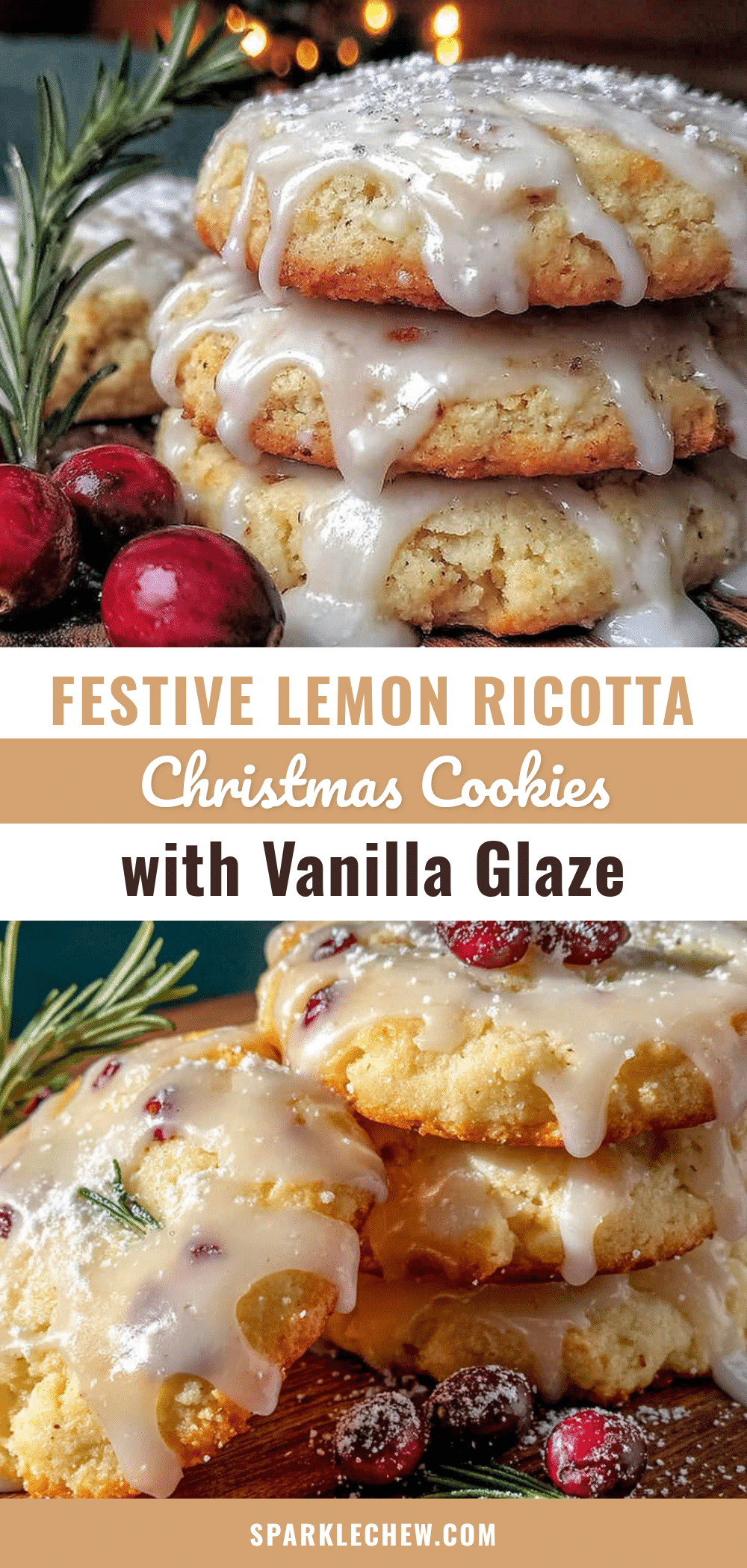
The cookies came out of the oven looking like little clouds. Softer than any ricotta cookie I’d ever made. The texture was this perfect thing—tender but not fragile, with a slight chew that made you want another bite immediately. I stood there holding the baking sheet, genuinely annoyed at how much better they were than my usual method. Maria had been baking these for twenty years without draining her ricotta. Twenty years. And I’d been over here complicating things for no reason.
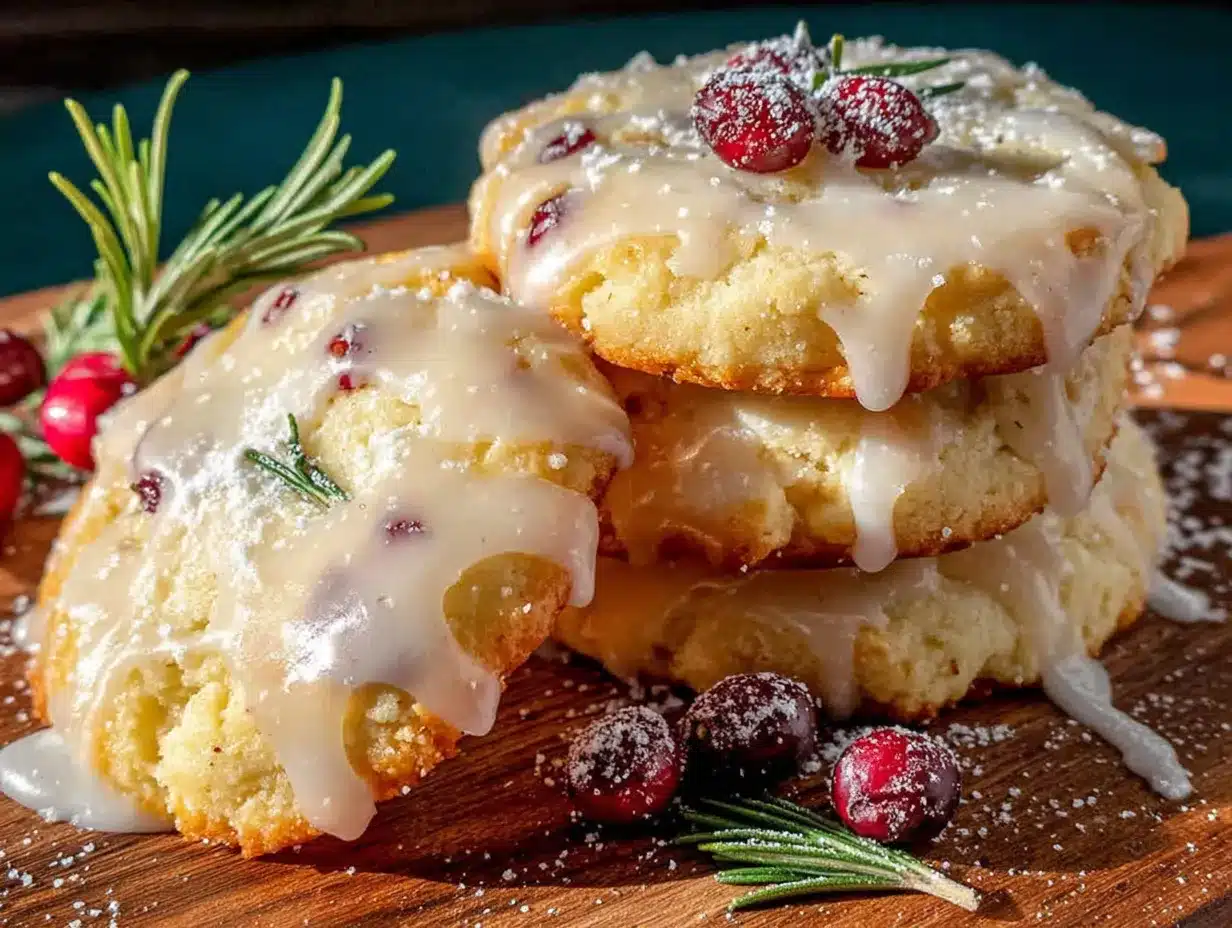
These lemon ricotta Christmas cookies became the thing I bring to every holiday gathering now. They’re the cookie people hover around, the one that disappears first from the platter. The vanilla glaze on top sets up just enough to crack when you bite into it, and that lemon flavor cuts through the richness in a way that makes sense for the holidays when everything else is so heavy. Maybe you’ve been there—stubborn about a technique that turns out to be completely unnecessary. I keep making these because they remind me to question my own rules once in a while.
Why You’ll Love This Recipe
Let me tell you why these cookies have earned a permanent spot in my holiday rotation. I’ve tested this recipe at least a dozen times, tweaking the lemon ratio and glaze consistency until everything clicked. Here’s what makes them special:
- Quick & Easy: From start to finish, you’re looking at about 30 minutes of active time. The dough comes together in one bowl, no chilling required, which matters when you’re making six different things for a cookie exchange.
- Simple Ingredients: You probably have most of this in your kitchen right now. The ricotta is the only slightly unusual thing, and it’s in every grocery store. No hunting down specialty baking supplies.
- Perfect for Christmas: These cookies look festive on any holiday platter. The white glaze with sprinkles catches the light, and they stack beautifully on cookie trays without sticking together.
- Crowd-Pleaser: I’ve brought these to three different holiday parties this month, and every single time someone asks for the recipe. Kids love them. Adults love them. People who claim they don’t like lemon love them.
- Unbelievably Delicious: The texture is what gets people. Ricotta makes these incredibly moist without being dense. The lemon keeps them bright, and that vanilla glaze adds just enough sweetness.
What makes this different from other ricotta cookie recipes is the undrained ricotta. Trust me on this one. I learned the hard way that draining removes moisture that makes these cookies special. The batter comes together in seconds, and the result is a cookie that stays soft for days. It’s the kind of cookie that makes you close your eyes after the first bite. Perfect for holiday baking when you want something impressive without the stress.
What Ingredients You Will Need
This recipe uses simple ingredients that come together to create something genuinely special. The ricotta does the heavy lifting here, providing moisture and tenderness that butter alone can’t achieve.
- All-purpose flour, 2 cups (250g) – Spoon and level it for accuracy. Too much flour makes these cookies dense.
- Baking powder, 2 teaspoons – Make sure it’s fresh. Old baking powder won’t give you that lift.
- Salt, ½ teaspoon – Balances the sweetness and brightens the lemon flavor.
- Unsalted butter, ½ cup (1 stick), softened – Let it sit out for 30 minutes. Cold butter won’t cream properly.
- Granulated sugar, ¾ cup (150g) – Regular white sugar works best here. Don’t substitute with brown sugar.
- Large egg, 1, room temperature – Crack it into a small bowl first to avoid shell pieces.
- Whole milk ricotta, 1 cup (240g), undrained – This is crucial. Do not drain it. I recommend Galbani or Polly-O for consistent texture. The moisture in undrained ricotta creates the softest cookies.
- Fresh lemon zest, 2 tablespoons – From about 2 lemons. Only zest the yellow part; the white pith is bitter. Microplane works best here.
- Fresh lemon juice, 1 tablespoon – Use the same lemons you zested. Bottled juice won’t give you the same brightness.
- Vanilla extract, 1 teaspoon – Pure extract, not imitation. The flavor difference matters in baked goods.
For the Vanilla Glaze:
- Powdered sugar, 1½ cups (180g), sifted – Sifting prevents lumps. Trust me, nobody wants lumpy glaze.
- Whole milk, 3-4 tablespoons – Start with 3 and add more if needed. The consistency should be thick but pourable.
- Vanilla extract, 1 teaspoon – Again, use the good stuff.
- Christmas sprinkles, for decorating – Any holiday mix works. I like the ones with little stars and trees.
Substitution Notes: For a dairy-free version, use dairy-free butter and a plant-based ricotta alternative. The texture will be slightly different, but still good. If you can’t find whole milk ricotta, part-skim works in a pinch, but the cookies won’t be quite as tender. Gluten-free all-purpose flour blends work well here—I’ve tested with Bob’s Red Mill 1-to-1 with great results.
Equipment Needed
Nothing too fancy here. You probably already have most of this in your kitchen.
- Large mixing bowl – Any bowl works. I use a ceramic one because it doesn’t slide around on the counter.
- Electric hand mixer or stand mixer – A hand mixer is fine. You’re only creaming butter and sugar, nothing heavy. If you want to mix by hand, go for it, but your arm will get tired.
- Microplane or fine grater – For zesting lemons. A box grater works too, but a Microplane gives you finer zest that distributes better through the dough.
- Baking sheets – Two standard sheets work perfectly. Line them with parchment paper for easy cleanup.
- Cookie scoop or tablespoon – A 1½ tablespoon scoop gives you consistent-sized cookies. I use my OXO scoop and it’s perfect.
- Cooling rack – Essential for the glaze to set properly. If you don’t have one, let the cookies cool completely on the baking sheet, but it takes longer.
- Small bowl for glaze – Any small bowl works. I use a glass measuring cup because the pour spout helps with drizzling.
- Whisk – For the glaze. A fork works in a pinch, but a whisk gives you smoother results.
Budget-friendly tip: Skip the electric mixer and use a wooden spoon. It takes a few extra minutes, but the cookies turn out the same. I’ve done it both ways.
Preparation Method
Preheat your oven to 350°F (175°C). Line two baking sheets with parchment paper. This recipe makes about 30 cookies, so you might need to bake in batches depending on your oven size.
-
Whisk dry ingredients together. In a medium bowl, whisk together 2 cups all-purpose flour, 2 teaspoons baking powder, and ½ teaspoon salt. Set this aside. Whisking aerates the flour and distributes the leavening agents evenly. You don’t want a pocket of baking powder in one cookie.
-
Cream butter and sugar. In a large bowl, beat ½ cup softened unsalted butter with ¾ cup granulated sugar until light and fluffy, about 2-3 minutes. Scrape down the sides of the bowl halfway through. The mixture should look pale and slightly increased in volume. Don’t rush this step—proper creaming creates air pockets that help the cookies rise.
-
Add wet ingredients. Beat in 1 large egg, 1 cup undrained ricotta, 2 tablespoons lemon zest, 1 tablespoon lemon juice, and 1 teaspoon vanilla extract. Mix until just combined. The batter will look a little loose and maybe even slightly curdled—that’s normal. The ricotta texture means it won’t look perfectly smooth, and that’s okay.
-
Fold in dry ingredients. Add the flour mixture to the wet ingredients and fold together with a spatula until no streaks of flour remain. Don’t overmix. Overmixing develops gluten and makes the cookies tough. You want to stop as soon as the flour disappears. The dough will be soft and slightly sticky—that’s the ricotta working its magic.
-
Scoop the cookies. Using a 1½ tablespoon cookie scoop or a regular tablespoon, drop rounded spoonfuls of dough onto the prepared baking sheets, spacing them about 2 inches apart. They spread slightly but not dramatically. If you don’t have a scoop, use two spoons—one to scoop, one to push the dough onto the sheet. The tops don’t need to be perfectly round; rustic is charming here.
-
Bake. Bake for 11-13 minutes, or until the edges are just barely golden. The centers will still look pale and slightly soft. That’s exactly what you want. Overbaking dries them out. Rotate the pans halfway through if your oven has hot spots. Mine does, so I always rotate.
-
Cool completely. Let the cookies cool on the baking sheets for 5 minutes, then transfer to a wire rack to cool completely before glazing. This is important. If you glaze them while they’re warm, the glaze will melt right off and pool underneath. I learned this the hard way during a particularly frustrating batch last year.
-
Make the glaze. In a small bowl, whisk together 1½ cups sifted powdered sugar, 1 teaspoon vanilla extract, and 3 tablespoons milk. Whisk until smooth. The glaze should be thick but pourable—think heavy cream consistency. If it’s too thick, add another tablespoon of milk. If it’s too thin, add more powdered sugar, one tablespoon at a time.
-
Glaze the cookies. Dip the tops of the cooled cookies into the glaze, letting the excess drip back into the bowl. Place them glazed-side up on the cooling rack. Alternatively, drizzle the glaze over the cookies with a spoon for a more rustic look. I dip mine because I like a thicker layer of glaze.
-
Add sprinkles. While the glaze is still wet, sprinkle Christmas sprinkles over the top. Do this immediately—once the glaze sets, the sprinkles won’t stick. Work in batches of 3-4 cookies at a time so the glaze doesn’t set before you add the sprinkles.
-
Let the glaze set. Allow the glazed cookies to sit at room temperature for about 30 minutes until the glaze is firm to the touch. The glaze will crack slightly when you bite into them, which is the best part.
Cooking Tips & Techniques
Here’s what I’ve learned from making these cookies more times than I care to count. Some of these lessons came from spectacular failures, and I’m sharing them so you don’t have to make the same mistakes.
Don’t drain the ricotta. I cannot stress this enough. Every instinct tells you to drain it because that’s what recipes always say. But the moisture in undrained ricotta is what makes these cookies so tender. I ruined my first three batches by draining it. The cookies came out dry and dense. Undrained ricotta gives you that bakery-quality texture.
Room temperature ingredients matter. Cold butter doesn’t cream properly. Cold egg seizes up the batter. Take everything out of the refrigerator 30 minutes before you start. If you forget, microwave the butter for 10 seconds at 30% power, and put the egg in a bowl of warm water for 5 minutes. Not perfect, but close enough.
Watch the bake time closely. These cookies go from perfect to overbaked in about 60 seconds. Start checking at 11 minutes. The edges should be just barely golden, and the centers should still look soft. They’ll continue cooking on the hot baking sheet after you pull them out. When in doubt, underbake slightly. A slightly underbaked ricotta cookie is still delicious. An overbaked one is sad.
Glaze consistency is everything. Too thick and it won’t spread. Too thin and it runs off the cookies completely. Aim for the consistency of honey. If you mess up, you can fix it—add more powdered sugar to thicken, more milk to thin. I’ve adjusted my glaze mid-dip more times than I’d like to admit.
Bake one test cookie first. This sounds fussy, but it saves you from ruining an entire batch. Scoop one cookie and bake it. See how it spreads, how it bakes. Adjust your scoop size or bake time accordingly. I started doing this after I baked an entire sheet of cookies that came out flat because my butter was too soft.
Variations & Adaptations
These cookies are forgiving enough to play around with. Here are some variations I’ve tried and loved.
Lemon Blueberry Christmas Cookies: Fold ½ cup dried blueberries into the dough along with the flour. The dried fruit adds little bursts of sweetness that complement the lemon beautifully. I made these for a cookie exchange last year and they were gone first. Fresh blueberries work too, but they add moisture that changes the bake time slightly.
Orange Ricotta Cookies: Swap the lemon zest and juice for orange. Use 2 tablespoons orange zest and 2 tablespoons orange juice instead. The flavor is warmer, more mellow. These feel less Christmas-y and more year-round, but they’re still fantastic on a holiday platter. I sometimes make both lemon and orange versions and arrange them together on the same plate.
Gluten-Free Version: Substitute the all-purpose flour with a 1-to-1 gluten-free baking flour blend. I’ve tested this with Bob’s Red Mill and King Arthur Measure for Measure, and both work well. The texture is slightly more delicate, so handle them gently. No other adjustments needed.
Dairy-Free Version: Use plant-based butter and dairy-free ricotta. Kite Hill makes a good almond milk ricotta that works here. The cookies won’t be quite as tender, but they’re still delicious. Use oat milk or almond milk in the glaze instead of regular milk.
Lemon Poppy Seed: Add 1 tablespoon poppy seeds to the dry ingredients. The poppy seeds add a subtle crunch and make the cookies look prettier. This is my husband’s favorite variation. He says it makes them feel more sophisticated.
White Chocolate Drizzle: Instead of the vanilla glaze, melt ½ cup white chocolate chips with 1 teaspoon coconut oil and drizzle over the cookies. The white chocolate sets up harder than the glaze, giving you a different texture. I do this when I want the cookies to look more polished for gift-giving.
Serving & Storage Suggestions
These cookies are best served at room temperature, which means you can make them ahead and not worry about last-minute fussing. The glaze sets up firm enough that they stack beautifully on a platter without sticking together.
How to serve: Arrange them on a festive plate or cookie tray. They look gorgeous alongside gingerbread cookies and sugar cookies. The white glaze with colorful sprinkles adds nice visual contrast to darker cookies. For a dessert board, pair them with fresh berries, chocolate truffles, and small cups of hot cocoa.
What to drink with them: A cup of black coffee or Earl Grey tea complements the lemon flavor perfectly. For holiday gatherings, they’re lovely with a glass of cold milk or a warm mug of spiced apple cider. If you’re serving adults only, a small glass of limoncello is a wonderful pairing.
Storage instructions: Store the cookies in an airtight container at room temperature for up to 5 days. Layer them between sheets of parchment paper to prevent the glaze from sticking. Do not refrigerate them—the fridge dries them out and makes the texture sad.
Freezer instructions: You can freeze these cookies two ways. Freeze the unbaked dough balls on a baking sheet, then transfer to a freezer bag for up to 3 months. Bake directly from frozen, adding 2-3 minutes to the bake time. Or freeze the baked, unglazed cookies for up to 3 months. Thaw at room temperature, then glaze and add sprinkles before serving. I always freeze a batch of dough in December so I can bake fresh cookies when unexpected guests show up.
Flavor development: These cookies actually taste better on day two. The lemon flavor mellows and blends with the ricotta in a way that’s more balanced. If you can resist eating them all on day one, you’ll be rewarded on day two. The texture stays soft the whole time, which is rare for a cookie.
Nutritional Information & Benefits
Per cookie (based on 30 cookies): approximately 120 calories, 4g fat, 18g carbohydrates, 2g protein. These numbers are estimates and will vary based on specific ingredients and glaze application thickness.
The ricotta in these cookies adds protein and calcium, which is more than most Christmas cookies can claim. Lemon zest provides a small amount of vitamin C and antioxidants. The cookies are lower in sugar than many holiday treats because the ricotta adds moisture without requiring extra fat or sugar.
Dietary considerations: This recipe contains dairy, gluten, and eggs. For gluten-free and dairy-free adaptations, see the variations section above. The cookies are nut-free as written, making them safe for school holiday parties where nut allergies are a concern.
These cookies feel indulgent without being overwhelming. One or two satisfy a sweet craving without sending you into a sugar coma. I appreciate that about them. They’re festive enough for celebrations but balanced enough that you don’t regret eating three of them.
Conclusion
These festive lemon ricotta Christmas cookies have become my signature holiday bake, and I think they should become yours too. They’re soft, bright, and exactly what you want on a cookie platter alongside all those heavy chocolate and spice cookies. The ricotta keeps them tender for days, the lemon cuts through the richness, and that vanilla glaze with sprinkles makes them look like you spent hours decorating.
What I love most about this recipe is how forgiving it is. You can make the dough in one bowl, scoop it without chilling, and have cookies on the table in under 30 minutes. The undrained ricotta trick—thanks to Maria—means you don’t have to plan ahead or deal with messy cheesecloth. It’s a recipe that works with your schedule, not against it.
I’d love to hear how these turn out for you. Did you try a variation? Did someone at your holiday party ask for the recipe? Drop a comment below and let me know. And if you’re looking for more holiday baking inspiration, check out our soft gingerbread cookies with cream cheese frosting or these easy chocolate crinkle cookies that never last long on any cookie tray.
Happy baking, friends. May your kitchen stay warm and your cookies stay soft.
Frequently Asked Questions
Can I use low-fat ricotta instead of whole milk?
You can, but the cookies won’t be as tender. Whole milk ricotta has more fat, which means more moisture and a softer texture. Part-skim works in a pinch—I’ve done it when that’s all I had—but the texture is noticeably less luxurious. If you only have low-fat, don’t drain it. You need every bit of moisture you can get.
Why did my cookies spread too much?
This usually happens for one of three reasons: your butter was too soft, your baking sheet was too warm, or you didn’t measure the flour correctly. Make sure your butter is softened but not melted. Let your baking sheets cool completely between batches. And spoon your flour into the measuring cup, then level it off. Scooping directly from the bag packs the flour and gives you too much.
Can I make the dough ahead of time?
Absolutely. The dough keeps in the refrigerator for up to 3 days in an airtight container. Let it sit at room temperature for 10 minutes before scooping and baking—cold dough is harder to scoop and might need an extra minute of bake time. You can also freeze the dough balls for up to 3 months and bake directly from frozen.
How do I get the glaze perfectly smooth?
Sift your powdered sugar. I know it’s an extra step, but unsifted powdered sugar has tiny lumps that won’t whisk out. Also, add the milk slowly and whisk thoroughly between additions. If you still have lumps, strain the glaze through a fine-mesh sieve before dipping the cookies. It takes 30 seconds and makes a noticeable difference.
Can I use bottled lemon juice instead of fresh?
I really don’t recommend it. Fresh lemon juice has a brightness that bottled juice just can’t replicate. The zest is even more important—bottled zest doesn’t exist, and the oils in fresh zest are what give these cookies their lemon flavor. You need two lemons for this recipe, and they’re worth every penny. The difference is noticeable even to people who don’t consider themselves lemon lovers.
Pin This Recipe!
Festive Lemon Ricotta Christmas Cookies: Easy Vanilla Glaze
These soft, tender lemon ricotta cookies are topped with a simple vanilla glaze and festive sprinkles. The secret is using undrained ricotta for an incredibly moist texture that stays soft for days.
- Prep Time: 15 minutes
- Cook Time: 12 minutes
- Total Time: 27 minutes
- Yield: 30 cookies 1x
- Category: Dessert
- Cuisine: American
Ingredients
- 2 cups all-purpose flour (250g)
- 2 teaspoons baking powder
- ½ teaspoon salt
- ½ cup unsalted butter (1 stick), softened
- ¾ cup granulated sugar (150g)
- 1 large egg, room temperature
- 1 cup whole milk ricotta (240g), undrained
- 2 tablespoons fresh lemon zest
- 1 tablespoon fresh lemon juice
- 1 teaspoon vanilla extract
- 1½ cups powdered sugar (180g), sifted
- 3–4 tablespoons whole milk
- 1 teaspoon vanilla extract (for glaze)
- Christmas sprinkles, for decorating
Instructions
- Preheat oven to 350°F (175°C). Line two baking sheets with parchment paper.
- In a medium bowl, whisk together flour, baking powder, and salt. Set aside.
- In a large bowl, beat softened butter and granulated sugar until light and fluffy, about 2-3 minutes.
- Beat in egg, undrained ricotta, lemon zest, lemon juice, and 1 teaspoon vanilla extract until just combined.
- Fold in the flour mixture with a spatula until no streaks remain. Do not overmix.
- Using a 1½ tablespoon cookie scoop, drop rounded spoonfuls of dough onto prepared baking sheets, spacing 2 inches apart.
- Bake for 11-13 minutes, until edges are just barely golden. Centers should still look pale and soft.
- Let cookies cool on baking sheets for 5 minutes, then transfer to a wire rack to cool completely.
- For the glaze: In a small bowl, whisk together sifted powdered sugar, 1 teaspoon vanilla extract, and 3 tablespoons milk until smooth. Add more milk if needed for a thick but pourable consistency.
- Dip tops of cooled cookies into glaze, letting excess drip back into bowl. Place glazed-side up on cooling rack.
- Immediately sprinkle with Christmas sprinkles while glaze is still wet.
- Let glaze set at room temperature for about 30 minutes until firm.
Notes
Do not drain the ricotta—the moisture is key for tender cookies. Room temperature ingredients matter. Watch bake time closely; underbake slightly for best texture. Glaze consistency should be like honey. Cookies taste even better on day two.
Nutrition
- Serving Size: 1 cookie
- Calories: 120
- Sugar: 11
- Sodium: 80
- Fat: 4
- Saturated Fat: 2.5
- Carbohydrates: 18
- Protein: 2
Keywords: lemon ricotta cookies, Christmas cookies, vanilla glaze, holiday baking, soft cookies, ricotta cookies