Love this? Save it for later!
Share the inspiration with your friends
It was 11:47 PM on a random Wednesday in late December, and I was wide awake, staring at the ceiling. The holidays had come and gone in a blur of tinsel and tater tots, but one thing was missing—the showstopper. I had promised my family a special dinner before the new year, something that felt like a real celebration, not just another weeknight scramble. The thing is, I didn’t have a prime rib roast in the fridge. I had a pork shoulder, some sad-looking carrots, and a half-empty jar of garlic. But the craving for that perfect, crusty, melt-in-your-mouth roast beef wouldn’t let me sleep. So, I did what any reasonable, slightly unhinged cook does at midnight: I started planning. I mentally mapped out the perfect garlic herb crust, the low-and-slow method, the final high-heat sear. It wasn’t about the meat I had—it was about the technique I knew would work. Honestly, some of my best ideas happen when the house is quiet and the pressure is off. This perfect garlic herb prime rib roast recipe was born from that late-night vision, and it’s been our family’s go-to for every special dinner since. There’s something about the quiet of the night that loosens the usual rules, and let me tell you, the rules I broke that night made all the difference.
Why You’ll Love This Recipe
This isn’t just another roast beef recipe. This is the one that gets you invited to host every holiday from now on. I’ve tested this method more times than I can count, tweaking the herb paste, the roasting time, and the resting period until it was absolutely foolproof. You know that feeling when you cut into a prime rib and the juices run clear, the meat is perfectly pink from edge to center, and the crust shatters with a gentle push of the knife? That’s what we’re building here.
- Foolproof Method: No more guessing games. This recipe uses a simple, low-temperature roasting method followed by a high-heat blast to create that gorgeous, garlicky crust. It works every single time, even if you’re a nervous first-timer.
- Simple, Flavorful Ingredients: You don’t need a pantry full of exotic spices. Fresh garlic, rosemary, thyme, and a good quality beef roast do all the heavy lifting. It’s proof that simple ingredients, treated right, create the most memorable meals.
- Perfect for Special Occasions: Whether it’s Christmas dinner, a milestone birthday, or just a Sunday you want to make feel extraordinary, this roast is the centerpiece. It feeds a crowd (or gives you amazing leftovers) and makes everyone feel like they’re at a five-star restaurant.
- Crowd-Pleaser: I’ve served this to picky eaters, steak snobs, and my vegetarian aunt who “just came for the company.” Everyone ends up with a plate. The aroma alone will have people hovering in the kitchen.
- Unbelievably Delicious: The combination of the savory, herbaceous crust and the rich, buttery beef is next-level comfort food. It’s the kind of meal that makes you close your eyes after the first bite and forget about your grocery budget for a minute.
What Ingredients You Will Need
This recipe relies on a handful of high-quality ingredients to deliver bold, classic flavor. The magic is in the preparation, not a long list of hard-to-find items. Most of these are probably in your kitchen right now.
- For the Garlic Herb Paste:
- 1 (4-5 pound) boneless prime rib roast (Ask your butcher for a well-marbled roast. I prefer a Choice or Prime grade for the best flavor and tenderness.)
- 6 cloves garlic, minced (Fresh is non-negotiable here. The jarred stuff just doesn’t have the same punch.)
- 2 tablespoons fresh rosemary, finely chopped (Dried rosemary can be woody; fresh is key for that aromatic crust.)
- 2 tablespoons fresh thyme leaves (Again, fresh is best. It adds a subtle, earthy note.)
- 2 tablespoons olive oil (A good quality extra virgin olive oil helps bind the paste and adds richness.)
- 1 tablespoon kosher salt (I use Diamond Crystal. If using table salt, reduce to 2 teaspoons.)
- 1 teaspoon black pepper (Freshly cracked is always better.)
- For the Roast:
- 1 cup beef broth (Use a low-sodium variety so you can control the salt. This goes in the pan to keep things moist.)
- Optional: 2 tablespoons butter (For basting the roast during the final sear. It adds an extra layer of richness.)
Ingredient Tips: When you’re at the store, look for a roast that has a nice, even fat cap on top. That fat is going to render down and baste the meat as it cooks, keeping it incredibly juicy. I always buy my beef from a local butcher when I can—they can trim it perfectly and often have better prices than the grocery store. If you can’t find a boneless roast, a bone-in roast works beautifully too. Just add about 15-20 minutes to the total cooking time. And don’t skip the fresh herbs! They are the soul of this dish.
Equipment Needed
You don’t need a professional kitchen to pull this off. A few key tools will make the process smooth and stress-free.
- Roasting Pan: A sturdy, heavy-bottomed roasting pan is ideal. It distributes heat evenly and has high sides to catch all those delicious juices. If you don’t have one, a large, rimmed baking sheet lined with foil will work in a pinch.
- Meat Thermometer: This is the most important tool. Don’t guess the temperature—it’s the difference between a perfect medium-rare and an overcooked disaster. I use an instant-read digital thermometer. It’s cheap and takes the fear out of cooking meat.
- Chef’s Knife: A sharp knife makes mincing garlic and chopping herbs a breeze. It’s also essential for slicing the rested roast into beautiful, even pieces.
- Cutting Board: A large, sturdy cutting board is a must. I recommend one with a groove around the edge to catch any juices that run out when you slice the meat.
- Aluminum Foil: You’ll need this to tent the roast while it rests. Resting is non-negotiable for a juicy result.
Budget-Friendly Tip: A good meat thermometer is a worthwhile investment. You can find a reliable one for under $15. Trust me, it will pay for itself the first time you avoid serving a dry, overcooked roast. I’ve had the same one for five years, and it’s never let me down.
Preparation Method
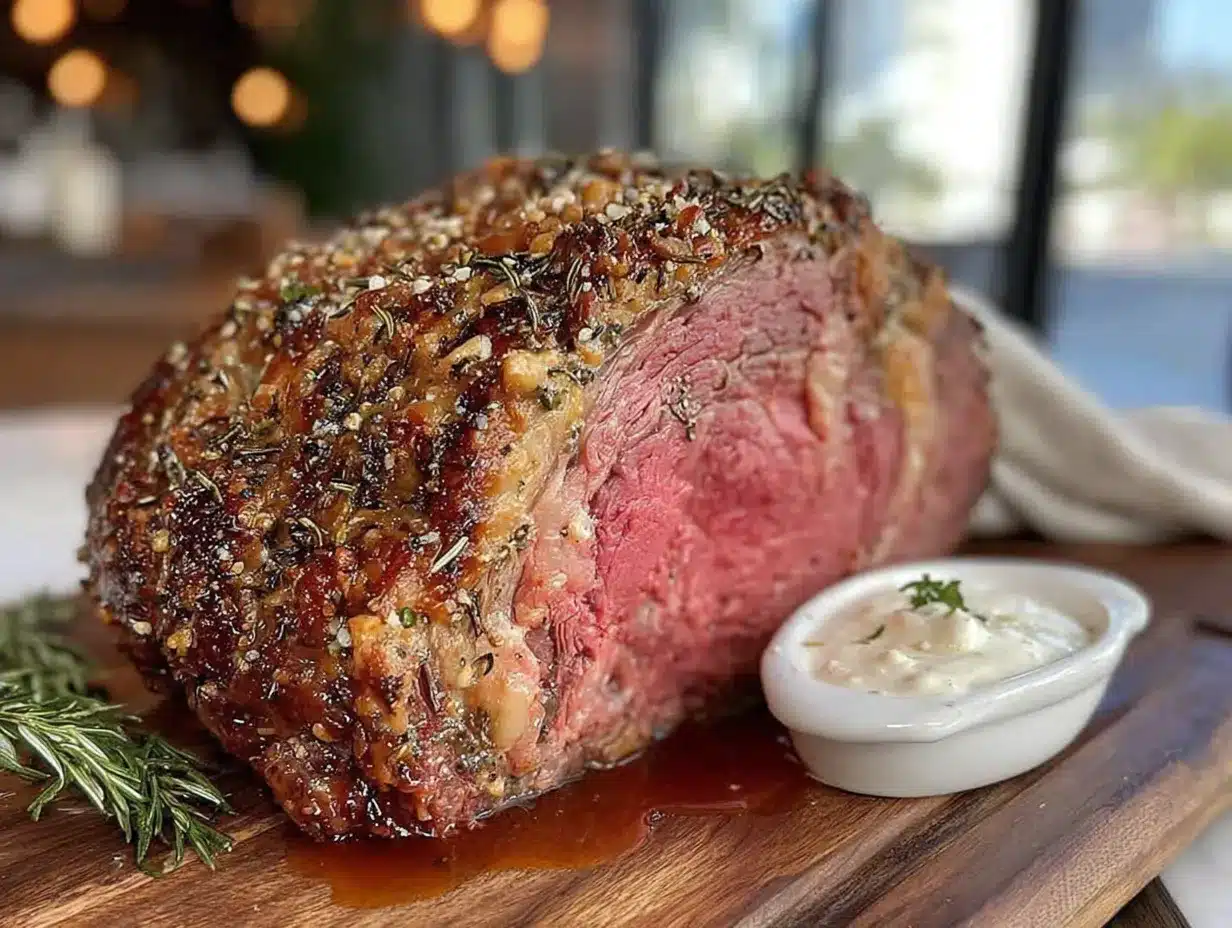
This method is designed to be hands-off for most of the cooking time, giving you space to prepare sides or just relax with a glass of wine. The key is patience and trusting the process.
- Prep the Roast (30 minutes before cooking): Take your prime rib roast out of the refrigerator and let it sit at room temperature for at least 30 minutes. This helps it cook more evenly. Pat it completely dry with paper towels. A dry surface is crucial for a good sear.
- Make the Garlic Herb Paste: In a small bowl, combine the minced garlic, chopped rosemary, thyme, olive oil, kosher salt, and black pepper. Mix it into a thick, fragrant paste. The smell at this point is incredible.
- Season the Roast: Rub the garlic herb paste all over the entire surface of the roast. Don’t be shy—really work it into every nook and cranny. Make sure the fat cap is well-coated. Place the roast, fat side up, in your roasting pan.
- Low and Slow Roast: Preheat your oven to 275°F (135°C). Pour the beef broth into the bottom of the pan, being careful not to wash the paste off the meat. Roast the prime rib for about 2 to 2.5 hours, or until the internal temperature reaches 115°F (46°C) for rare, or 125°F (52°C) for medium-rare. The temperature will continue to rise as it rests. This low heat gently cooks the meat all the way through without drying it out.
- The High-Heat Sear: Once the roast hits your target temperature, remove it from the oven. Increase the oven temperature to 500°F (260°C). While it’s heating up, tent the roast loosely with foil. Once the oven is screaming hot, remove the foil and return the roast to the oven. Roast for 8-12 minutes, until the crust is deeply browned and sizzling. Watch it closely—it can go from perfect to burnt very quickly.
- Rest the Roast: This is the most important step. Remove the roast from the oven and transfer it to a cutting board. Tent it loosely with foil and let it rest for 20-30 minutes. Do not skip this! The resting period allows the juices to redistribute throughout the meat. If you cut into it too early, all those beautiful juices will run out onto the board, leaving you with dry meat.
- Slice and Serve: After resting, use a sharp chef’s knife to slice the roast against the grain into 1/2-inch to 3/4-inch thick slices. The meat should be perfectly pink and incredibly tender. Arrange on a platter and spoon any accumulated juices from the cutting board over the top.
Personal Tip: I used to get so anxious during the final sear. The high heat feels aggressive. But trust the process. That blast of heat is what creates the gorgeous, crunchy crust that makes this roast so special. Just don’t walk away from the oven!
Cooking Tips & Techniques
Over the years, I’ve made every mistake in the book with prime rib. I’ve over-salted it, under-cooked it, and once, I forgot to take the twine off before serving (don’t ask). Here are the lessons I’ve learned so you don’t have to.
- The Thermometer is Your Best Friend: I cannot stress this enough. Don’t rely on cooking times alone. Ovens vary wildly. Insert the thermometer into the thickest part of the roast, away from any bone. For medium-rare, pull it out at 125°F (52°C). It will climb to about 130°F (54°C) during the rest.
- Don’t Skip the Rest: This is the number one mistake home cooks make. The meat needs time to relax. If you cut into it right away, you’ll have a puddle of juice on your cutting board and dry, tough meat on your plate. A 20-minute rest is non-negotiable.
- Pat it Dry: Moisture is the enemy of a good crust. Before you apply the herb paste, make sure the roast is as dry as possible. Use several paper towels to soak up any surface moisture. This helps the paste adhere and encourages browning.
- Let it Breathe: Taking the chill off the roast before cooking is a game-changer. A cold roast dropped into a hot oven will cook unevenly, with a well-done exterior and a raw center. That 30 minutes on the counter makes a huge difference.
Variations & Adaptations
This recipe is a fantastic base, but don’t be afraid to make it your own. Here are a few ways I’ve adapted it over the years.
- Spicy Herb Crust: Add 1 teaspoon of red pepper flakes or a pinch of cayenne pepper to the herb paste. It gives the roast a subtle warmth that pairs beautifully with the garlic and herbs. I did this for a New Year’s Eve dinner, and my brother-in-law (a self-proclaimed spice wimp) asked for the recipe.
- Horseradish Cream Sauce: While the roast is resting, whisk together 1/2 cup sour cream, 2 tablespoons prepared horseradish (drained), 1 tablespoon lemon juice, and a pinch of salt. This tangy, creamy sauce is the perfect counterpoint to the rich beef.
- Red Wine & Herb Variation: Replace the beef broth with 1/2 cup of dry red wine (like Cabernet Sauvignon) and 1/2 cup of beef broth. Add a sprig of fresh rosemary and a few sprigs of thyme to the pan liquid. The wine adds a deep, complex flavor to the pan drippings, which you can use to make a simple au jus.
- Budget-Friendly Cut: If the price of prime rib makes you wince (I feel you), try this same method with a top sirloin roast or a tri-tip. The cooking time will be shorter, so rely on your thermometer. The herb crust works beautifully on less expensive cuts, making them taste like a million bucks.
Serving & Storage Suggestions
This roast is a star on its own, but the right sides and storage make the whole experience even better.
Serving: Serve the prime rib hot, right after it’s rested and sliced. Arrange the slices on a warm platter and spoon some of the pan juices over the top. I love serving it with classic sides like creamy mashed potatoes, roasted asparagus, and a simple green salad with a tangy vinaigrette to cut through the richness. A glass of full-bodied red wine, like a Cabernet or a Zinfandel, is the perfect pairing.
Storage: Leftover prime rib is a gift. Let the roast cool completely, then wrap it tightly in plastic wrap or aluminum foil, or place it in an airtight container. It will keep in the refrigerator for 3-4 days. The flavor actually gets even better as it sits.
Reheating: The best way to reheat prime rib is low and slow to avoid drying it out. Place slices in a baking dish with a splash of beef broth, cover with foil, and warm in a 300°F (150°C) oven for about 10-15 minutes. You can also reheat slices in a skillet over medium-low heat with a little butter. Avoid the microwave—it will turn your beautiful roast into shoe leather.
Leftover Ideas: Thinly slice the cold roast for amazing sandwiches on crusty bread with horseradish sauce and arugula. You can also dice it up and add it to a hearty beef stew or a breakfast hash with potatoes and onions.
Nutritional Information & Benefits
While this is an indulgent meal, beef does have some nutritional benefits. A 4-ounce serving of cooked prime rib (with visible fat trimmed) provides a good source of high-quality protein, iron, and B vitamins, including B12, which is essential for energy and nerve function.
Here are approximate nutritional values per serving (based on 8 servings):
- Calories: 450-550
- Protein: 35-40g
- Fat: 35-40g
- Saturated Fat: 15-18g
- Carbohydrates: 2-3g
- Sodium: 600-800mg (varies with salt used)
Dietary Considerations: This recipe is naturally low-carb, keto-friendly, and gluten-free. It’s a great option for those following a paleo or whole30 diet (just skip the butter and use a compliant oil). The main allergens are dairy (if using butter) and sulfites (naturally occurring in wine, if used).
My Perspective: I believe in enjoying real, whole foods in moderation. A meal like this is a celebration. It’s not an everyday thing, and that’s what makes it special. Pair it with a big, beautiful salad and some roasted vegetables, and you’ve got a balanced, satisfying plate that nourishes both body and soul.
Conclusion
This perfect garlic herb prime rib roast isn’t just a recipe—it’s an experience. It’s the smell that fills your house and makes everyone gather in the kitchen. It’s the sound of the knife slicing through that perfect crust. It’s the look on your family’s faces when they take that first, incredible bite. It’s the meal that turns an ordinary weekend into a special occasion.
I’ve made this roast for Christmas, for New Year’s, for birthdays, and for no reason at all other than we needed a little bit of magic. It has never, ever let me down. I hope you’ll give it a try and make it your own. Maybe you’ll add a different herb, or serve it with your grandmother’s potato recipe. That’s the beauty of cooking—it’s a starting point for your own story.
I’d love to hear how it turns out for you! Drop a comment below and let me know if your family loved it as much as mine does. And if you have a favorite side dish that you serve with prime rib, share that too—I’m always looking for new ideas. Happy cooking!
Frequently Asked Questions
Can I use a bone-in prime rib roast for this recipe?
Absolutely! A bone-in roast is actually a bit more flavorful and forgiving. The bones act as an insulator, helping the meat cook more evenly. Just be aware that it will take a bit longer to cook. Use your meat thermometer to guide you, not the clock. You’ll also want to adjust your serving size, as the bones add weight without adding meat.
What if I don’t have fresh herbs?
Fresh herbs are highly recommended for the best flavor, but if you’re in a pinch, you can use dried. Use about 1 teaspoon of dried rosemary and 1 teaspoon of dried thyme instead of the fresh amounts. Keep in mind that dried herbs are more potent, so you might want to start with a little less and taste the paste before applying it.
How do I make au jus from the pan drippings?
It’s easy! After you remove the roast to rest, place the roasting pan on the stovetop over medium heat. Add 1 cup of beef broth (or a mix of broth and red wine) and scrape up all the browned bits from the bottom of the pan. Let it simmer for 2-3 minutes, then strain it through a fine-mesh sieve. Season with salt and pepper to taste. That’s your au jus!
Can I prepare the garlic herb paste ahead of time?
Yes, you can! The paste can be made up to 2 days in advance. Store it in an airtight container in the refrigerator. Just let it come to room temperature for about 15 minutes before you rub it on the roast. This makes the day-of cooking even easier.
My roast is a different size. How do I adjust the cooking time?
The best way to handle different sizes is to use the rule of thumb: at 275°F (135°C), a boneless roast takes about 15-20 minutes per pound for medium-rare. So, a 4-pound roast would take about 60-80 minutes. But again, the meat thermometer is your most reliable tool. Start checking the internal temperature about 30 minutes before you think it might be done.
PrintPerfect Garlic Herb Prime Rib Roast: Easy Holiday Dinner
This foolproof prime rib roast features a savory garlic herb crust and a low-and-slow roasting method followed by a high-heat sear for a perfectly pink, tender, and juicy centerpiece. It’s the ultimate showstopper for any special occasion.
- Prep Time: 15 minutes
- Cook Time: 2 hours 30 minutes
- Total Time: 3 hours 15 minutes
- Yield: 8 servings 1x
- Category: Main Course
- Cuisine: American
Ingredients
- 1 (4-5 pound) boneless prime rib roast
- 6 cloves garlic, minced
- 2 tablespoons fresh rosemary, finely chopped
- 2 tablespoons fresh thyme leaves
- 2 tablespoons olive oil
- 1 tablespoon kosher salt
- 1 teaspoon black pepper
- 1 cup beef broth, low-sodium
- 2 tablespoons butter (optional, for basting)
Instructions
- Prep the Roast (30 minutes before cooking): Take the prime rib roast out of the refrigerator and let it sit at room temperature for at least 30 minutes. Pat it completely dry with paper towels.
- Make the Garlic Herb Paste: In a small bowl, combine the minced garlic, chopped rosemary, thyme, olive oil, kosher salt, and black pepper. Mix into a thick paste.
- Season the Roast: Rub the garlic herb paste all over the entire surface of the roast, including the fat cap. Place the roast, fat side up, in a roasting pan.
- Low and Slow Roast: Preheat oven to 275°F (135°C). Pour the beef broth into the bottom of the pan. Roast for about 2 to 2.5 hours, or until internal temperature reaches 115°F (46°C) for rare or 125°F (52°C) for medium-rare.
- The High-Heat Sear: Remove the roast from the oven. Increase oven temperature to 500°F (260°C). Tent the roast loosely with foil while the oven heats. Once hot, remove foil and return roast to the oven. Roast for 8-12 minutes until deeply browned and sizzling.
- Rest the Roast: Transfer the roast to a cutting board, tent loosely with foil, and let rest for 20-30 minutes.
- Slice and Serve: Slice against the grain into 1/2-inch to 3/4-inch thick slices. Arrange on a platter and spoon accumulated juices over the top.
Notes
For a bone-in roast, add 15-20 minutes to total cooking time. If using dried herbs, use 1 teaspoon each of dried rosemary and thyme. Let the roast come to room temperature before cooking for even doneness. Do not skip the resting period—it is essential for juicy meat.
Nutrition
- Serving Size: 4 ounces
- Calories: 500
- Sodium: 700
- Fat: 38
- Saturated Fat: 16
- Carbohydrates: 2
- Protein: 38
Keywords: prime rib, garlic herb prime rib, holiday dinner, roast beef, easy prime rib, Christmas dinner, New Year's dinner