Love this? Save it for later!
Share the inspiration with your friends
“You won’t believe what I found at the farmer’s market last Saturday,” my friend Lisa said as she handed me a fresh bundle of bright green garlic scapes. I had seen them before—those curly, slender stalks that look like something between a green bean and a chive—but honestly, I never knew what to do with them. Lisa, a kitchen wizard in her own right, insisted I try making a fresh garlic scape pesto. I was skeptical at first, but the way she described it—the sharp garlic punch, the vibrant green color, the nutty depth from toasted pine nuts—had me intrigued.
So there I was, in my cluttered kitchen that evening, trying to replicate her magic. I accidentally grabbed regular pine nuts instead of the toasted ones she recommended, and I forgot to salt the pasta water properly. Yet, despite the little mishaps, the linguine tossed in that homemade pesto was unbelievably fresh and flavorful. It was like summer on a plate—bright, herbal, with just the right bite of garlic and a lovely crunch from the pine nuts.
If you know that feeling when a simple ingredient suddenly turns into a star, this fresh garlic scape pesto linguine with toasted pine nuts is exactly that. Maybe you’ve seen garlic scapes at the market and wondered what to do with them. Let me tell you, this recipe will turn those green tendrils into a vibrant, easy pasta dish that tastes like you spent hours in the kitchen, even when you didn’t.
Why You’ll Love This Recipe
After messing around with fresh garlic scapes for a few seasons, I can say this linguine recipe is the one that truly stands out. It’s not just another pesto pasta. Here’s why it’s worth your time:
- Quick & Easy: This recipe comes together in under 30 minutes, perfect for those busy weeknights or when you want something fresh and satisfying without fuss.
- Simple Ingredients: Most of these are pantry basics, with the star being the seasonal garlic scapes you might snag at your local farmers market or grocery store.
- Perfect for Spring & Early Summer: When garlic scapes are at their best, this dish captures the essence of the season in every bite.
- Crowd-Pleaser: Honestly, even people who say they’re “not into pesto” have been won over by this fresh twist.
- Unbelievably Delicious: The bright, grassy flavor of garlic scapes combined with the creamy texture of olive oil and the crunch of toasted pine nuts makes this pasta irresistible.
What makes this recipe different? Well, I like to toast the pine nuts just right—not too dark, or they get bitter—and blend the garlic scapes with a touch of lemon zest for brightness. Plus, the linguine noodles soak up the pesto better than other pasta shapes I’ve tried. This isn’t just any pesto linguine; it’s one that wakes up your taste buds and feels like a little celebration of spring.
What Ingredients You Will Need
This fresh garlic scape pesto linguine recipe uses simple, wholesome ingredients that come together to create bold flavor and satisfying texture without the fuss. Most are pantry staples, with garlic scapes adding a seasonal, aromatic lift.
- For the Pesto:
- Fresh garlic scapes (about 1 cup, chopped) – look for firm, bright green scapes at your market
- Toasted pine nuts (¼ cup) – toasting brings out a rich nuttiness; I recommend lightly golden, not dark brown
- Extra virgin olive oil (½ cup) – use a fruity, high-quality oil like California Olive Ranch for best flavor
- Parmesan cheese, grated (½ cup) – freshly grated, not pre-shredded, to avoid clumping
- Fresh lemon zest (1 teaspoon) – adds brightness and balances the garlic’s intensity
- Salt (to taste) – kosher or sea salt works well
- Freshly ground black pepper (to taste)
- For the Pasta:
- Linguine (12 ounces / 340 grams) – traditional semolina pasta works best here
- Salt (for pasta water) – about 1 tablespoon for a large pot of water
Ingredient tips: If you can’t find garlic scapes, a good substitute is fresh garlic leaves or a combination of garlic and basil, but the unique flavor won’t be quite the same. For a dairy-free option, swap Parmesan for nutritional yeast. Feel free to adjust the pine nuts amount depending on your nut preference—walnuts or almonds can work, though pine nuts are classic.
Equipment Needed
- Large pot – for boiling the linguine; a 6-quart pot is ideal
- Food processor or blender – essential for making the smooth, creamy pesto
- Fine grater or microplane – for zesting lemon and grating Parmesan
- Colander – to drain the pasta
- Wooden spoon or tongs – for mixing pasta and pesto
- Measuring cups and spoons – for accuracy, especially with oil and nuts
If you don’t have a food processor, a sturdy blender can handle the pesto, but you might need to scrape down the sides a few times. When toasting pine nuts, a small skillet works perfectly; keep a close eye to prevent burning, which happened to me once and nearly ruined the batch! For budget-friendly options, a handheld grater and a microwave can substitute for some tools, but the food processor really makes life easier here.
Preparation Method
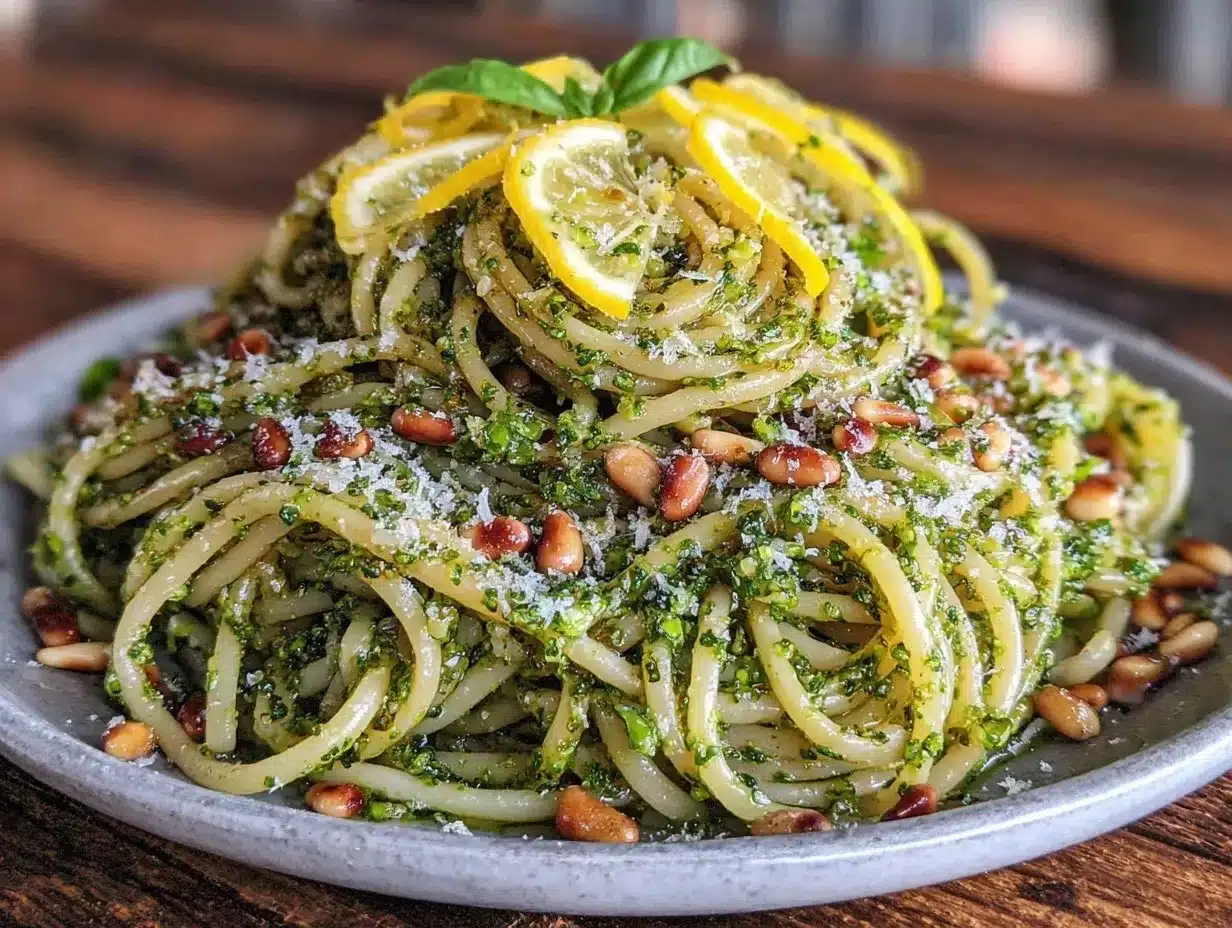
- Prepare the pine nuts: Heat a small skillet over medium heat and add ¼ cup pine nuts. Toast, stirring frequently, until they turn a light golden brown and smell nutty, about 3–5 minutes. Transfer immediately to a plate to cool and prevent burning.
- Bring pasta water to a boil: Fill a large pot with water, add 1 tablespoon salt, and bring to a rolling boil. This step usually takes 8–10 minutes, depending on your stove.
- Make the pesto: In a food processor, combine the chopped garlic scapes, toasted pine nuts, grated Parmesan, lemon zest, a pinch of salt, and a few grinds of black pepper. Pulse a few times to chop roughly.
- Add olive oil: With the processor running, slowly drizzle in ½ cup olive oil until the pesto becomes smooth but still has some texture, about 30 seconds. Taste and adjust salt or lemon zest as needed.
- Cook the linguine: Add linguine to the boiling water and cook according to package instructions (usually 9-11 minutes) until al dente. Stir occasionally to prevent sticking.
- Reserve pasta water: Before draining, scoop out about ½ cup of the pasta cooking water and set aside. This starchy water helps loosen the pesto if needed.
- Drain pasta: Drain linguine in a colander and immediately return it to the pot or a large bowl.
- Toss pasta with pesto: Add the pesto to the hot pasta and toss well to coat. If the sauce feels too thick, add reserved pasta water a tablespoon at a time until you reach a silky consistency.
- Final seasoning: Taste and add more salt, pepper, or a squeeze of fresh lemon juice if you want a bit more zing. Toss again.
- Serve: Plate the pasta and sprinkle with a few extra toasted pine nuts and grated Parmesan for garnish. A drizzle of olive oil on top is optional but lovely.
Note: Don’t over-process the pesto; you want a little bit of texture, not a puree. Also, toss the pesto with pasta while it’s hot to help it cling better. I once waited too long and had to rewarm everything, which isn’t ideal.
Cooking Tips & Techniques
Making fresh garlic scape pesto linguine feels fancy but is actually straightforward once you know a few tricks.
- Toast your pine nuts carefully: They burn fast! Keep stirring and remove them from heat as soon as they turn golden.
- Don’t overblend the pesto: You want it a bit chunky to enjoy the garlic scapes’ texture. Overprocessing can make it too oily or slimy.
- Salt your pasta water generously: This is your only chance to season the pasta itself. It should taste like the sea.
- Reserve pasta water: That starchy water is magic for loosening thick pesto without watering it down.
- Timing matters: Cook pasta just before serving so it’s hot and fresh. Toss with pesto immediately after draining for the best flavor coating.
- Adjust olive oil cautiously: Add gradually to control consistency and avoid a greasy sauce.
Honestly, the first time I made this, I skipped the lemon zest and it tasted flat. Adding that little zing makes a huge difference. Also, I learned that fresh garlic scapes can vary in pungency, so taste them raw before blending and adjust quantities accordingly.
Variations & Adaptations
This fresh garlic scape pesto linguine recipe is flexible, so you can tweak it to suit your tastes or dietary needs.
- Vegan option: Replace Parmesan with nutritional yeast and use a vegan-friendly olive oil. The flavor is still fantastic!
- Nut-free version: Swap pine nuts for toasted pumpkin seeds or sunflower seeds to avoid allergens but keep the crunch.
- Herb boost: Add fresh basil or parsley to the pesto for a layered herbal flavor.
- Spicy twist: Toss in a pinch of red pepper flakes or a drizzle of chili oil for some heat.
- Alternative pasta: Try gluten-free linguine or even zucchini noodles for a lighter take.
One time, I experimented by adding a spoonful of ricotta to the pesto before tossing it with pasta, which gave it a creamy, dreamy texture—definitely worth a try if you want a richer version.
Serving & Storage Suggestions
Serve this fresh garlic scape pesto linguine warm, right after tossing for the best flavor and texture. Garnish with a few extra toasted pine nuts and freshly grated Parmesan. It pairs beautifully with a crisp green salad or roasted vegetables and a chilled glass of white wine or sparkling water with lemon.
If you have leftovers, store them in an airtight container in the refrigerator for up to 2 days. The pesto may thicken and the pasta will absorb the sauce, so add a splash of olive oil or a bit of warm water when reheating gently on the stovetop or microwave to revive that silky texture.
Flavors actually deepen after a day, so leftover pesto pasta makes a great quick lunch the next day. Just don’t expect the same fresh brightness as when served immediately.
Nutritional Information & Benefits
This fresh garlic scape pesto linguine is not only delicious but packs a nutritional punch. Garlic scapes are rich in vitamins A and C, plus antioxidants that support immune health. Pine nuts provide healthy fats and protein, while olive oil offers heart-healthy monounsaturated fats.
One serving (about 1 ½ cups) contains roughly 450 calories, 15 grams of fat, 60 grams of carbohydrates, and 12 grams of protein. It’s naturally vegetarian and can easily be made vegan or gluten-free with simple swaps.
For those watching sodium, adjusting the salt to taste or using a lower-sodium cheese can help. Overall, it’s a wholesome, fresh pasta dish that feels indulgent but nourishes your body too.
Conclusion
If you’ve been curious about garlic scapes or want a fresh, easy pasta recipe that’s bursting with flavor, this fresh garlic scape pesto linguine with toasted pine nuts is a must-try. It’s simple enough for weeknights, impressive enough for guests, and flexible enough to suit many diets.
I love this recipe because it brings out the best in a seasonal ingredient that often gets overlooked. Plus, it’s a perfect way to enjoy homemade pasta without too much fuss. Give it a go—you might find yourself reaching for garlic scapes at every market visit now.
When you try it, drop a comment or share your own take on the pesto. I’d love to hear how it turns out for you or any variations you invent. Happy cooking!
FAQs
What do garlic scapes taste like?
Garlic scapes have a milder, fresher garlic flavor than garlic cloves. They’re a bit grassy and slightly sweet, perfect for pesto.
Can I use another pasta shape?
Yes! While linguine is ideal here, you can use spaghetti, fettuccine, or even penne. Just make sure the pasta is hot when tossed with pesto.
How long does fresh garlic scape pesto keep?
Store pesto in an airtight container in the fridge for up to 3 days. Adding a thin layer of olive oil on top helps prevent browning.
Are pine nuts necessary for pesto?
They add classic flavor and texture, but you can substitute with walnuts, almonds, or seeds if needed.
Can I freeze the pesto?
Yes, pesto freezes well. Portion it into ice cube trays, freeze, then transfer to bags for easy use later. Thaw in the fridge before using.
Pin This Recipe!
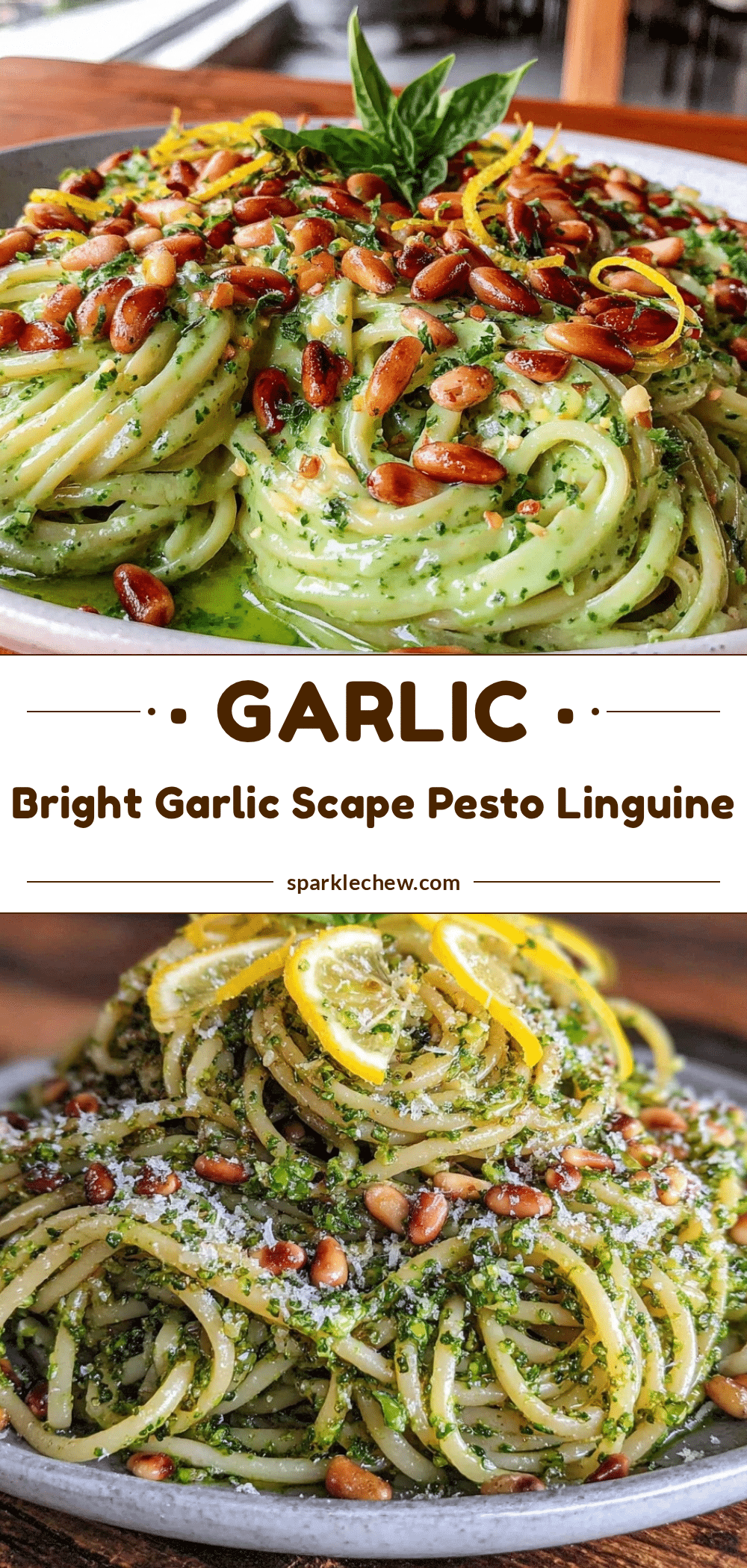
Fresh Garlic Scape Pesto Linguine
A vibrant and easy homemade pasta dish featuring fresh garlic scape pesto with toasted pine nuts, perfect for spring and early summer.
- Prep Time: 10 minutes
- Cook Time: 20 minutes
- Total Time: 30 minutes
- Yield: 4 servings 1x
- Category: Main Course
- Cuisine: Italian
Ingredients
- 1 cup fresh garlic scapes, chopped
- 1/4 cup toasted pine nuts
- 1/2 cup extra virgin olive oil
- 1/2 cup grated Parmesan cheese
- 1 teaspoon fresh lemon zest
- Salt, to taste
- Freshly ground black pepper, to taste
- 12 ounces linguine pasta
- 1 tablespoon salt (for pasta water)
Instructions
- Heat a small skillet over medium heat and toast 1/4 cup pine nuts, stirring frequently, until light golden brown and fragrant, about 3–5 minutes. Transfer to a plate to cool.
- Fill a large pot with water, add 1 tablespoon salt, and bring to a rolling boil.
- In a food processor, combine chopped garlic scapes, toasted pine nuts, grated Parmesan, lemon zest, a pinch of salt, and black pepper. Pulse a few times to chop roughly.
- With the processor running, slowly drizzle in 1/2 cup olive oil until the pesto is smooth but still textured, about 30 seconds. Taste and adjust seasoning as needed.
- Add linguine to boiling water and cook according to package instructions (9–11 minutes) until al dente, stirring occasionally.
- Reserve 1/2 cup pasta cooking water before draining.
- Drain linguine and return to pot or large bowl.
- Toss hot pasta with pesto, adding reserved pasta water a tablespoon at a time to reach desired consistency.
- Adjust seasoning with salt, pepper, or a squeeze of fresh lemon juice if desired and toss again.
- Serve immediately, garnished with extra toasted pine nuts and grated Parmesan. Optionally drizzle with olive oil.
Notes
Toast pine nuts carefully to avoid burning. Do not overblend pesto to maintain texture. Salt pasta water generously. Reserve pasta water to loosen pesto sauce if needed. Toss pesto with pasta while hot for best coating. Lemon zest adds brightness and balances garlic intensity.
Nutrition
- Serving Size: About 1 1/2 cups
- Calories: 450
- Fat: 15
- Carbohydrates: 60
- Protein: 12
Keywords: garlic scape pesto, linguine, homemade pasta, toasted pine nuts, spring pasta, easy pesto recipe, fresh pesto, vegetarian pasta