Love this? Save it for later!
Share the inspiration with your friends
My neighbor Dave is the last person I’d expect to give me a life-changing bread recipe. I mean, the guy mows his lawn at 7 AM on Saturdays and once asked me if “focaccia” was a type of pasta. But there I was, last fall, leaning over his chain-link fence while he described, in shocking detail, exactly how to make the crispiest sourdough discard focaccia I’d ever tasted. Turns out, his grandmother was a baker in a small Italian village, and this recipe was her pride and joy. He’d never mentioned her before. Not once. I stood there holding a dead garden hose, completely stunned.
The secret, according to Dave’s grandmother, isn’t in the kneading or the fancy flour. It’s in the patience and the pan. You need a heavy, dark metal pan, a ridiculous amount of good olive oil, and that tangy sourdough discard you’ve been feeling guilty about hoarding in your fridge. Honestly, this recipe turned my baking world upside down. I’ve made it maybe a dozen times since that conversation, and it gets better every single time.
You know that feeling when you pull a pan of bread from the oven and the whole kitchen smells like a fancy bakery? That’s this recipe. The bottom gets shatteringly crisp, almost like a cracker, while the inside stays soft and airy with those signature big, bubbly pockets. The rosemary and flaky sea salt on top are just the perfect finishing touch. This is the focaccia that makes you close your eyes after the first bite. And it all started with a guy named Dave and a conversation I almost didn’t have.
Why You’ll Love This Recipe
Let’s be honest, most focaccia recipes are good, but they aren’t this good. This one is different. It’s been tested in my tiny, imperfect kitchen more times than I can count, and I’m a little obsessed with getting it just right. Here is why this crispy sourdough discard focaccia deserves a permanent spot in your baking rotation:
- Zero Waste Genius: Finally, a fantastic use for that sourdough discard! Instead of throwing it away or letting it languish in the fridge, you turn it into the most incredible bread. It’s a win for your wallet and your taste buds.
- Incredibly Crispy Texture: The bottom of this focaccia is a game-changer. Thanks to a specific technique and a hot pan, you get a crust so crispy it shatters when you bite into it. It’s the perfect contrast to the soft, chewy interior.
- Simple, Pantry-Friendly Ingredients: You don’t need any fancy equipment or hard-to-find ingredients. If you have sourdough discard, flour, olive oil, and some herbs, you are already most of the way there. No grocery store scavenger hunts required.
- Perfect for Any Occasion: This focaccia is a total crowd-pleaser. Serve it alongside soup or salad for a cozy dinner, tear it apart for a party appetizer, or just eat it straight from the pan for a snack (I won’t judge).
- Foolproof, Even for Beginners: If you are scared of baking with yeast or sourdough, this is the recipe for you. It is incredibly forgiving, requires almost no kneading, and the results are always impressive. It practically bakes itself.
This isn’t just another bread recipe. It’s the one that makes you feel like a pro. It’s the one your friends will ask you to bring to every gathering. And honestly? It’s the one that makes you look forward to having extra sourdough discard on hand.
What Ingredients You Will Need
This recipe is built on simple, high-quality ingredients that work together to create something truly special. Each one plays a key role in the texture and flavor of your crispy sourdough discard focaccia. Here is what you need to grab:
For the Dough
- Bread Flour (500g / about 4 cups): I prefer King Arthur Bread Flour for its high protein content, which gives the focaccia a wonderful chewy structure and helps create that crispy crust. You can use all-purpose flour, but the texture won’t be quite as chewy.
- Sourdough Discard (200g / about 1 cup, unfed): This is the star of the show! Use your discard straight from the fridge. It doesn’t need to be active or bubbly. The discard adds a complex, tangy flavor and helps with the incredible texture.
- Warm Water (375g / about 1 ½ cups): The water should be lukewarm, around 90-100°F (32-38°C). Too hot and it can kill the natural yeast in the discard; too cold and it will slow down the fermentation.
- Olive Oil (60g / about ¼ cup + more for the pan): Use a good quality extra virgin olive oil here. It’s not just for flavor; the fat helps create a tender crumb and a crispy bottom. Don’t skimp on it!
- Active Dry Yeast (1 teaspoon): This little boost of commercial yeast ensures a reliable, strong rise, especially if your sourdough discard is a bit sluggish. You can omit it for a slower, all-natural fermentation, but the rise will take much longer.
- Fine Sea Salt (10g / about 1 ½ teaspoons): Salt is crucial for flavor and for strengthening the gluten network. Don’t leave it out!
For the Topping

- Good Quality Olive Oil (about ¼ cup): You’ll use this to generously coat the pan and the top of the dough before baking. It’s essential for that crispy, golden crust.
- Fresh Rosemary (2-3 sprigs, leaves removed and roughly chopped): Fresh rosemary is a must here. Dried rosemary just doesn’t have the same aromatic punch. It becomes beautifully fragrant as it bakes.
- Flaky Sea Salt (like Maldon, 1-2 teaspoons): This is non-negotiable for me. The large, delicate flakes provide a wonderful burst of salty flavor and a delightful little crunch on top of the focaccia.
Equipment Needed
You don’t need a professional bakery setup for this, but the right tools make a big difference. Here is what you will need:
- A Heavy, Dark Metal Baking Pan (13×9-inch): This is the most important piece of equipment. A dark, heavy pan (like an anodized aluminum or a dark non-stick pan) absorbs heat much better than a shiny, light-colored one. This is the secret to getting that impossibly crispy bottom crust. I use my old, well-seasoned USA Pan and it works like a charm.
- A Large Mixing Bowl: Any large bowl will do for mixing the dough.
- A Digital Kitchen Scale: I cannot recommend this enough. Measuring flour and water by weight is far more accurate than using cups, especially with sourdough. It ensures consistent results every single time.
- A Wooden Spoon or Dough Whisk: For the initial mixing. The dough is very wet and sticky, so a spoon is easier to work with than your hands at this stage.
- Plastic Wrap or a Damp Kitchen Towel: To cover the dough while it rises. A damp towel is great for keeping the dough from drying out.
- Your Hands (oiled!): You will use your hands to stretch and dimple the dough. Make sure they are well-oiled with olive oil to prevent sticking.
Preparation Method
This is where the magic happens. Follow these steps, and you will be rewarded with the most incredible crispy sourdough discard focaccia. Trust the process, especially the sticky dough!
- Mix the Dough (10 minutes): In your large mixing bowl, combine the warm water and the active dry yeast. Let it sit for about 5 minutes until it looks a little foamy. This “blooms” the yeast. Then, add the sourdough discard, olive oil, and bread flour. Mix with your wooden spoon until a shaggy, sticky dough forms. It will look messy—that’s exactly what we want. Finally, add the fine sea salt and mix for another minute until it’s well incorporated.
- The First Rest (30 minutes): Cover the bowl with plastic wrap or a damp towel and let it rest for 30 minutes at room temperature. This is called the “autolyse” period. It allows the flour to fully hydrate and starts developing the gluten without any work from you. Honestly, this is my favorite part—the dough does all the work.
- The Stretch and Fold Series (1.5 hours): Now, we build strength. With a slightly wet hand, grab one side of the dough, stretch it up, and fold it over the top of itself. Rotate the bowl a quarter turn and repeat. Do this 4-6 times total (one full rotation). Cover the bowl again and let it rest for 30 minutes. Repeat this entire stretch and fold process 3 more times, with a 30-minute rest in between. After the final fold, the dough should be smooth, elastic, and still quite sticky. Don’t worry if it feels wet—it’s supposed to!
- The First Rise (2-4 hours): Cover the bowl tightly and let the dough rise at room temperature until it has doubled in size and is bubbly and jiggly. This can take anywhere from 2 to 4 hours depending on the temperature of your kitchen and the strength of your discard. A warm spot (like near a sunny window) will speed things up.
- Cold Fermentation (Overnight, Optional but Recommended): For the best flavor and texture, pop the covered bowl into the refrigerator overnight (at least 8 hours, up to 24). This cold ferment develops a deeper, more complex tangy flavor and makes the dough much easier to handle. If you are short on time, you can skip this step and move on to step 6.
- Prepare the Pan (10 minutes): When you are ready to bake, generously pour about 3-4 tablespoons of olive oil into your 13×9-inch metal pan. Use your fingers to spread it all over the bottom and up the sides. This is crucial for the crispy crust.
- Transfer and Stretch (15 minutes): If the dough was in the fridge, let it sit at room temperature for 30 minutes first. Then, gently turn the cold dough out into the oiled pan. Don’t force it. Let it sit for 10 minutes to relax. Then, using oiled fingertips, gently stretch and press the dough to the edges of the pan. It might resist and shrink back a little—that’s okay. Let it rest for another 10 minutes and try again. It will eventually fill the pan.
- The Final Rise (1.5-2 hours): Cover the pan loosely with plastic wrap and let the dough rise at room temperature until it is puffy, bubbly, and has nearly doubled in height. It should look alive and full of air. This is the final proof.
- Preheat and Dimple (15 minutes): About 30 minutes before you are ready to bake, preheat your oven to 450°F (230°C). Place a rack in the middle of the oven. Once the dough has finished its final rise, drizzle another 2 tablespoons of olive oil over the top. Now for the fun part: using your oiled fingertips, press deep dimples all over the surface of the dough. Don’t be shy—press all the way down to the bottom of the pan. This creates those iconic focaccia pockets. Sprinkle the fresh rosemary and a generous amount of flaky sea salt evenly over the top.
- Bake to Perfection (25-30 minutes): Place the pan on the middle rack and bake for 25-30 minutes, or until the top is deeply golden brown and the bottom is a deep, dark amber. The focaccia should sound hollow when you tap it on the bottom. If the top is browning too quickly but the bottom isn’t done yet, tent it loosely with foil for the last 5-10 minutes.
- Cool and Serve (20 minutes): This is the hardest part. Let the focaccia cool in the pan for 5 minutes, then carefully transfer it to a wire rack. Let it cool for at least 15-20 minutes before slicing. This allows the steam to escape and the crust to stay perfectly crispy. If you cut into it too soon, it will get a little soggy. I know it’s tempting, but trust me on this one!
Cooking Tips & Techniques
I’ve made this crispy sourdough discard focaccia more times than I can count, and I’ve definitely learned a few things the hard way. Here are my best tips to help you nail it on your first try:
- The Pan is Everything: I once used a shiny, light-colored aluminum pan because it was all I had. The bottom of the focaccia was pale and soft, not crispy at all. The dark, heavy pan absorbs heat and radiates it back, creating that shatteringly crisp crust. If you only have a glass or ceramic dish, you’ll need to add about 10 minutes to the bake time, and the bottom still won’t be as crispy.
- Don’t Be Afraid of the Oil: I remember the first time I made this, I thought the amount of olive oil in the pan was excessive. I was wrong. The oil is what fries the bottom of the dough as it bakes, creating that incredible texture. Don’t skimp on it. Your focaccia will thank you.
- Patience is a Virtue: The long, cold fermentation is the secret to the deep, complex flavor. I once skipped the overnight rest because I was in a rush, and the focaccia was fine, but it was missing that special “something.” The tang from the sourdough was much milder. If you have the time, the overnight cold ferment is absolutely worth it.
- Wet Hands are Your Friend: The dough for this focaccia is very wet and sticky. Trying to handle it with dry hands will result in a sticky, frustrating mess. Keep a small bowl of water nearby and dip your fingers in it before you stretch and fold or dimple the dough. It makes the process so much smoother.
- Listen to Your Dough: Baking times and rise times are guidelines, not rules. A humid day might slow the rise, while a warm kitchen might speed it up. The dough is ready for the oven when it is puffy, jiggly, and full of visible air bubbles. Trust your eyes and your instincts more than the clock.
Variations & Adaptations
One of the best things about this focaccia is how versatile it is. Once you have the basic recipe down, you can customize it in so many delicious ways. Here are a few of my favorite variations:
- Everything Bagel Focaccia: After dimpling the dough and adding the oil, skip the rosemary and sea salt. Instead, sprinkle a generous layer of everything bagel seasoning (sesame seeds, poppy seeds, dried garlic, dried onion, and salt) over the top. It’s absolutely incredible. I made this for a brunch party once, and it disappeared in minutes.
- Caramelized Onion & Thyme Focaccia: While the dough is doing its final rise, thinly slice 2 large onions and caramelize them slowly in a pan with a tablespoon of butter and a pinch of salt for about 30-40 minutes. Let them cool slightly, then dot them over the dimpled dough before baking. Sprinkle with fresh thyme leaves instead of rosemary. The sweet, savory onions are a perfect match for the tangy bread.
- Cheesy Garlic Herb Focaccia: This is my husband’s absolute favorite. After dimpling the dough, poke small cubes of fresh mozzarella or crumbled feta into the dimples. Then, mix 2 tablespoons of melted butter with 2 minced garlic cloves and brush it over the top. Sprinkle with rosemary, sea salt, and a handful of grated parmesan cheese before baking. It’s pure comfort food.
Serving & Storage Suggestions
This crispy sourdough discard focaccia is wonderful in so many ways. Here is how I like to serve it and keep it fresh:
- Serving: This focaccia is best served warm, on the day it’s baked. Let it cool for at least 20 minutes on a wire rack to keep the bottom crispy, then slice it into squares or strips. I love serving it alongside a big bowl of creamy tomato basil soup for a cozy, satisfying meal. It’s also fantastic for making sandwiches—try it with roasted vegetables, fresh mozzarella, and a drizzle of balsamic glaze.
- Storage: If you have leftovers (which is rare in my house!), store them in an airtight container at room temperature for up to 2 days. Do not refrigerate it, as the fridge will make the bread go stale much faster. The bottom might lose a bit of its crunch, but it will still be delicious.
- Reheating: The best way to revive the crispiness is to reheat the focaccia in a 350°F (175°C) oven for about 5-7 minutes. You can also pop it in a toaster oven or even a dry skillet over medium heat for a minute or two per side. The microwave will make it soft and chewy, so avoid it if you want that crispy texture back.
Nutritional Information & Benefits
While I firmly believe this focaccia is a “soul food” first and a health food second, it does have some surprising benefits. Here is a quick look at the nutritional profile per serving (based on 12 servings):
| Nutrient | Approximate Value |
|---|---|
| Calories | 280-320 |
| Total Fat | 14-18g |
| Saturated Fat | 2-3g |
| Carbohydrates | 32-38g |
| Fiber | 1-2g |
| Protein | 6-8g |
| Sodium | 350-450mg |
The sourdough fermentation process breaks down some of the gluten and phytic acid in the flour, which can make the bread easier to digest for some people. The olive oil provides healthy monounsaturated fats, which are great for heart health. Plus, the rosemary is packed with antioxidants. It’s not a health food, but it’s a wholesome, real-food treat you can feel good about enjoying. As always, please be mindful of potential allergens. This recipe contains gluten and may contain dairy depending on your choice of pan oil.
Conclusion
So there you have it—the crispy sourdough discard focaccia that started with a chat over a chain-link fence. It’s become my go-to recipe for so many reasons. It’s forgiving, it’s delicious, and it makes me feel like a genuine baker every time I pull that golden, fragrant pan from the oven. It’s the kind of recipe that turns a simple dinner into something special and makes a quiet afternoon feel a little more luxurious.
I honestly hope you give this one a try. Don’t be intimidated by the long instructions or the sticky dough. Just take it step by step, and remember that even if it’s not perfect, it will still be the best focaccia you’ve ever made. And if you have a neighbor like Dave, maybe go thank them. You never know what secret family recipes they might be hiding.
I would absolutely love to hear how yours turns out! Did you try a fun variation? Did you manage to not eat the whole pan in one sitting? Leave a comment below and let me know. And if you loved this recipe, please share it with a friend who needs a little more crispy, herby goodness in their life. Happy baking!
Frequently Asked Questions
Can I use all-purpose flour instead of bread flour?
Yes, you can! The focaccia will still be delicious, but the texture will be a bit softer and less chewy. Bread flour’s higher protein content gives the focaccia more structure and helps create that signature crispy crust. If you only have all-purpose, it will still work perfectly well.
My dough is very wet and sticky. Is that normal?
Absolutely! This is a high-hydration dough, meaning it has a lot of water compared to flour. This is what creates those beautiful, airy pockets in the finished focaccia. Don’t be tempted to add more flour. Use wet hands to handle it, and trust the process. It will all come together.
Can I skip the overnight cold fermentation?
You can, but I wouldn’t recommend it if you have the time. The overnight rest in the fridge develops a much deeper, more complex tangy flavor. If you are short on time, you can skip it and just let the dough do its final rise at room temperature, but the flavor will be milder.
Why isn’t the bottom of my focaccia crispy?
The most common culprit is the baking pan. You need a heavy, dark metal pan to absorb and radiate heat effectively. Shiny or glass pans don’t get hot enough to crisp the bottom. Also, make sure you are using enough olive oil in the pan and that your oven is fully preheated to 450°F (230°C).
How do I store leftover focaccia to keep it fresh?
Store leftover focaccia in an airtight container at room temperature for up to 2 days. Do not refrigerate it, as this will dry it out. To revive the crispiness, reheat it in a 350°F (175°C) oven or a toaster oven for a few minutes. You can also reheat it in a dry skillet for a minute or two per side.
Pin This Recipe!

Crispy Sourdough Discard Focaccia with Rosemary & Sea Salt
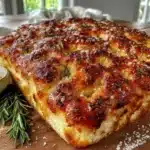
This crispy sourdough discard focaccia features a shatteringly crisp bottom, soft and airy interior with big bubbly pockets, and a topping of fresh rosemary and flaky sea salt. It’s a zero-waste, foolproof recipe that turns your sourdough discard into the most incredible bread.
- Prep Time: 20 minutes
- Cook Time: 25-30 minutes
- Total Time: 3-4 hours (plus optional overnight cold fermentation)
- Yield: 12 servings 1x
- Category: Bread
- Cuisine: Italian
Ingredients
- 500g bread flour (about 4 cups)
- 200g sourdough discard (about 1 cup, unfed)
- 375g warm water (about 1 ½ cups, 90-100°F)
- 60g olive oil (about ¼ cup, plus more for the pan)
- 1 teaspoon active dry yeast
- 10g fine sea salt (about 1 ½ teaspoons)
- ¼ cup good quality olive oil (for the pan and topping)
- 2–3 sprigs fresh rosemary, leaves removed and roughly chopped
- 1–2 teaspoons flaky sea salt (like Maldon)
Instructions
- Mix the Dough: In a large mixing bowl, combine warm water and active dry yeast. Let sit for 5 minutes until foamy. Add sourdough discard, olive oil, and bread flour. Mix with a wooden spoon until a shaggy, sticky dough forms. Add fine sea salt and mix for another minute.
- First Rest: Cover the bowl with plastic wrap or a damp towel and let rest for 30 minutes at room temperature (autolyse).
- Stretch and Fold Series: With a slightly wet hand, stretch one side of the dough up and fold it over the top. Rotate the bowl a quarter turn and repeat. Do 4-6 stretches (one full rotation). Cover and rest 30 minutes. Repeat this stretch and fold process 3 more times, with 30-minute rests in between.
- First Rise: Cover the bowl tightly and let the dough rise at room temperature until doubled in size, bubbly, and jiggly (2-4 hours).
- Cold Fermentation (Optional but Recommended): Place the covered bowl in the refrigerator overnight (at least 8 hours, up to 24) for deeper flavor and easier handling.
- Prepare the Pan: Generously pour 3-4 tablespoons of olive oil into a 13×9-inch heavy, dark metal pan. Spread it all over the bottom and up the sides.
- Transfer and Stretch: If dough was refrigerated, let it sit at room temperature for 30 minutes. Gently turn the dough into the oiled pan. Let it sit for 10 minutes to relax. Using oiled fingertips, gently stretch and press the dough to the edges of the pan. Let rest another 10 minutes and repeat if needed.
- Final Rise: Cover the pan loosely with plastic wrap and let the dough rise at room temperature until puffy, bubbly, and nearly doubled in height (1.5-2 hours).
- Preheat and Dimple: About 30 minutes before baking, preheat oven to 450°F (230°C). Drizzle 2 tablespoons of olive oil over the dough. Using oiled fingertips, press deep dimples all over the surface. Sprinkle fresh rosemary and flaky sea salt evenly over the top.
- Bake: Place the pan on the middle rack and bake for 25-30 minutes, until the top is deeply golden brown and the bottom is a deep, dark amber. The focaccia should sound hollow when tapped on the bottom. If top browns too quickly, tent loosely with foil for the last 5-10 minutes.
- Cool and Serve: Let the focaccia cool in the pan for 5 minutes, then transfer to a wire rack. Cool for at least 15-20 minutes before slicing to keep the crust crispy.
Notes
The pan is crucial for a crispy bottom; use a heavy, dark metal pan. Don’t be afraid of the olive oil—it fries the bottom for incredible texture. The overnight cold fermentation develops deeper flavor. Use wet hands to handle the sticky dough. Listen to your dough; rise times are guidelines.
Nutrition
- Serving Size: 1 square or strip
- Calories: 280320
- Sodium: 350450
- Fat: 1418
- Saturated Fat: 23
- Carbohydrates: 3238
- Fiber: 12
- Protein: 68
Keywords: sourdough discard focaccia, crispy focaccia, rosemary focaccia, sourdough bread, Italian bread, easy focaccia, zero waste bread