Love this? Save it for later!
Share the inspiration with your friends
This was supposed to be a plain loaf of sourdough. You know, the kind you make on autopilot on a Sunday afternoon while you’re catching up on podcasts. I had my starter bubbling away, my flour measured, and my water at the perfect temperature. But then I spotted the half-can of pumpkin puree sitting in the back of the fridge, leftover from a breakfast I’d made three days ago. And honestly? I just grabbed it. I didn’t think it through. I dumped it into the dough without adjusting the hydration, and I immediately knew I’d messed up. The dough turned into this sticky, orange mess that refused to hold its shape. I was already running late for a phone call with my sister, and I remember standing there, hands covered in pumpkin-sludge, thinking, “Well, this is going in the trash.”
But I didn’t throw it away. I folded it anyway, added a bit more flour, and let it sit overnight on the counter. The next morning, I came downstairs to this warm, earthy smell that wasn’t just sourdough tang. It smelled like fall. Like someone had baked a candle. I sliced into it after it cooled, and there it was—a soft, tender crumb with a gentle orange hue and a ribbon of cinnamon sugar running right through the middle. I actually laughed out loud. I mean, I had ruined the original loaf, but in the process, I had accidentally created the best fall bread I’d ever made. Maybe you’ve been there—where a kitchen mistake turns into the thing you can’t stop making. This is that bread for me.
Why You’ll Love This Recipe
This Cozy Cinnamon Swirl Pumpkin Sourdough isn’t just another pumpkin bread recipe. It’s the one that makes you forget about plain toast forever. Here’s why it’s earned a permanent spot in my weekly bake rotation:
- Quick & Easy: The active prep time is only about 20 minutes. The dough does the hard work while you sleep, making it perfect for busy weeknights or lazy weekend mornings.
- Simple Ingredients: You probably already have pumpkin puree, cinnamon, and sugar in your pantry. No trips to specialty stores needed.
- Perfect for Fall Mornings: This bread is made for cozy breakfasts with a cup of coffee or as a stunning centerpiece for a Thanksgiving brunch table.
- Crowd-Pleaser: I’ve served this to everyone from my toddler nephew to my sourdough-snob neighbor, and it gets rave reviews every single time.
- Unbelievably Delicious: The combination of tangy sourdough, sweet pumpkin, and the warm cinnamon swirl is next-level comfort food. It’s the kind of bread that makes you close your eyes after the first bite.
What makes this recipe different from the rest is the technique. Instead of just mixing pumpkin into the dough (which can make it gummy), I use a specific hydration adjustment and a long, cold fermentation to develop the flavor. The cinnamon swirl isn’t an afterthought—it’s a ribbon of buttery, sugary goodness that bakes right into the center of the loaf. This isn’t just another version of pumpkin bread. It’s my best version, born from a happy accident and refined through trial and error.
What Ingredients You Will Need
This recipe uses simple, wholesome ingredients to deliver that cozy fall flavor. Most of these are pantry staples, which makes this an easy bread to whip up on a whim.
- For the Pumpkin Sourdough Base:
- 100g active sourdough starter (fed and bubbly, at peak ripeness)
- 350g bread flour (I prefer King Arthur for its consistent protein content)
- 100g pumpkin puree (not pumpkin pie filling—just pure pumpkin)
- 150g water (filtered, at room temperature)
- 50g brown sugar (adds moisture and a subtle molasses flavor)
- 7g salt
- 1 tsp pumpkin pie spice (or a mix of cinnamon, nutmeg, and ginger)
- For the Cinnamon Swirl:
- 40g unsalted butter, softened (I use Kerrygold for richer flavor)
- 60g granulated sugar
- 2 tsp ground cinnamon (freshly ground if you can—it makes a difference)
- Pinch of salt
Ingredient Selection Tips: For the best texture, look for a thick, not watery, pumpkin puree. Libby’s is my go-to brand because it’s consistently dense and not bitter. If your starter is on the younger side, you might need to extend the bulk fermentation time. For a dairy-free version, swap the butter in the swirl with a vegan butter stick (not margarine from a tub).
Equipment Needed
You don’t need a fancy bakery setup for this bread. Here’s what I use, along with some budget-friendly alternatives:
- Kitchen Scale: Honestly, this is non-negotiable for sourdough. Measuring by weight is way more accurate than cups. A simple digital scale costs about $15.
- Large Mixing Bowl: Glass or ceramic works best because they don’t retain odors.
- Banneton Proofing Basket: This gives the loaf its classic shape and helps wick away moisture. If you don’t have one, a colander lined with a floured kitchen towel works perfectly.
- Bread Lame or Sharp Knife: For scoring the dough. I’ve used a razor blade taped to a chopstick in a pinch.
- Dutch Oven: This creates steam for a crispy crust. No Dutch oven? Use a heavy baking sheet and place a metal pan of hot water on the bottom rack.
- Parchment Paper: Makes transferring the dough a breeze.
Maintenance Tip: If you use a banneton, let it dry out completely between uses to prevent mold. Just brush out the excess flour and leave it in a warm spot.
Preparation Method
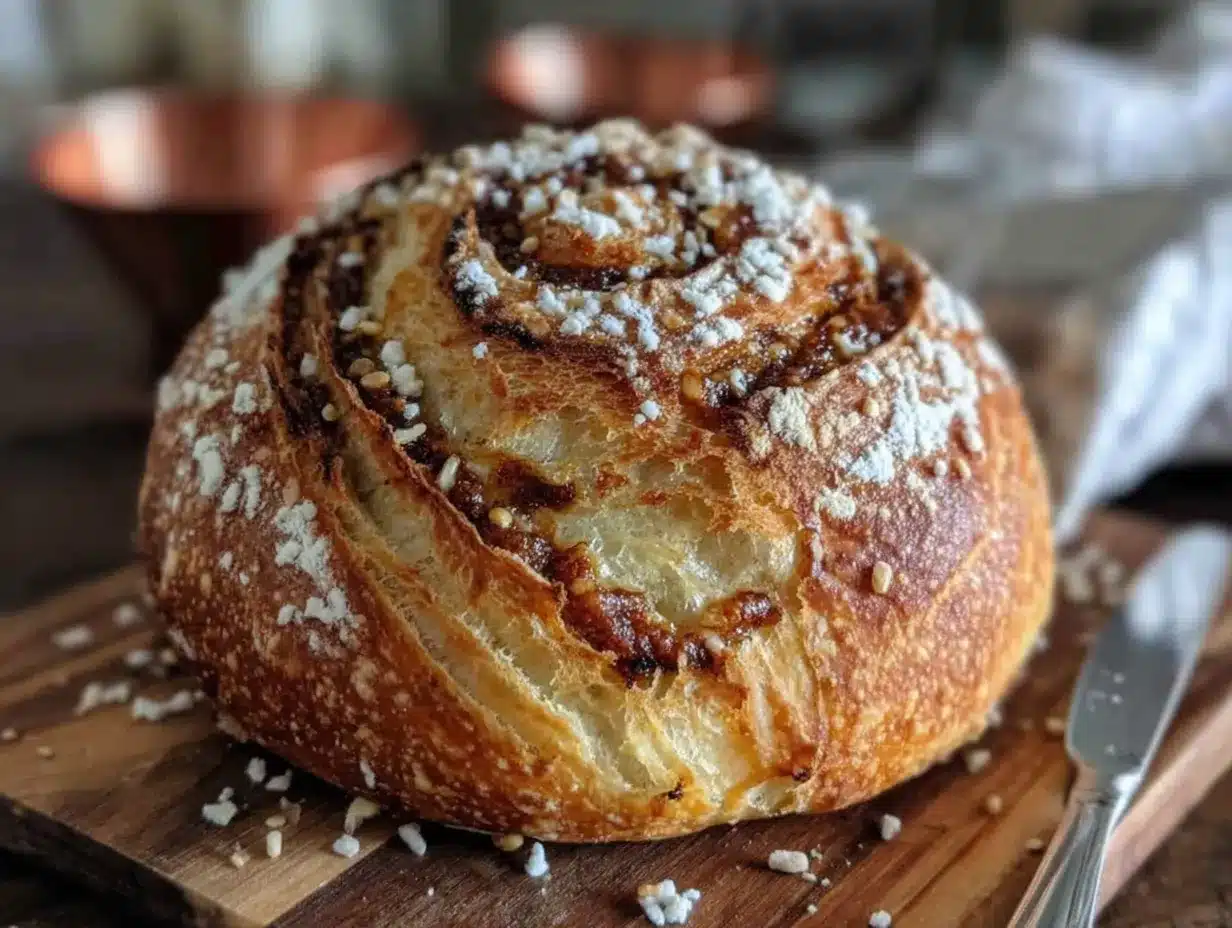
- Feed Your Starter (8-12 hours before mixing): Make sure your starter is active and bubbly. It should double in size within 4-6 hours of feeding. If it’s sluggish, give it an extra feeding cycle.
- Mix the Dough (10 minutes): In a large bowl, combine the active starter, water, and pumpkin puree. Stir until the starter dissolves into the water. Add the bread flour, brown sugar, pumpkin pie spice, and salt. Mix with your hands or a dough whisk until no dry flour remains. The dough will be sticky—that’s okay.
- Bulk Fermentation (4-6 hours at room temperature): Cover the bowl with a damp towel. Over the next 3 hours, perform 4 sets of stretch and folds every 30 minutes. To do this, wet your hand, grab one side of the dough, stretch it up, and fold it over itself. Rotate the bowl and repeat. This builds strength without kneading. After the folds, let the dough rest undisturbed until it has increased in volume by about 50% and looks puffy.
- Prepare the Cinnamon Swirl (5 minutes): While the dough is fermenting, mix the softened butter, sugar, cinnamon, and a pinch of salt in a small bowl until it forms a smooth paste. Set aside.
- Shape and Laminate (10 minutes): Turn the dough out onto a lightly floured surface. Gently stretch it into a rectangle, about 1/2-inch thick. Spread the cinnamon butter paste evenly over the surface, leaving a 1-inch border. Roll the dough up tightly like a jelly roll, starting from the short end. Pinch the seam to seal.
- Cold Proof (12-18 hours in the fridge): Place the shaped dough seam-side up into a floured banneton. Cover with a plastic bag or a damp towel. Refrigerate overnight. This slow proof develops that tangy sourdough flavor and makes the dough easier to handle.
- Preheat and Score (30 minutes): The next morning, place your Dutch oven in the oven and preheat to 450°F (230°C). Once hot, carefully turn the dough out onto a piece of parchment paper. Score the top with a slash using a lame or sharp knife. The swirl will be visible near the surface.
- Bake (45 minutes): Carefully place the dough (with the parchment) into the hot Dutch oven. Cover and bake for 25 minutes. Remove the lid and bake for another 20-25 minutes, until the crust is deep golden brown and the internal temperature reaches 200°F (93°C).
- Cool Completely (2 hours): This is the hardest step! Let the bread cool on a wire rack for at least 2 hours before slicing. The interior continues to set as it cools. If you cut too early, the crumb will be gummy.
Cooking Tips & Techniques
I’ve made this loaf about a dozen times now, and I’ve learned a few things the hard way. Here are my best tips to get that perfect swirl and tender crumb every time.
Watch the Hydration: Pumpkin puree adds a lot of moisture, but it’s not the same as water. If your dough feels too sticky after the initial mix, don’t panic. Resist the urge to add a ton of flour. Instead, wet your hands during the stretch and folds. The dough will tighten up as the gluten develops. I once added too much flour and ended up with a dense, dry loaf. Learn from my mistake!
The Swirl Technique: The key to a beautiful cinnamon swirl is a firm, but not stiff, butter paste. If it’s too soft, it will melt into the dough and disappear. If it’s too hard, it will break the dough when you roll it. Aim for a spreadable consistency, like room-temperature butter. Also, don’t over-roll the dough. Two tight turns are better than four loose ones.
Multitasking Strategy: Start the bulk fermentation in the late afternoon. While the dough is resting, you can prepare the cinnamon swirl and clean up the kitchen. Then, shape the dough right before you head to bed. The cold proof does all the work while you sleep. It’s the most low-maintenance bread you’ll ever make.
Consistency Check: After the cold proof, the dough should feel firm and slightly puffy. If it feels flat and doesn’t hold its shape, it might be over-proofed. Next time, reduce the bulk fermentation by 30 minutes. If it feels rock hard and hasn’t risen at all, it needs more time at room temperature before baking.
Variations & Adaptations
One of the best things about this recipe is how flexible it is. Here are a few ways I’ve adapted it for different tastes and diets.
- Dairy-Free Version: Swap the butter in the swirl with a high-quality vegan butter. I’ve used Miyoko’s with great results. The texture stays the same, and the flavor is just as rich.
- Spiced-Up Swirl: Add 1/4 teaspoon of cardamom or cloves to the cinnamon sugar mixture. It gives the bread a chai-like warmth that’s incredible with a latte.
- Add-Ins: Fold 1/2 cup of toasted pecans or golden raisins into the dough during the lamination step. The nuts add a nice crunch against the soft crumb.
- Gluten-Free Option: I’ve tested this with a 1:1 gluten-free flour blend (like Bob’s Red Mill). The dough will be much stickier, so use wet hands for all handling. The texture is slightly more cake-like, but the flavor is still spot-on.
- Maple Glaze: For a sweeter treat, whisk together 1/2 cup powdered sugar, 2 tablespoons maple syrup, and a splash of milk. Drizzle over the cooled loaf. It’s dangerously good.
I personally love the pecan version. I made it for a Thanksgiving brunch last year, and my cousin asked for the recipe before she even finished her slice. It’s that good.
Serving & Storage Suggestions
This bread is best served slightly warm or at room temperature. The flavors are most pronounced about 4 hours after baking, once the crumb has fully set. For serving, slice it thick and toast it lightly to bring out the caramelized notes in the cinnamon swirl. It’s perfect with a pat of salted butter or a smear of cream cheese.
What to Pair It With: This bread is a natural match for a hot cup of coffee or a chai latte. For a savory-sweet contrast, serve it alongside a bowl of butternut squash soup or a simple arugula salad with a lemon vinaigrette.
Storage Instructions: Store the loaf in a bread bag or wrapped tightly in beeswax wrap at room temperature for up to 3 days. Do not refrigerate—it will dry out the crumb. For longer storage, slice the entire loaf and freeze the slices in a zip-top bag. They’ll keep for up to 3 months. To reheat, pop a frozen slice directly into the toaster. It will come out tasting almost as fresh as the day you baked it.
Flavor Development: Honestly, this bread tastes even better on day two. The sourdough tang mellows out, and the pumpkin and cinnamon flavors meld together beautifully. If you can resist eating it all on day one, you’re in for a treat.
Nutritional Information & Benefits
Per slice (1/12 of the loaf), this bread provides approximately:
- Calories: 210
- Carbohydrates: 40g
- Protein: 6g
- Fat: 4g
- Fiber: 2g
Health Benefits: Pumpkin is packed with vitamin A and antioxidants, which support eye health and your immune system. The sourdough fermentation process breaks down phytic acid, making the minerals in the flour more bioavailable. Plus, the long fermentation can make the bread easier to digest for some people. This bread is naturally low in added sugar compared to most pumpkin breads, and it contains no preservatives. If you’re watching your intake, this is a much better option than store-bought loaves.
Dietary Considerations: This recipe is vegetarian and can be made dairy-free. It is not gluten-free unless you use the specific flour blend mentioned in the variations. It contains wheat and dairy (unless substituted).
Conclusion
This Cozy Cinnamon Swirl Pumpkin Sourdough is more than just a recipe—it’s a happy accident that turned into a fall tradition. It’s the bread I make when I want to feel like I have my life together, even when I don’t. The tangy, tender crumb, the sweet ribbon of cinnamon, the way it makes your whole kitchen smell like a bakery—it’s pure comfort in a slice. I honestly think you’re going to love it.
Don’t be afraid to make it your own. Add different spices, throw in some nuts, or double the swirl. I’d love to hear how it turns out for you. Drop a comment below and let me know if you tried a variation, or tag me in your photos if you share them online. Happy baking, friends!
Frequently Asked Questions
Can I use canned pumpkin pie filling instead of pure pumpkin puree?
No, you should not use pumpkin pie filling. It contains added sugar and spices that will throw off the hydration and sweetness of the dough. Stick with 100% pure pumpkin puree for the best results.
My dough is very sticky. What did I do wrong?
This is normal! Pumpkin puree adds a lot of moisture. Use wet hands during the stretch and folds to prevent sticking. Avoid adding extra flour, as this can make the bread dense. The dough will become more manageable as the gluten develops.
Can I skip the overnight proof in the fridge?
You can, but the flavor won’t be as complex. The cold proof develops the sourdough tang and makes the dough easier to score. If you’re short on time, let it proof at room temperature for 2-3 hours after shaping, then bake immediately.
Why did my cinnamon swirl disappear into the dough?
This usually happens if the butter paste is too soft or if you over-handled the dough during shaping. Make sure the butter is just softened, not melted. Also, roll the dough tightly and avoid pressing down too hard.
How do I know when the bread is fully baked?
Use a digital thermometer. The internal temperature should reach 200°F (93°C) when inserted into the center of the loaf. The crust should be deep golden brown and sound hollow when tapped on the bottom.
Pin This Recipe!
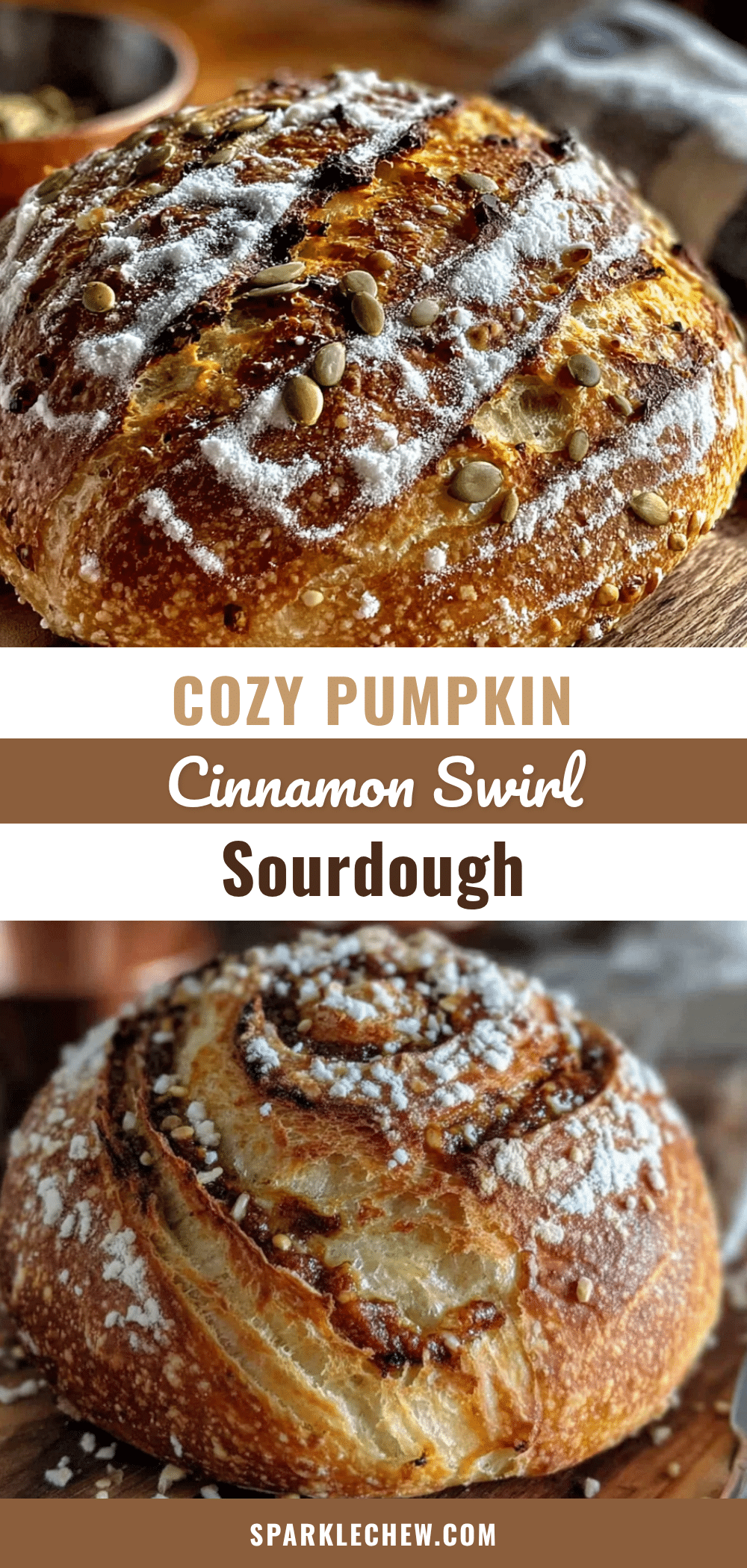
Cozy Cinnamon Swirl Pumpkin Sourdough: Best Fall Bread
This Cozy Cinnamon Swirl Pumpkin Sourdough is a happy accident turned fall tradition. It features a tangy, tender crumb with a sweet ribbon of cinnamon sugar running through the middle, making it the perfect bread for cozy mornings or Thanksgiving brunch.
- Prep Time: 20 minutes
- Cook Time: 45 minutes
- Total Time: 14 hours 5 minutes (including overnight proof)
- Yield: 12 servings 1x
- Category: Bread
- Cuisine: American
Ingredients
- 100g active sourdough starter (fed and bubbly, at peak ripeness)
- 350g bread flour (I prefer King Arthur for its consistent protein content)
- 100g pumpkin puree (not pumpkin pie filling—just pure pumpkin)
- 150g water (filtered, at room temperature)
- 50g brown sugar (adds moisture and a subtle molasses flavor)
- 7g salt
- 1 tsp pumpkin pie spice (or a mix of cinnamon, nutmeg, and ginger)
- 40g unsalted butter, softened (I use Kerrygold for richer flavor)
- 60g granulated sugar
- 2 tsp ground cinnamon (freshly ground if you can—it makes a difference)
- Pinch of salt
Instructions
- Feed Your Starter (8-12 hours before mixing): Make sure your starter is active and bubbly. It should double in size within 4-6 hours of feeding. If it’s sluggish, give it an extra feeding cycle.
- Mix the Dough (10 minutes): In a large bowl, combine the active starter, water, and pumpkin puree. Stir until the starter dissolves into the water. Add the bread flour, brown sugar, pumpkin pie spice, and salt. Mix with your hands or a dough whisk until no dry flour remains. The dough will be sticky—that’s okay.
- Bulk Fermentation (4-6 hours at room temperature): Cover the bowl with a damp towel. Over the next 3 hours, perform 4 sets of stretch and folds every 30 minutes. To do this, wet your hand, grab one side of the dough, stretch it up, and fold it over itself. Rotate the bowl and repeat. This builds strength without kneading. After the folds, let the dough rest undisturbed until it has increased in volume by about 50% and looks puffy.
- Prepare the Cinnamon Swirl (5 minutes): While the dough is fermenting, mix the softened butter, sugar, cinnamon, and a pinch of salt in a small bowl until it forms a smooth paste. Set aside.
- Shape and Laminate (10 minutes): Turn the dough out onto a lightly floured surface. Gently stretch it into a rectangle, about 1/2-inch thick. Spread the cinnamon butter paste evenly over the surface, leaving a 1-inch border. Roll the dough up tightly like a jelly roll, starting from the short end. Pinch the seam to seal.
- Cold Proof (12-18 hours in the fridge): Place the shaped dough seam-side up into a floured banneton. Cover with a plastic bag or a damp towel. Refrigerate overnight. This slow proof develops that tangy sourdough flavor and makes the dough easier to handle.
- Preheat and Score (30 minutes): The next morning, place your Dutch oven in the oven and preheat to 450°F (230°C). Once hot, carefully turn the dough out onto a piece of parchment paper. Score the top with a slash using a lame or sharp knife. The swirl will be visible near the surface.
- Bake (45 minutes): Carefully place the dough (with the parchment) into the hot Dutch oven. Cover and bake for 25 minutes. Remove the lid and bake for another 20-25 minutes, until the crust is deep golden brown and the internal temperature reaches 200°F (93°C).
- Cool Completely (2 hours): This is the hardest step! Let the bread cool on a wire rack for at least 2 hours before slicing. The interior continues to set as it cools. If you cut too early, the crumb will be gummy.
Notes
For the best texture, look for a thick, not watery, pumpkin puree. Libby’s is a go-to brand. If your starter is on the younger side, you might need to extend the bulk fermentation time. For a dairy-free version, swap the butter in the swirl with a vegan butter stick. The dough will be sticky initially; use wet hands during stretch and folds. The key to a beautiful cinnamon swirl is a firm, but not stiff, butter paste. Do not refrigerate the baked loaf; store at room temperature for up to 3 days or freeze slices for up to 3 months.
Nutrition
- Serving Size: 1 slice (1/12 of loa
- Calories: 210
- Sugar: 10
- Sodium: 180
- Fat: 4
- Saturated Fat: 2
- Carbohydrates: 40
- Fiber: 2
- Protein: 6
Keywords: pumpkin sourdough, cinnamon swirl bread, fall bread, sourdough bread, pumpkin bread, homemade bread, sourdough recipe