Love this? Save it for later!
Share the inspiration with your friends
A woman at the farmers’ market watched me poke at a butternut squash like I had no idea what to do with it. I didn’t, honestly. It was late October, and I was cold, and that squash looked like it required a power tool to get through. She didn’t laugh at me, though. She just picked up a squash, handed it to me, and said, “Roast it with an apple. You’ll thank me later.”
That was it. No recipe card, no measurements. Just a sentence that stuck in my head like a song I couldn’t shake. I went home with a bag full of squash and a few Honeycrisp apples, and I stood in my kitchen wondering if she meant peel it first or just hack it in half. I roasted it anyway, seeds and all, and the smell that filled my apartment was so good I forgot I had no idea what I was doing. That first attempt was a little rustic, let me tell you. I forgot to add salt, and the soup turned out sweet in a way that felt more like dessert than dinner. But something was there. Something worth chasing.
This cozy butternut squash and apple soup with sage is the version I landed on after many, many batches. Some were too thin, some were too sweet, and one was so salty I had to throw the whole pot away. But I kept coming back to it because that first scent of roasting squash and apple with sage is the smell of fall settling into your bones. It is warm, golden, and unapologetically cozy. Maybe you have been there, standing in your kitchen with a squash and a vague idea, hoping for something good. This soup is that good thing.
Why You Will Love This Recipe
This isn’t just another butternut squash soup recipe. It is the one you will make when you want something that tastes like you spent hours in the kitchen but actually comes together in under an hour. I have tested this more times than I care to admit, and every single person who has tried it has asked for the recipe. That is not a brag, just a fact.
- Quick and Easy: From start to finish, this soup is ready in about 45 minutes. Most of that time is hands-off roasting, so you can chop an apple or brew some tea while it works.
- Simple Ingredients: You probably have most of these things already. Onion, garlic, broth, butter. The squash and apple are the stars, and sage is the quiet hero in the background.
- Perfect for Fall Gatherings: Whether it is a cozy dinner for two or a Thanksgiving starter, this soup fits right in. It is fancy enough for guests but simple enough for a Tuesday night.
- Crowd-Pleaser: Kids love the sweetness from the apple, and adults love the savory depth from the sage. It is the rare recipe that makes everyone happy.
- Unbelievably Delicious: The texture is velvety without being heavy, and the flavor hits that perfect balance of sweet and savory. It is the kind of soup that makes you close your eyes after the first spoonful.
What makes this recipe different from all the other squash soups out there is the way the apple gets roasted right alongside the squash. That little bit of caramelization changes everything. It adds a brightness that cuts through the richness, and the sage ties it all together in a way that feels intentional, not accidental. This soup is comfort food reimagined, healthier and faster, but with the same soul-soothing satisfaction.
What Ingredients You Will Need
This recipe uses simple, wholesome ingredients to deliver bold flavor and satisfying texture without the fuss. Most of these are pantry staples or easy fall finds at any grocery store.
For the Soup Base
- 1 medium butternut squash (about 2-3 pounds) — peeled, seeded, and cubed into 1-inch pieces (look for one that feels heavy for its size and has a matte, beige skin)
- 2 medium apples — I prefer Honeycrisp or Fuji for their sweetness and firm texture (Granny Smith works too if you want a tangier finish)
- 1 medium yellow onion — roughly chopped (adds savory depth)
- 3 cloves garlic — smashed (roasted garlic is sweeter and milder than raw)
- 3 tablespoons olive oil — divided for roasting and sautéing (use a good quality one for better flavor)
- 1/2 teaspoon salt — plus more to taste (I use fine sea salt)
- 1/4 teaspoon black pepper — freshly ground is best
For the Aromatic Base
- 2 tablespoons unsalted butter — adds richness and helps bloom the sage (use vegan butter if needed)
- 8-10 fresh sage leaves — plus more for garnish (dried sage works in a pinch, use 1 teaspoon)
- 4 cups vegetable or chicken broth — low-sodium so you control the salt (I like Swanson or Pacific Foods for quality)
- 1/2 cup heavy cream or full-fat coconut milk — for creaminess (optional but recommended)
For Garnish (Optional but Lovely)
- Extra sage leaves — fried in butter for a crispy topping
- Toasted pumpkin seeds — adds crunch
- A drizzle of cream or coconut milk — for that pretty swirl
- Pinch of flaky salt — like Maldon, for a finishing touch
If you cannot find fresh sage, dried sage works but use it sparingly. Start with 1 teaspoon and taste before adding more. For a dairy-free version, swap the butter for olive oil and use coconut milk instead of cream. The coconut milk adds a subtle sweetness that actually pairs beautifully with the apple.
Equipment Needed
You do not need anything fancy here. A good sharp knife and a sturdy cutting board will get you through the squash prep, which is honestly the hardest part of this whole recipe.
- Large baking sheet — rimmed, so nothing drips off while roasting
- Large soup pot or Dutch oven — I use my trusty 5.5-quart Le Creuset, but any heavy-bottomed pot works
- Immersion blender or regular blender — immersion is easier and less cleanup, but a countertop blender gives a silkier texture (just blend in batches and vent the lid)
- Sharp chef’s knife — for cutting the squash safely
- Vegetable peeler — a Y-peeler makes quick work of butternut squash skin
- Wooden spoon or spatula — for stirring
If you do not have an immersion blender, let the soup cool slightly before transferring it to a regular blender. Fill it only halfway, hold the lid down with a towel, and blend in batches. Trust me on this one, hot soup expands and can blow the lid off. I learned that the hard way.
Preparation Method
Let me walk you through this step by step. I have made this soup so many times I could do it in my sleep, but I will share all the little tricks I have picked up along the way.
Step 1: Preheat and Prep
Preheat your oven to 400°F (200°C). While it heats up, peel the butternut squash with a vegetable peeler. Cut off the top and bottom, then slice it in half lengthwise. Scoop out the seeds with a spoon and discard them (or save them for roasting later). Cut the squash into 1-inch cubes. They do not need to be perfect, but try to keep them similar in size so they roast evenly.
Step 2: Roast the Squash and Apples
On your baking sheet, toss the cubed squash with 2 tablespoons of olive oil, 1/4 teaspoon salt, and a pinch of pepper. Spread it out in a single layer. Core and chop the apples into 1-inch chunks (leave the skin on, it softens during roasting and adds fiber). Add the apples to the same baking sheet, drizzle with the remaining 1 tablespoon of olive oil, and toss gently. Roast for 25-30 minutes, flipping halfway through, until the squash is tender and the edges are starting to caramelize. The apples should be soft and slightly golden.
Step 3: Bloom the Sage
While the squash and apples roast, melt the butter in your soup pot over medium heat. Add the fresh sage leaves and let them sizzle for about 2 minutes. The butter will turn golden and smell incredibly fragrant. Remove the sage leaves with a slotted spoon and set them aside for garnish. Leave the butter in the pot.
Step 4: Sauté the Aromatics
Add the chopped onion to the pot with the sage butter. Cook for 5-6 minutes, stirring occasionally, until the onion is soft and translucent. Add the smashed garlic cloves and cook for another minute until fragrant. Do not let the garlic burn, it will turn bitter.
Step 5: Combine and Simmer
Add the roasted squash and apples to the pot. Pour in the broth and bring everything to a gentle boil. Reduce the heat to low and let it simmer for 10 minutes. This allows all the flavors to get to know each other. The soup should smell sweet, savory, and a little woodsy from the sage.
Step 6: Blend Until Smooth
Remove the pot from the heat. If you are using an immersion blender, blend the soup directly in the pot until it is completely smooth. If using a countertop blender, work in batches and be careful with the hot liquid. Blend until velvety. Stir in the heavy cream or coconut milk, if using, and season with salt and pepper to taste.
Step 7: Garnish and Serve
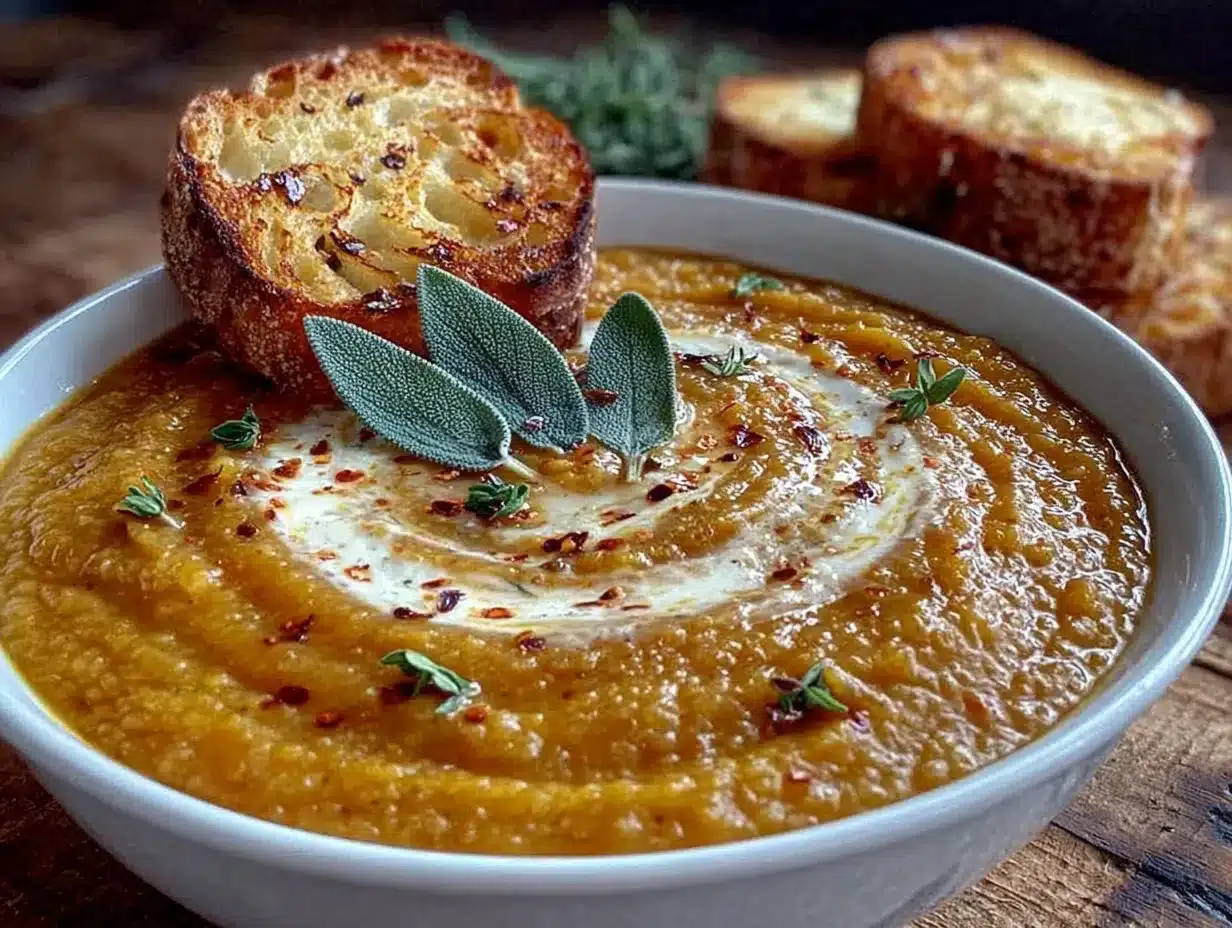
Ladle the soup into bowls. Crumble the reserved fried sage leaves over the top, add a swirl of cream, and sprinkle with toasted pumpkin seeds and flaky salt if you have it. Serve hot with crusty bread or a simple salad.
Cooking Tips and Techniques
I have made every mistake you can imagine with this soup, so let me save you some trouble. First, do not skip roasting the squash and apples. Boiling them directly in the broth might save time, but you will lose that deep, caramelized flavor that makes this soup special. Roasting concentrates the natural sugars and adds complexity you just cannot get any other way.
Second, taste as you go. I know it sounds obvious, but I have forgotten to salt this soup more times than I care to count. Salt brings out the sweetness of the squash and apple, so do not be shy with it. Start with 1/2 teaspoon and adjust at the end. Also, if your soup tastes flat, a squeeze of lemon juice or a splash of apple cider vinegar can brighten everything up.
Third, be patient with the blending. A smooth, velvety texture is the goal here. If you are using a countertop blender, blend for a full 60 seconds on high. If using an immersion blender, move it around the pot in a slow, steady motion to make sure you get every chunk. I once rushed this step and ended up with a lumpy soup that looked like baby food. Not my best moment.
Finally, if the soup is too thick after blending, thin it out with a little extra broth or water. If it is too thin, let it simmer uncovered for a few more minutes to reduce. You are in control here, so trust your instincts.
Variations and Adaptations
This soup is incredibly forgiving, so feel free to make it your own. Here are a few ways I have adapted it over the years.
Dairy-Free and Vegan
Swap the butter for olive oil or coconut oil, and use full-fat coconut milk instead of heavy cream. The coconut flavor is subtle and actually works beautifully with the apple and sage. I have served this to dairy-loving friends and they did not notice the difference.
Spicy Kick
Add a pinch of red pepper flakes or a small diced jalapeño when you sauté the onion. The heat cuts through the sweetness and adds a nice warmth. I tried this on a whim one cold evening and it has become my go-to version when I want something with a little edge.
Extra Protein
Stir in a cup of cooked white beans or chickpeas before blending. They make the soup creamier and add protein without changing the flavor much. I have also topped bowls with crispy bacon or pancetta for a salty, smoky crunch.
Different Apples
If Honeycrisp is not available, use Fuji, Gala, or Braeburn. Granny Smith will give you a tarter soup, which some people prefer. I have even used a mix of sweet and tart apples to balance things out. It is hard to go wrong here.
Make It a Meal
Serve this soup with a grilled cheese sandwich or a hearty kale salad for a complete fall dinner. It also pairs wonderfully with roasted chicken or a simple grain bowl.
Serving and Storage Suggestions
This soup is best served hot, straight from the pot, with a generous garnish of fried sage and a drizzle of cream. I love it with a thick slice of sourdough bread slathered in butter, but it is also lovely with a side of roasted Brussels sprouts or a simple arugula salad dressed with lemon vinaigrette.
For storage, let the soup cool completely before transferring it to an airtight container. It will keep in the refrigerator for up to 5 days. The flavors actually deepen and meld together overnight, so it might taste even better the next day. I have been known to make a double batch just so I have leftovers for lunch.
To freeze, pour the cooled soup into freezer-safe bags or containers. Leave a little room at the top because liquid expands when frozen. It will keep for up to 3 months. Thaw overnight in the refrigerator and reheat gently on the stovetop or in the microwave. If the soup seems separated after thawing, a quick whisk or blend will bring it back together.
For reheating, warm the soup over medium-low heat, stirring occasionally. Add a splash of broth or water if it has thickened too much. Avoid boiling it vigorously, as the cream can curdle. If you are reheating a single serving, the microwave works fine, just stop and stir every 30 seconds.
Nutritional Information and Benefits
This soup is as good for you as it is delicious. Butternut squash is packed with vitamin A, vitamin C, and fiber, which support immune health and digestion. Apples add antioxidants and more fiber, while sage has anti-inflammatory properties and a reputation for aiding digestion. Heavy cream or coconut milk provides healthy fats that help your body absorb the fat-soluble vitamins in the squash.
Per serving (about 1.5 cups), this soup contains approximately:
- Calories: 280
- Fat: 14g
- Carbohydrates: 36g
- Fiber: 8g
- Protein: 4g
- Sugar: 14g (naturally occurring)
This soup is naturally gluten-free and can easily be made vegan and dairy-free. It is a wonderful option for anyone looking for a nutrient-dense, comforting meal that does not weigh you down. I love that I can serve it to my family knowing it is packed with good stuff, and they just think it is a delicious bowl of cozy.
Conclusion
This cozy butternut squash and apple soup with sage is the recipe I keep coming back to year after year. It is the soup I make when the leaves start turning and the air gets crisp. It is the soup I bring to friends who need a warm meal and a little comfort. And it is the soup that reminds me that sometimes the best recipes come from a stranger at a farmers’ market who saw me struggling and decided to help.
I hope you make this soup your own. Add more sage if you love it, skip the cream if you do not, or throw in a pinch of cayenne if you are feeling bold. Cooking is about making things taste good to you, and this recipe is just a starting point. I would love to hear how it turns out. Leave a comment below and let me know if you tried any fun variations, or share a photo of your bowl. There is nothing better than knowing this soup is warming someone else’s kitchen too.
Frequently Asked Questions
Can I use frozen butternut squash for this soup?
Yes, you can. Frozen squash is already peeled and cubed, which saves prep time. Roast it straight from frozen, but add 5-10 minutes to the roasting time and drain any excess liquid before adding it to the pot. The texture might be slightly less caramelized, but it still tastes great.
Can I make this soup ahead of time?
Absolutely. This soup is actually better the next day because the flavors have time to meld. Make it a day ahead, let it cool, and store it in the refrigerator. Reheat gently on the stovetop and adjust the seasoning before serving.
How do I peel a butternut squash safely?
Use a sharp Y-shaped vegetable peeler for the best control. Cut off the top and bottom first so the squash sits flat on your cutting board. Then peel from top to bottom in long strokes. If the squash is very hard, microwave it whole for 2-3 minutes to soften the skin slightly.
Can I use dried sage instead of fresh?
Yes, but use it sparingly. Dried sage is more concentrated than fresh. Start with 1 teaspoon and add more to taste. Add it when you sauté the onion so it can bloom in the butter.
What if my soup is too sweet?
If the soup tastes too sweet, add a squeeze of lemon juice or a splash of apple cider vinegar. The acidity will balance the sweetness. You can also add a pinch of salt or a dash of black pepper to round things out.
Pin This Recipe!

Cozy Butternut Squash Apple Soup: Easy Fall Recipe

A velvety butternut squash and apple soup with sage that balances sweet and savory flavors. Ready in about 45 minutes, this comforting fall soup is perfect for weeknight dinners or holiday gatherings.
- Prep Time: 15 minutes
- Cook Time: 30 minutes
- Total Time: 45 minutes
- Yield: 4 servings 1x
- Category: Soup
- Cuisine: American
Ingredients
- 1 medium butternut squash (about 2–3 pounds), peeled, seeded, and cubed into 1-inch pieces
- 2 medium apples (Honeycrisp or Fuji), cored and chopped into 1-inch chunks
- 1 medium yellow onion, roughly chopped
- 3 cloves garlic, smashed
- 3 tablespoons olive oil, divided
- 1/2 teaspoon fine sea salt, plus more to taste
- 1/4 teaspoon freshly ground black pepper
- 2 tablespoons unsalted butter
- 8–10 fresh sage leaves, plus more for garnish
- 4 cups low-sodium vegetable or chicken broth
- 1/2 cup heavy cream or full-fat coconut milk (optional)
Instructions
- Preheat oven to 400°F (200°C). Peel butternut squash, cut off top and bottom, slice in half lengthwise, scoop out seeds, and cut into 1-inch cubes.
- On a large baking sheet, toss cubed squash with 2 tablespoons olive oil, 1/4 teaspoon salt, and a pinch of pepper. Spread in a single layer. Add chopped apples to the same sheet, drizzle with remaining 1 tablespoon olive oil, and toss gently. Roast for 25-30 minutes, flipping halfway, until squash is tender and edges are caramelized.
- While squash and apples roast, melt butter in a large soup pot or Dutch oven over medium heat. Add fresh sage leaves and sizzle for about 2 minutes until fragrant. Remove sage leaves with a slotted spoon and set aside for garnish.
- Add chopped onion to the pot with the sage butter. Cook for 5-6 minutes, stirring occasionally, until soft and translucent. Add smashed garlic and cook for 1 minute until fragrant.
- Add roasted squash and apples to the pot. Pour in broth and bring to a gentle boil. Reduce heat to low and simmer for 10 minutes.
- Remove pot from heat. Using an immersion blender, blend soup directly in the pot until completely smooth. Alternatively, blend in batches in a countertop blender, filling only halfway and venting the lid. Stir in heavy cream or coconut milk if using. Season with salt and pepper to taste.
- Ladle soup into bowls. Garnish with crumbled fried sage leaves, a swirl of cream, toasted pumpkin seeds, and flaky salt if desired. Serve hot with crusty bread or a simple salad.
Notes
Do not skip roasting the squash and apples—it adds deep caramelized flavor. Taste and adjust salt as you go; salt brings out sweetness. If soup is too thick, thin with extra broth or water. If too thin, simmer uncovered to reduce. For dairy-free, use olive oil instead of butter and coconut milk instead of cream. For a tangier soup, use Granny Smith apples or add a squeeze of lemon juice at the end. Soup can be refrigerated for up to 5 days or frozen for up to 3 months.
Nutrition
- Serving Size: 1.5 cups
- Calories: 280
- Sugar: 14
- Sodium: 480
- Fat: 14
- Saturated Fat: 6
- Carbohydrates: 36
- Fiber: 8
- Protein: 4
Keywords: butternut squash soup, apple soup, fall soup, creamy soup, sage, easy soup, vegetarian soup, gluten-free soup