Love this? Save it for later!
Share the inspiration with your friends
I was digging through a pile of old newspapers at a flea market in early October—looking for vintage linens, honestly, not recipes—when the woman running the booth, a tiny lady named Ethel with glasses on a beaded chain, started telling me about her butternut squash soup. I hadn’t asked. I was holding a slightly stained tablecloth and she just launched into it. “You need to add an apple,” she said, pointing a gnarled finger at me. “And don’t you dare skip the fresh sage.” I stood there, clutching that tablecloth, while she explained how her grandmother made it every autumn in a tiny kitchen in Vermont. She wrote the recipe on a napkin she pulled from her apron pocket. I still have that napkin, ink smudged and all.
That soup became my fall obsession. I tweaked it over three seasons—once burning the shallots so badly I had to start over—and finally landed on this version that tastes like autumn in a bowl. The sweetness of the roasted squash and apple plays off the earthy, almost peppery sage, and the whole thing comes together without any heavy cream or complicated steps. I mean, it’s basically dump-and-roast, then blend. That’s it. Maybe you’ve been there, scrolling through a hundred soup recipes that promise comfort but require a dozen pots and a culinary degree. This isn’t that.
This is the soup you make on a rainy Tuesday when you need something warm and real. The one that fills your kitchen with that roasty, sage-y smell and makes everyone wander in asking what’s for dinner. It’s become my go-to for quiet nights and for impromptu dinner guests, because it feels fancy but takes almost no effort. And honestly? It all started with a flea market napkin. You never know where you’ll find a recipe that sticks.
Why You’ll Love This Recipe
Let me tell you why this butternut squash apple soup keeps showing up on my table year after year. It’s not just good—it’s the kind of soup that makes you close your eyes after the first spoonful. I’ve tested this recipe at least a dozen times, tweaking the roast time and the apple-to-squash ratio, and I can confidently say this is the version you’ll want to make on repeat.
- Quick & Easy: Comes together in about 45 minutes, most of which is hands-off roasting time. Perfect for a busy weeknight when you want something homemade without the fuss.
- Simple Ingredients: No fancy grocery trips needed. Butternut squash, apples, onion, sage, broth—you probably have most of this in your kitchen right now.
- Perfect for Fall: This soup is basically autumn in a bowl. Great for cozy dinners, Thanksgiving starters, or meal prep for chilly workweek lunches.
- Crowd-Pleaser: I’ve served this to picky eaters, vegetable skeptics, and full-on foodies. Everyone goes back for seconds. It’s creamy without any dairy, which always surprises people.
- Unbelievably Delicious: The roasting brings out this deep, caramelized sweetness in the squash and apple, while the sage adds a savory, almost woodsy note. It’s comfort food that somehow feels light and nourishing.
What makes this recipe different from the rest? It’s the roasting method. Most squash soup recipes have you boil the vegetables, which waters down the flavor. By roasting everything together, you concentrate the natural sugars and get this rich, complex taste without adding any cream or sugar. Plus, blending in a tart apple (I use Granny Smith) cuts through the sweetness and adds a subtle brightness that keeps you coming back for another spoonful.
This isn’t just another butternut squash soup recipe. It’s the one that makes you feel like you’ve got a secret weapon in your cooking arsenal. The one your friends will ask for, and you’ll pretend you don’t mind sharing.
What Ingredients You Will Need
This recipe uses simple, wholesome ingredients to deliver bold flavor and satisfying texture without the fuss. Most are pantry staples or easy to find at any grocery store, especially during fall.
- 1 medium butternut squash (about 2-3 pounds), peeled, seeded, and cut into 1-inch cubes
- 2 medium apples (Granny Smith or Honeycrisp work best), peeled, cored, and chopped into 1-inch pieces
- 1 medium yellow onion, roughly chopped
- 3 cloves garlic, smashed (no need to chop finely)
- 2 tablespoons olive oil (I prefer a good quality extra virgin here)
- 1 tablespoon fresh sage leaves, roughly chopped (about 8-10 leaves)
- 1 teaspoon dried thyme (or 1 tablespoon fresh)
- 1/2 teaspoon ground nutmeg (freshly grated if you have it)
- 4 cups vegetable broth (or chicken broth if not vegetarian)
- 1/2 cup unsweetened coconut milk (or heavy cream if dairy is okay)
- Salt and black pepper to taste
- Optional garnish: extra sage leaves fried in butter, a drizzle of coconut milk, pumpkin seeds, or a sprinkle of cinnamon
A few notes on ingredients: Look for a squash that feels heavy for its size and has a solid, tan skin without soft spots. For the apples, Granny Smith adds a nice tartness that balances the sweetness, but Honeycrisp or Fuji work well too if you want a sweeter soup. I’ve tested this with Gala apples and it was fine, just a little one-note sweet. The coconut milk is my secret for creaminess without dairy, but honestly, if you’re not avoiding dairy, a splash of heavy cream or even whole milk works beautifully. I recommend using full-fat coconut milk for the best texture—the light stuff can make the soup watery.
Fresh sage is non-negotiable here, I’m sorry. Dried sage just doesn’t have the same punch, and the fresh leaves get all fragrant and crispy when they roast with the squash. You can find it in the produce section near the fresh herbs. If you absolutely can’t find it, you can substitute with fresh rosemary or thyme, but the flavor profile will shift.
Equipment Needed
You don’t need a fancy kitchen to make this soup. Here’s what you’ll actually use:
- Large baking sheet (half-sheet pan works great for even roasting)
- Chef’s knife and a sturdy vegetable peeler (a Y-peeler makes quick work of squash skin)
- Large soup pot or Dutch oven (I use my 5.5-quart Le Creuset, but any heavy-bottomed pot works)
- Immersion blender (my preferred method—less cleanup and you can blend right in the pot)
- OR a regular blender (work in batches and be careful with hot liquid)
- Measuring cups and spoons
If you don’t have an immersion blender, no worries. A regular countertop blender works just fine—just let the soup cool slightly before blending, and only fill the blender halfway to avoid hot soup explosions. I learned that one the hard way, let me tell you. A splatter of hot squash soup on the ceiling is not a good look. If you’re using a blender, hold the lid down with a kitchen towel while you blend.
For the baking sheet, I recommend lining it with parchment paper for easy cleanup. The caramelized bits come right off, and you won’t be scrubbing for twenty minutes.
Preparation Method

This soup comes together in a few simple steps. The key is to let the oven do most of the work.
- Preheat your oven to 425°F (220°C). Line a large baking sheet with parchment paper for easy cleanup.
- Prepare the squash and apples. Peel the butternut squash with a vegetable peeler, then cut it in half lengthwise. Scoop out the seeds with a spoon (you can roast these separately with salt for a snack!). Cut the squash into 1-inch cubes. Peel and core the apples, then chop them into similar-sized pieces. Roughly chop the onion. Smash the garlic cloves with the flat side of your knife.
- Toss everything with oil and herbs. On the prepared baking sheet, combine the squash cubes, apple chunks, chopped onion, smashed garlic, and fresh sage. Drizzle with the olive oil, then sprinkle with dried thyme, nutmeg, and a generous pinch of salt and black pepper. Use your hands to toss everything until it’s evenly coated. Spread it in a single layer—crowding the pan will steam instead of roast.
- Roast for 30-35 minutes. Roast until the squash is tender and caramelized around the edges, and the apples are soft. Halfway through, give the pan a shake or stir the vegetables so they brown evenly. You’ll know it’s done when you can easily pierce a squash cube with a fork. The kitchen will smell incredible at this point.
- Transfer to a soup pot. Scrape all the roasted vegetables and apples into a large soup pot or Dutch oven. Add the 4 cups of vegetable broth. Bring to a simmer over medium heat, then reduce the heat to low and let it bubble gently for 5 minutes. This helps the flavors meld together.
- Blend until smooth. Remove the pot from the heat. Use an immersion blender to puree the soup directly in the pot until it’s completely smooth and velvety. If using a regular blender, work in batches—fill the blender no more than halfway, hold the lid down with a towel, and blend until smooth. Return the blended soup to the pot.
- Stir in the coconut milk. Add the 1/2 cup of coconut milk (or cream) and stir to combine. Taste and adjust seasoning—you might want more salt, a crack of black pepper, or even a pinch more nutmeg. If the soup is too thick, add a splash more broth or water until it reaches your desired consistency.
- Warm through and serve. Heat the soup gently over low heat for 2-3 minutes, stirring occasionally. Don’t let it boil after adding the coconut milk, or it might separate. Ladle into bowls and add your favorite garnishes.
One thing I learned the hard way: don’t skip the roasting step. I tried making this soup once by just simmering everything in broth, and it was bland and watery. The roasting concentrates the flavors and adds that deep, caramelized sweetness you can’t get any other way. Also, if your soup tastes flat at the end, it probably needs more salt. A pinch of salt can transform a good soup into a great one.
Cooking Tips & Techniques
Over the years, I’ve made this soup enough times to learn a few tricks that make a real difference. Here’s what I wish someone had told me from the start.
Don’t crowd the baking sheet. This is the number one mistake I see. If you pile all the squash and apples on top of each other, they’ll steam instead of roast. You want caramelization, not mush. Use two baking sheets if you need to, or roast in batches. Trust me, the extra five minutes of effort is worth it for those browned, crispy edges.
Cut everything the same size. I know it’s tedious, but cutting the squash and apples into uniform 1-inch cubes ensures they cook evenly. If some pieces are tiny and others are huge, you’ll end up with burnt edges and raw centers. Take the extra minute to be consistent.
Toast the sage for extra flavor. Before adding the fresh sage to the roasting pan, try rubbing the leaves between your palms to release the oils. It wakes up the flavor. For an even bigger punch, fry a few extra sage leaves in butter until crispy and use them as a garnish. The crispy sage adds this amazing texture contrast to the creamy soup.
Season in layers. Don’t wait until the end to add all the salt. Season the vegetables before roasting, then taste and adjust after blending. Seasoning at each stage builds depth of flavor. I once forgot to salt the vegetables before roasting and no amount of salt at the end could fix it.
Use room temperature coconut milk. If you’re using coconut milk, let it sit on the counter for 15 minutes before adding it to the hot soup. Cold coconut milk can seize up and create little lumps when it hits the hot liquid. Same goes for heavy cream—temper it by stirring a ladleful of hot soup into the cream before adding it to the pot.
Make it ahead. This soup actually tastes better the next day. The flavors have time to meld and deepen. I often make a double batch on Sunday and eat it for lunches all week. Just reheat gently on the stove or in the microwave.
Variations & Adaptations
One of the best things about this soup is how flexible it is. Here are some ways to make it your own.
Vegan & Dairy-Free: This recipe is already vegan if you use vegetable broth and coconut milk. The coconut milk adds richness without any dairy. For an even creamier version, blend in a can of full-fat coconut milk instead of the half cup, and reduce the broth slightly.
Spicy Version: Add a pinch of red pepper flakes or a chopped jalapeño (seeds removed) to the roasting pan. The heat cuts through the sweetness beautifully. I made this version for a friend who loves spicy food, and she said it was the best soup she’d ever had.
Herb Swaps: If you don’t have sage, try fresh rosemary or thyme. Rosemary gives it a more piney, aromatic flavor, while thyme keeps it earthy and subtle. You can also use a mix of fresh herbs—sage, rosemary, and thyme together are lovely.
Apple Variations: I’ve made this with Gala, Fuji, and even Pink Lady apples. Each one changes the sweetness level slightly. For a more savory soup, use a tart green apple. For a sweeter, dessert-like soup, use Honeycrisp or Fuji. Avoid Red Delicious—they get mealy when cooked.
Add Protein: To make this a full meal, top the soup with crispy chickpeas (roasted with cumin and paprika), or add a dollop of Greek yogurt and some toasted walnuts. I’ve also stirred in shredded rotisserie chicken for a heartier version, and it was fantastic.
Roasted Carrot Variation: Swap half the butternut squash for carrots. The carrots add a natural sweetness and a slightly different texture. This is a great option if you can’t find a good squash at the store.
Serving & Storage Suggestions
This soup is versatile enough for casual weeknights and fancy dinner parties alike.
Serving Temperature: Serve it hot, but not boiling. Let it cool for a minute or two after ladling into bowls. A drizzle of coconut milk or cream on top adds a beautiful finish. I like to swirl it in with a toothpick for a marbled effect.
Perfect Pairings: This soup is amazing with a crusty bread for dipping—sourdough or a good baguette works perfectly. For a full meal, serve it alongside a simple green salad with a tangy vinaigrette to cut through the richness. I also love it with a grilled cheese sandwich for the ultimate comfort food combo.
Garnish Ideas: Fried sage leaves, toasted pumpkin seeds, a sprinkle of cinnamon or nutmeg, a dollop of Greek yogurt or sour cream, crispy bacon bits, or a drizzle of balsamic glaze. Each garnish adds a different texture and flavor element.
Storage: Store leftover soup in an airtight container in the refrigerator for up to 5 days. The flavors actually deepen over time, so it might taste even better on day two. Let the soup cool completely before refrigerating to prevent condensation from making it watery.
Freezing: This soup freezes beautifully. Let it cool completely, then transfer to freezer-safe containers or zip-top bags. Leave a little room for expansion. It will keep for up to 3 months. Thaw overnight in the refrigerator before reheating.
Reheating: Reheat gently on the stovetop over medium-low heat, stirring occasionally. Add a splash of broth or water if the soup has thickened during storage. You can also microwave individual portions in 30-second bursts, stirring between each. Avoid boiling, as it can cause the coconut milk to separate.
Nutritional Information & Benefits
This soup is as nourishing as it is delicious. Here’s a rough breakdown per serving (based on 6 servings):
Estimated Nutritional Values (per serving):
- Calories: 195
- Fat: 8g
- Carbohydrates: 31g
- Fiber: 6g
- Sugar: 12g
- Protein: 3g
- Sodium: 480mg (varies with broth)
Health Benefits: Butternut squash is packed with vitamin A (great for eye health and immunity), vitamin C, and fiber. Apples add additional fiber and antioxidants, including quercetin, which supports heart health. Sage has anti-inflammatory properties and is known for its cognitive benefits. The olive oil provides healthy monounsaturated fats, and the coconut milk offers medium-chain triglycerides (MCTs) that can support energy metabolism.
Dietary Considerations: This soup is naturally gluten-free, dairy-free (if using coconut milk), and vegan. It’s also relatively low in calories for such a satisfying meal. For a lower-carb version, reduce the apple to one small apple and add an extra cup of roasted cauliflower instead.
Potential Allergens: This recipe is free from the top allergens (dairy, eggs, nuts, soy, wheat) when made as written. However, if you’re using store-bought broth, check the label for hidden allergens. Some broths contain soy or wheat.
I love that this soup feels indulgent but is actually really good for you. It’s the kind of meal that leaves you feeling warm and satisfied, not heavy and sluggish. Perfect for those days when you need a little comfort but still want to treat your body well.
Conclusion
This butternut squash apple soup with sage has become my fall signature, and I think it’s about to become yours too. It’s everything I want in a cold-weather recipe: warming, nourishing, deeply flavorful, and surprisingly simple to make. The roasted squash and apple create a natural sweetness that needs no added sugar, while the sage and thyme keep it grounded and savory. It’s the kind of soup that makes you slow down and actually taste your food.
I love how forgiving this recipe is. You can swap the apple, change up the herbs, add a kick of spice, or make it extra creamy. It adapts to whatever you have in your kitchen and whatever mood you’re in. That’s the mark of a truly great recipe, in my book—it works for you, not the other way around.
So here’s my invitation: make this soup this week. Roast the squash until it’s caramelized and fragrant. Let the sage perfume your kitchen. Blend it until it’s silky and golden. Then sit down with a bowl, maybe with a good piece of bread, and take a moment to enjoy the season. When you do, come back and tell me how it went. I’d love to hear about your variations, your garnishes, and the faces your family made when they took that first bite. Happy cooking!
Frequently Asked Questions
Can I use frozen butternut squash instead of fresh?
Yes, you can use frozen butternut squash to save time. However, frozen squash tends to release more water during roasting, so you won’t get the same caramelization. To compensate, spread the frozen squash on the baking sheet, drizzle with oil, and roast at 425°F for about 40-45 minutes, stirring halfway through. The texture will be slightly different, but the soup will still be delicious.
Can I make this soup in a slow cooker or Instant Pot?
Absolutely. For a slow cooker, sauté the onion and garlic on the stovetop first, then add everything except the coconut milk to the slow cooker. Cook on low for 6-8 hours or high for 3-4 hours, then blend and stir in the coconut milk. For an Instant Pot, use the sauté function to cook the onion, then add the squash, apples, broth, and herbs. Pressure cook on high for 10 minutes, do a quick release, blend, and stir in the coconut milk.
How can I make this soup thicker or thinner?
For a thicker soup, reduce the broth to 3 cups, or add a peeled, diced potato to the roasting pan (the starch will help thicken the soup). For a thinner soup, add extra broth or water after blending until it reaches your desired consistency. You can also stir in a splash of milk or cream to adjust the texture.
Can I leave the peel on the butternut squash?
Technically yes, but I don’t recommend it. Butternut squash skin is edible once cooked, but it becomes tough and fibrous, which will give your soup a slightly grainy texture. The skin also doesn’t blend as smoothly as the flesh. I always peel it for the silkiest result. If you’re in a hurry, you can buy pre-peeled and cubed squash from the grocery store.
What’s the best way to peel and cut a butternut squash without losing a finger?
First, microwave the whole squash for 2-3 minutes to soften the skin slightly. Then cut off both ends with a sharp chef’s knife. Stand the squash upright on its flat base and slice down the middle to split it in half. Scoop out the seeds with a spoon. Use a Y-shaped vegetable peeler to remove the skin in long strips—it’s much easier than using a regular peeler. Always cut on a stable cutting board and keep your fingers tucked in a claw grip when chopping.
Pin This Recipe!
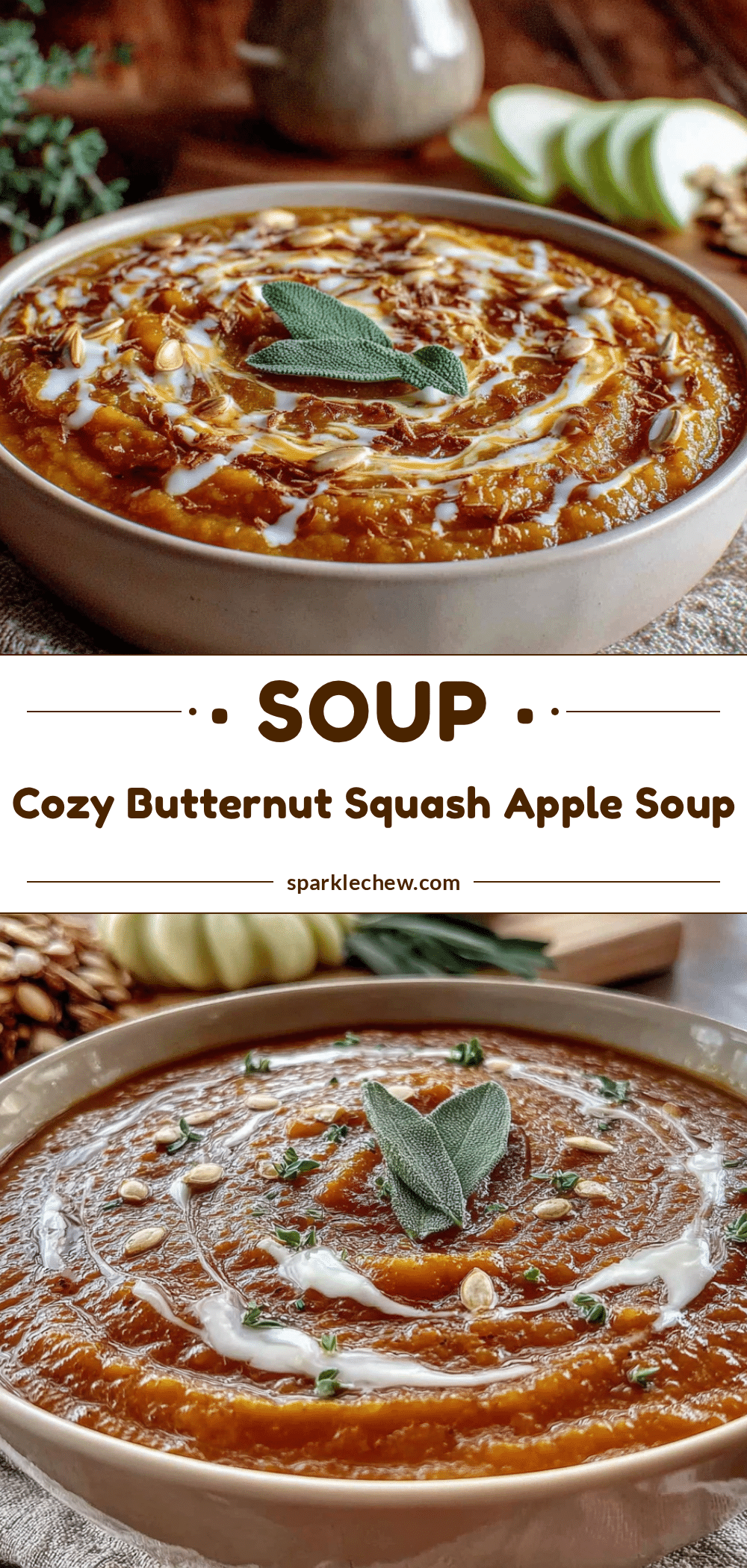
Easy Cozy Butternut Squash Apple Soup with Sage

A creamy, dairy-free butternut squash soup with roasted apples and fresh sage, perfect for fall. This easy recipe comes together in about 45 minutes with simple ingredients and delivers deep, caramelized flavor without heavy cream.
- Prep Time: 15 minutes
- Cook Time: 35 minutes
- Total Time: 50 minutes
- Yield: 6 servings 1x
- Category: Soup
- Cuisine: American
Ingredients
- 1 medium butternut squash (about 2–3 pounds), peeled, seeded, and cut into 1-inch cubes
- 2 medium apples (Granny Smith or Honeycrisp), peeled, cored, and chopped into 1-inch pieces
- 1 medium yellow onion, roughly chopped
- 3 cloves garlic, smashed
- 2 tablespoons olive oil
- 1 tablespoon fresh sage leaves, roughly chopped (about 8–10 leaves)
- 1 teaspoon dried thyme (or 1 tablespoon fresh)
- 1/2 teaspoon ground nutmeg (freshly grated if available)
- 4 cups vegetable broth (or chicken broth if not vegetarian)
- 1/2 cup unsweetened coconut milk (or heavy cream if dairy is okay)
- Salt and black pepper to taste
- Optional garnish: extra sage leaves fried in butter, a drizzle of coconut milk, pumpkin seeds, or a sprinkle of cinnamon
Instructions
- Preheat your oven to 425°F (220°C). Line a large baking sheet with parchment paper for easy cleanup.
- Prepare the squash and apples. Peel the butternut squash with a vegetable peeler, then cut it in half lengthwise. Scoop out the seeds with a spoon. Cut the squash into 1-inch cubes. Peel and core the apples, then chop them into similar-sized pieces. Roughly chop the onion. Smash the garlic cloves with the flat side of your knife.
- Toss everything with oil and herbs. On the prepared baking sheet, combine the squash cubes, apple chunks, chopped onion, smashed garlic, and fresh sage. Drizzle with the olive oil, then sprinkle with dried thyme, nutmeg, and a generous pinch of salt and black pepper. Use your hands to toss everything until it’s evenly coated. Spread it in a single layer.
- Roast for 30-35 minutes until the squash is tender and caramelized around the edges, and the apples are soft. Halfway through, give the pan a shake or stir the vegetables so they brown evenly.
- Transfer to a soup pot. Scrape all the roasted vegetables and apples into a large soup pot or Dutch oven. Add the 4 cups of vegetable broth. Bring to a simmer over medium heat, then reduce the heat to low and let it bubble gently for 5 minutes.
- Blend until smooth. Remove the pot from the heat. Use an immersion blender to puree the soup directly in the pot until it’s completely smooth and velvety. If using a regular blender, work in batches—fill the blender no more than halfway, hold the lid down with a towel, and blend until smooth. Return the blended soup to the pot.
- Stir in the coconut milk. Add the 1/2 cup of coconut milk (or cream) and stir to combine. Taste and adjust seasoning—you might want more salt, a crack of black pepper, or even a pinch more nutmeg. If the soup is too thick, add a splash more broth or water until it reaches your desired consistency.
- Warm through and serve. Heat the soup gently over low heat for 2-3 minutes, stirring occasionally. Don’t let it boil after adding the coconut milk. Ladle into bowls and add your favorite garnishes.
Notes
Don’t skip the roasting step—it concentrates the flavors. For best results, cut squash and apples into uniform 1-inch cubes. Season in layers: salt the vegetables before roasting, then adjust after blending. Use room temperature coconut milk to prevent lumps. This soup tastes even better the next day. For a thicker soup, reduce broth to 3 cups or add a peeled, diced potato to the roasting pan. For a thinner soup, add extra broth after blending.
Nutrition
- Serving Size: 1 serving (about 1.5
- Calories: 195
- Sugar: 12
- Sodium: 480
- Fat: 8
- Saturated Fat: 3
- Carbohydrates: 31
- Fiber: 6
- Protein: 3
Keywords: butternut squash soup, apple soup, sage, fall soup, dairy-free, vegan, gluten-free, easy soup, roasted squash soup