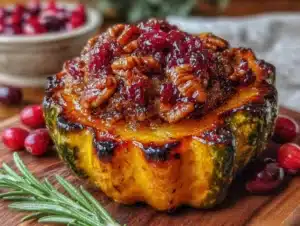
Love this? Save it for later!
Share the inspiration with your friends
My brother-in-law, Mark, had claimed for years that he hated squash. Like, genuinely hated it. He’d make a face at Thanksgiving when the butternut soup came out and would push acorn squash rings around his plate at family dinners like a kid avoiding broccoli. “It’s mushy and sweet in a weird way,” he’d argue. “It tastes like someone tried to make a vegetable into a dessert and failed.” I’d just shrug and keep cooking my squash anyway, because honestly, more for me.
Then last fall, I was testing this stuffed roasted acorn squash recipe for a dinner party I was hosting. I had a few extra squash halves that didn’t fit on the main serving platter, so I set them aside on a smaller plate, figuring I’d eat them for lunch the next day. Midway through the party, I walked back into the kitchen to grab more wine and found Mark standing at the counter, fork in hand, going to town on one of those “extra” squash halves. He had this look on his face—like he’d been caught doing something slightly embarrassing but couldn’t stop. “This is good,” he mumbled, mouth half full. “Like, actually good.” I just smiled and poured myself a glass of wine. Sometimes the best validation is catching someone in the act of proving themselves wrong.
That moment stuck with me. Not because I needed Mark’s approval to keep making squash (I didn’t), but because it reminded me why I love this particular recipe so much. It’s not trying to hide what it is—it’s squash, unapologetically. But the stuffing, the seasoning, the way the edges caramelize in the oven—it all comes together in a way that makes even the skeptics pause. Maybe you’ve had that experience too, where a dish you’re proud of catches someone off guard. That’s the kind of recipe this is.
This stuffed roasted acorn squash has become my go-to for fall gatherings and dinner parties. It looks impressive on the table—those deep orange-red halves with the golden-brown stuffing spilling out—but it’s surprisingly simple to pull together. And honestly? Watching someone take that first bite and pause, really tasting it, is one of my favorite cooking moments. It’s the recipe that turned a self-proclaimed squash hater into someone who now asks, “Are you making that squash thing for Thanksgiving?”
Why You’ll Love This Recipe
Let me tell you why this stuffed roasted acorn squash recipe is different from every other version you’ve seen floating around Pinterest or your aunt’s recipe box. I’ve tested this dozens of times—for small family dinners, for big holiday gatherings, for those potlucks where you need something that travels well and still looks gorgeous on the buffet table.
- Perfect for Entertaining: This is the dish you bring to a dinner party when you want to impress without spending all day in the kitchen. It looks like you fussed, but the prep is straightforward and forgiving.
- Crowd-Pleaser Status: I’ve served this to vegetarians, meat-lovers, picky eaters, and my brother-in-law Mark. Everyone goes back for seconds. The combination of tender, caramelized squash with savory, herby stuffing hits that sweet-savory spot that’s hard to resist.
- Make-Ahead Friendly: You can prep the stuffing a day ahead, roast the squash halves, and assemble everything before guests arrive. Then just pop it in the oven to finish. No last-minute scrambling.
- Naturally Gluten-Free & Vegetarian: As written, this recipe works for gluten-free and vegetarian diets. With a few swaps, it can easily become vegan or dairy-free too.
- Seasonal Showstopper: Acorn squash is at its peak from early fall through winter, making this the perfect dish for Thanksgiving, Friendsgiving, or any cozy gathering where you want something that tastes like autumn on a plate.
What makes this recipe different from other stuffed squash recipes is the balance. So many versions either go too sweet (maple syrup overload) or too savory (dry and bland). I spent months tweaking the ratios—the right amount of garlic, the perfect blend of herbs, a touch of heat from red pepper flakes, and a crunchy topping that gives each bite texture. It’s not just another stuffed squash recipe. It’s the one I keep coming back to, the one my friends request, the one that converted my squash-hating brother-in-law.
This is comfort food that feels special. It’s the kind of dish that makes you close your eyes after the first bite, not because it’s fancy, but because it just tastes right. And when you’re hosting a gathering, that’s exactly what you want—something that feeds people well and gives you one less thing to worry about.
What Ingredients You Will Need
This recipe uses simple, wholesome ingredients that come together to create something genuinely impressive. Most of these are pantry staples or easy to find at any grocery store, especially during fall and winter. Here’s what you’ll need and why each ingredient matters.
For the Squash
- 2 medium acorn squash (about 1.5 to 2 pounds each) — Look for squash that feels heavy for its size with firm, unblemished skin. The ridges should be deep and even. I prefer organic squash when I can find it, but conventional works just fine. The variety you want is the standard green acorn squash with orange patches—not the golden variety, which tends to be drier.
- 2 tablespoons olive oil — For brushing the cut sides of the squash. This helps with caramelization and prevents sticking. A good quality extra-virgin olive oil adds flavor, but regular olive oil works too.
- Salt and black pepper — To season the squash before roasting. I use kosher salt for its clean flavor and easy pinch-measuring.
For the Stuffing
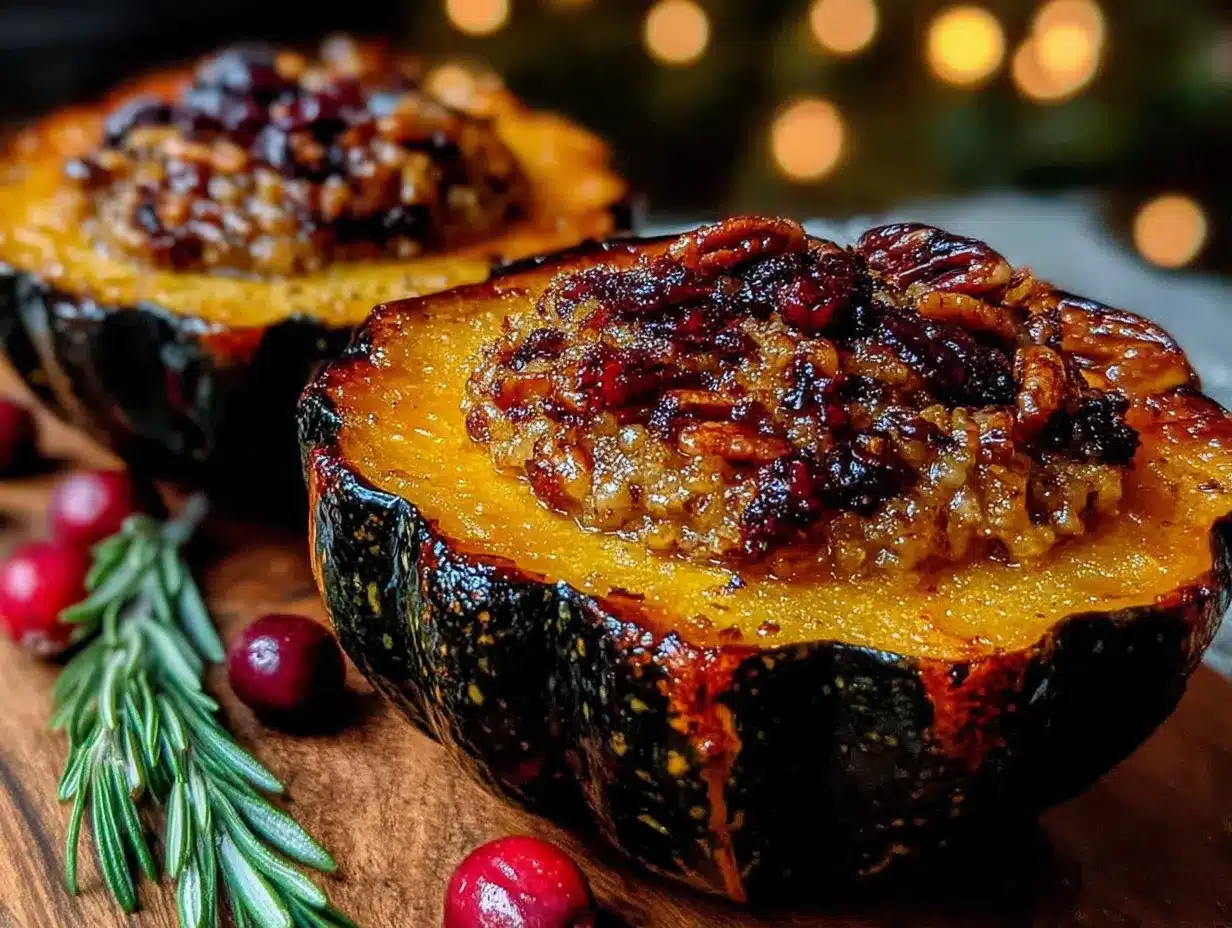
- 1 cup cooked quinoa (about 1/3 cup dry) — Quinoa gives the stuffing a light, fluffy texture and adds protein. Cook it in vegetable broth instead of water for extra flavor. You can substitute brown rice or farro, but adjust cooking times accordingly.
- 1 tablespoon olive oil — For sautéing the aromatics.
- 1 medium yellow onion, diced — About 1 cup. Yellow onion gives a mellow, sweet base. White onion works in a pinch, but red onion will change the color more than I’d like.
- 3 cloves garlic, minced — Fresh garlic is non-negotiable here. Pre-minced jarred garlic has a different flavor that doesn’t work as well. Trust me on this one—I learned the hard way.
- 1 cup cremini mushrooms, finely chopped — Mushrooms add umami and a meaty texture. Cremini (baby bella) have more flavor than white button mushrooms. If you’re not a mushroom fan, you can leave them out and add an extra 1/2 cup of cooked quinoa or finely chopped walnuts.
- 1 cup chopped kale, stems removed — Kale holds up well in the oven and doesn’t get soggy. Spinach works too, but it shrinks more and can make the stuffing watery. Massage the kale with a tiny bit of olive oil and salt for a minute before adding it—this softens the leaves and reduces bitterness.
- 1/2 cup dried cranberries — These add little bursts of sweetness that balance the savory elements. I prefer unsweetened dried cranberries to control the sugar level. Dried tart cherries or chopped dried apricots are great alternatives.
- 1/3 cup toasted pecans, chopped — For crunch and richness. Toast them in a dry skillet over medium heat for 3-4 minutes until fragrant. Watch them closely—they burn fast. Walnuts or pepitas work well too.
- 1 teaspoon dried thyme — Earthy and slightly floral, thyme is a natural partner for squash. Fresh thyme works too—use 1 tablespoon of fresh leaves.
- 1/2 teaspoon dried rosemary — Piney and aromatic. Crush it between your fingers before adding to release the oils. Fresh rosemary works great—use 1 teaspoon finely chopped.
- 1/4 teaspoon red pepper flakes — Optional, but I highly recommend it. Just a tiny bit of heat wakes up all the other flavors without making the dish spicy. My favorite brand is Simply Organic for consistent heat.
- 1/4 cup vegetable broth — To add moisture to the stuffing. Use low-sodium so you can control the salt. Chicken broth works if you’re not keeping it vegetarian.
- 1/2 cup shredded Parmesan cheese — Adds salty, nutty flavor and helps bind the stuffing. Pecorino Romano works too. For a dairy-free version, use 1/4 cup nutritional yeast plus an extra tablespoon of olive oil.
- Salt and black pepper to taste
For the Topping
- 1/4 cup panko breadcrumbs — These give the stuffing a crispy, golden top. Use gluten-free panko if needed. Regular breadcrumbs work, but panko stays crunchier.
- 2 tablespoons melted butter or olive oil — To coat the breadcrumbs. Butter adds rich flavor, but olive oil keeps it dairy-free.
- 2 tablespoons chopped fresh parsley — For color and freshness at the end. Flat-leaf Italian parsley has more flavor than curly.
Equipment Needed
You don’t need a professional kitchen to make this stuffed roasted acorn squash. Here’s what you’ll actually use:
- Large baking sheet or sheet pan — A rimmed baking sheet is ideal to catch any juices that might drip from the squash. A half-sheet pan (18×13 inches) fits two squash halves perfectly with room to spare.
- Parchment paper or silicone baking mat — Not strictly necessary, but it makes cleanup so much easier. The caramelized squash sugars can stick to the pan, and nobody wants to scrub that.
- Sharp chef’s knife — Acorn squash is tough. A dull knife is dangerous here. You want a sturdy 8-inch chef’s knife or a cleaver. I learned this the hard way after nearly sending a squash flying across my kitchen.
- Large spoon or ice cream scoop — For scooping out the seeds and stringy pulp. A grapefruit spoon with serrated edges works great too.
- Medium skillet or sauté pan — For cooking the stuffing. A 10-inch skillet is the right size. Non-stick works, but stainless steel or cast iron gives better browning.
- Medium mixing bowl — For combining the stuffing ingredients.
- Small bowl — For mixing the breadcrumb topping.
- Cutting board — Preferably a large one with a groove to catch juices.
- Measuring cups and spoons — For accuracy, especially with the quinoa-to-liquid ratio.
- Pastry brush — For brushing oil onto the cut sides of the squash. A silicone brush is easy to clean. If you don’t have one, just use a folded paper towel.
Budget-friendly tip: If you don’t have a pastry brush, you can use a clean paintbrush from the hardware store—just make sure it’s never been used for paint! I’ve been using the same one for years, and it works perfectly.
Preparation Method
Let me walk you through this step by step. I’ve included all the little details that make the difference between good squash and unforgettable squash.
Step 1: Preheat and Prep the Squash
Preheat your oven to 400°F (200°C). Line a large baking sheet with parchment paper or a silicone mat. Using a sharp chef’s knife, carefully cut each acorn squash in half from stem to tip. This takes some muscle—go slowly and keep your fingers clear. Scoop out the seeds and stringy pulp with a large spoon. Don’t worry about getting every last bit of string; a little left behind is fine. Brush the cut sides and the cavity with olive oil, then season generously with salt and black pepper. Place the squash halves cut-side down on the prepared baking sheet.
Step 2: Roast the Squash
Roast the squash for 25-30 minutes, until the flesh is fork-tender and the edges are starting to caramelize and turn golden brown. The timing depends on the size and freshness of your squash—check at 25 minutes by piercing the flesh with a fork. It should slide in easily with little resistance. Don’t over-roast at this stage, because the squash will go back in the oven with the stuffing. Remove from the oven and let cool slightly. Flip the halves over so the cavities face up. Reduce the oven temperature to 375°F (190°C).
Step 3: Cook the Quinoa
While the squash is roasting, cook the quinoa. Rinse 1/3 cup dry quinoa in a fine-mesh strainer under cold water for about 30 seconds. This removes the natural coating (saponin) that can make quinoa taste bitter. Combine the rinsed quinoa with 2/3 cup water or vegetable broth in a small saucepan. Bring to a boil, then reduce heat to low, cover, and simmer for 15 minutes. Remove from heat and let it sit, covered, for 5 minutes. Fluff with a fork. You should have about 1 cup cooked quinoa. Set aside.
Step 4: Make the Stuffing
Heat 1 tablespoon olive oil in a medium skillet over medium heat. Add the diced onion and cook for 4-5 minutes until translucent and starting to brown at the edges. Add the minced garlic and cook for 30 seconds until fragrant—don’t let it burn. Add the chopped mushrooms and cook for 5-6 minutes, stirring occasionally, until they’ve released their liquid and started to brown. The pan should look mostly dry when they’re done. Add the chopped kale and cook for 2-3 minutes until wilted. Season with a pinch of salt and pepper.
Transfer the cooked vegetables to a medium mixing bowl. Add the cooked quinoa, dried cranberries, toasted pecans, dried thyme, dried rosemary, red pepper flakes, and 1/4 cup vegetable broth. Stir to combine. Fold in the shredded Parmesan cheese. Taste and adjust seasoning—you want it well-seasoned because some of the flavor will mellow during the final bake.
Step 5: Stuff the Squash
Divide the stuffing evenly among the four squash halves, mounding it slightly in the center. Don’t pack it too tightly—you want some air pockets for texture. The stuffing should be generous but not overflowing. If you have extra stuffing, you can bake it in a small ramekin alongside the squash.
Step 6: Make the Topping and Bake
In a small bowl, combine the panko breadcrumbs with the melted butter or olive oil. Stir until the breadcrumbs are evenly coated. Sprinkle the breadcrumb mixture over the stuffed squash halves. Bake at 375°F (190°C) for 15-20 minutes, until the stuffing is heated through and the breadcrumbs are golden brown and crispy. If the breadcrumbs are browning too quickly, tent loosely with foil for the last 5 minutes.
Step 7: Garnish and Serve
Remove from the oven and let rest for 5 minutes. Sprinkle with fresh chopped parsley before serving. The squash should be tender enough to eat with a fork, and the stuffing should be hot and slightly crisp on top.
Cooking Tips & Techniques
After making this stuffed roasted acorn squash more times than I can count, I’ve picked up a few tricks that make the process smoother and the results more consistent. Here are the ones that matter most.
Don’t skip the pre-roast. I know it’s tempting to just stuff the raw squash and bake everything together, but the two-stage roasting makes a real difference. Pre-roasting the squash cut-side down creates a caramelized surface that adds depth of flavor and ensures the squash is perfectly tender without overcooking the stuffing. It also allows the squash to release some moisture, so your stuffing doesn’t end up soggy.
Mind your knife technique. Cutting acorn squash is genuinely dangerous if you’re not careful. The skin is tough and the shape is awkward. Here’s what works: Place the squash on a damp paper towel on your cutting board to keep it from sliding. Insert the tip of your knife into the center ridge and rock the knife forward, using your other hand to press down on the back of the blade (not the handle). Go slow. If you’re struggling, microwave the whole squash for 2 minutes to soften it slightly—this makes cutting much easier.
Toast your nuts and seeds. This is one of those small steps that makes a big difference. Toasting pecans brings out their natural oils and adds a warm, nutty flavor that raw nuts just don’t have. I’ve forgotten to toast them before, and honestly, the stuffing was noticeably less interesting. Set a timer—nuts go from perfectly toasted to burnt in about 30 seconds.
Season in layers. Don’t just salt at the end. Season the squash before roasting, season the vegetables as they cook, and season the final stuffing mixture. Each layer of seasoning builds on the last, creating a more complex final flavor. I learned this lesson after making a batch that tasted flat despite having plenty of salt—because I’d only added it at the end.
Watch the moisture. If your stuffing seems dry before baking, add an extra tablespoon or two of broth. If it seems wet, cook it a few minutes longer to evaporate excess liquid. The goal is a stuffing that’s moist but not soggy. I once used a particularly watery batch of mushrooms and ended up with stuffing that leaked all over the baking sheet. Not a disaster, but not ideal.
Make extra topping. The panko-butter mixture is the best part for some people (me included). I always make a little extra and sprinkle it on top of any leftover stuffing I bake in a ramekin. Crispy, buttery breadcrumbs on everything, please.
Variations & Adaptations
This stuffed roasted acorn squash recipe is flexible. Here are some variations I’ve tried and loved.
Vegan Version
Replace the Parmesan cheese with 1/4 cup nutritional yeast plus 1 tablespoon olive oil. Use melted coconut oil or vegan butter for the breadcrumb topping. The nutritional yeast adds a cheesy, savory flavor that works surprisingly well with the other ingredients. I tested this for a vegan friend’s dinner party and honestly couldn’t tell the difference.
Add Protein
For a heartier version, add 1 cup cooked Italian sausage (casings removed), crumbled and browned, or 1 cup cooked lentils to the stuffing. The sausage adds a savory, fennel-forward flavor that pairs beautifully with the squash. For a lighter option, add 1 cup cooked chickpeas, roughly chopped. I’ve done all three, and each version has its own personality.
Change the Grain
Instead of quinoa, try cooked farro, wild rice, or brown rice. Farro has a chewy texture that holds up well. Wild rice adds a nutty flavor and beautiful dark color. Adjust cooking times according to the grain you choose—farro takes about 30 minutes, brown rice about 45 minutes. Leftover cooked grains work great here, which makes this a good recipe for using up odds and ends from the fridge.
Seasonal Swaps
In spring, substitute asparagus (chopped and blanched) for the kale and fresh dill for the rosemary. In summer, use zucchini instead of mushrooms and fresh basil instead of thyme. The basic formula stays the same: a grain + vegetables + aromatics + dried fruit + nuts + cheese. Seasonal variations keep this recipe from getting boring.
Spice It Up
Add 1/2 teaspoon smoked paprika and a pinch of cayenne pepper to the stuffing for a smoky-spicy kick. Or add 1 teaspoon curry powder for an Indian-inspired version. I made a curry-spiced version last fall and it was gone in minutes—the warm spices complement the sweetness of the squash perfectly.
Serving & Storage Suggestions
This stuffed roasted acorn squash is versatile when it comes to serving. Here’s how I handle it.
Serve hot or warm. The squash is best served hot out of the oven, when the breadcrumb topping is still crispy and the filling is steaming. But it’s also delicious at room temperature—I’ve brought it to potlucks where it sat out for an hour and it was still excellent. If serving at a dinner party, let the squash rest for 5-10 minutes after baking. This allows the filling to set slightly and makes it easier to serve without falling apart.
Presentation tips for hosting. Arrange the stuffed squash halves on a large platter, garnished with fresh parsley and a sprinkle of extra toasted pecans. For a holiday table, surround the squash with roasted Brussels sprouts or a simple arugula salad with lemon vinaigrette. The bright green contrast against the orange squash is stunning. I like to serve each half as a main course for vegetarians, or cut each half in half (so you get quarters) and serve as a side dish for everyone.
What to serve alongside. This squash pairs beautifully with a simple roasted chicken or pork tenderloin for the meat-eaters at your table. For a vegetarian spread, serve with a hearty lentil soup or a wild mushroom risotto. A crisp green salad with apple slices and a maple-Dijon dressing cuts through the richness of the squash. For drinks, a dry Riesling or a light Pinot Noir complements the sweet-savory flavors.
Storage instructions. Store leftover stuffed squash in an airtight container in the refrigerator for up to 4 days. The squash will soften and the breadcrumb topping will lose its crunch, but the flavor actually improves as the ingredients meld together. To reheat, place in a 350°F (175°C) oven for 10-15 minutes until warmed through. The microwave works in a pinch, but the texture won’t be as good. If you want to restore some crispiness to the topping, sprinkle fresh panko on top before reheating in the oven.
Freezer-friendly. You can freeze the assembled but unbaked stuffed squash. Wrap each half tightly in plastic wrap, then in foil, and freeze for up to 3 months. To bake from frozen, remove the foil and plastic, place on a baking sheet, and bake at 375°F (190°C) for 35-40 minutes, adding the breadcrumb topping for the last 10 minutes. I’ve done this for holiday prep and it works beautifully—just add 10-15 minutes to the baking time.
Nutritional Information & Benefits
This stuffed roasted acorn squash is as nourishing as it is delicious. Here’s what you’re getting in each serving (based on one squash half as a main course).
| Nutrient | Amount per Serving |
|---|---|
| Calories | 385 |
| Total Fat | 18g |
| Saturated Fat | 5g |
| Carbohydrates | 48g |
| Fiber | 8g |
| Sugar | 12g |
| Protein | 12g |
| Vitamin A | 45% DV |
| Vitamin C | 35% DV |
| Iron | 15% DV |
| Calcium | 20% DV |
Acorn squash is a nutritional powerhouse. It’s rich in vitamin A (from beta-carotene), which supports eye health and immune function. The fiber content keeps you full and supports digestive health. Quinoa adds complete protein, while kale brings in vitamins K, C, and A along with antioxidants. The pecans contribute healthy fats and magnesium. This is a meal that satisfies deeply without weighing you down.
Dietary considerations: This recipe is naturally gluten-free (use gluten-free panko) and vegetarian. For vegan, see the variation above. It’s also nut-free if you omit the pecans or replace them with sunflower seeds. The main allergens are dairy (Parmesan, butter) and tree nuts (pecans).
Conclusion
This stuffed roasted acorn squash has become one of those recipes I turn to again and again. It’s the dish I bring to fall gatherings when I want to contribute something that feels special but doesn’t require me to spend all day in the kitchen. It’s the meal I make for myself on a quiet Sunday when I want something that tastes like comfort and nourishment at the same time. And it’s the recipe that turned my brother-in-law into a squash convert—which honestly still makes me smile every time I think about it.
What I love most about this recipe is how forgiving it is. You can swap ingredients, adjust the seasoning, use whatever grain you have on hand, and it still comes together beautifully. It’s the kind of dish that rewards improvisation. So don’t be afraid to make it your own—add more spice, swap the cranberries for chopped apples, use whatever cheese is in your fridge. The basic technique is solid, and the flavor combination is flexible.
I’d love to hear how this turns out for you. Did you make any substitutions? Did you serve it at a dinner party or just for a cozy night in? Drop a comment below and let me know. And if you share a photo on Pinterest, tag me—I love seeing your versions of this recipe. Here’s to good food, good company, and maybe converting a few squash skeptics along the way.
Frequently Asked Questions
Can I use butternut squash instead of acorn squash?
Yes, absolutely. Butternut squash has a similar sweet, nutty flavor and works well as a substitute. The main difference is shape—butternut squash is longer and narrower, so you’ll get more of a boat shape rather than the round half-moon of acorn squash. Cut the butternut in half lengthwise, scoop out the seeds, and follow the same roasting instructions. You may need to add 5-10 minutes to the pre-roast time since butternut is denser.
How do I prevent the squash from being watery?
The pre-roasting step is key here. Roasting the squash cut-side down allows moisture to evaporate rather than pooling in the cavity. Also, make sure your mushroom mixture is cooked until the liquid has evaporated before adding it to the stuffing. If your stuffing still seems wet, you can spread it on a baking sheet and bake for 5 minutes before stuffing the squash.
Can I make this recipe ahead of time for a party?
Definitely. You can roast the squash and prepare the stuffing up to 2 days in advance. Store the roasted squash halves and stuffing separately in the refrigerator. When you’re ready to serve, stuff the squash, add the breadcrumb topping, and bake at 375°F (190°C) for 20-25 minutes until heated through. This makes party prep so much easier—you’re just 20 minutes from serving when guests arrive.
What can I use instead of quinoa?
Cooked farro, wild rice, brown rice, or even couscous all work well. Each grain gives the stuffing a different texture. Farro is chewy and hearty, wild rice is nutty and dramatic, brown rice is neutral and reliable. Leftover cooked grains are perfect here—it’s a great way to use up what you have. Just make sure whatever grain you use is fully cooked before adding it to the stuffing.
How do I store and reheat leftovers?
Store leftover stuffed squash in an airtight container in the refrigerator for up to 4 days. The breadcrumb topping will soften, but the flavor will still be excellent. To reheat, place in a 350°F (175°C) oven for 10-15 minutes. For a quicker option, the microwave works—just expect the topping to be soft rather than crispy. If you want to restore some crunch, sprinkle fresh panko on top before reheating in the oven.
Pin This Recipe!
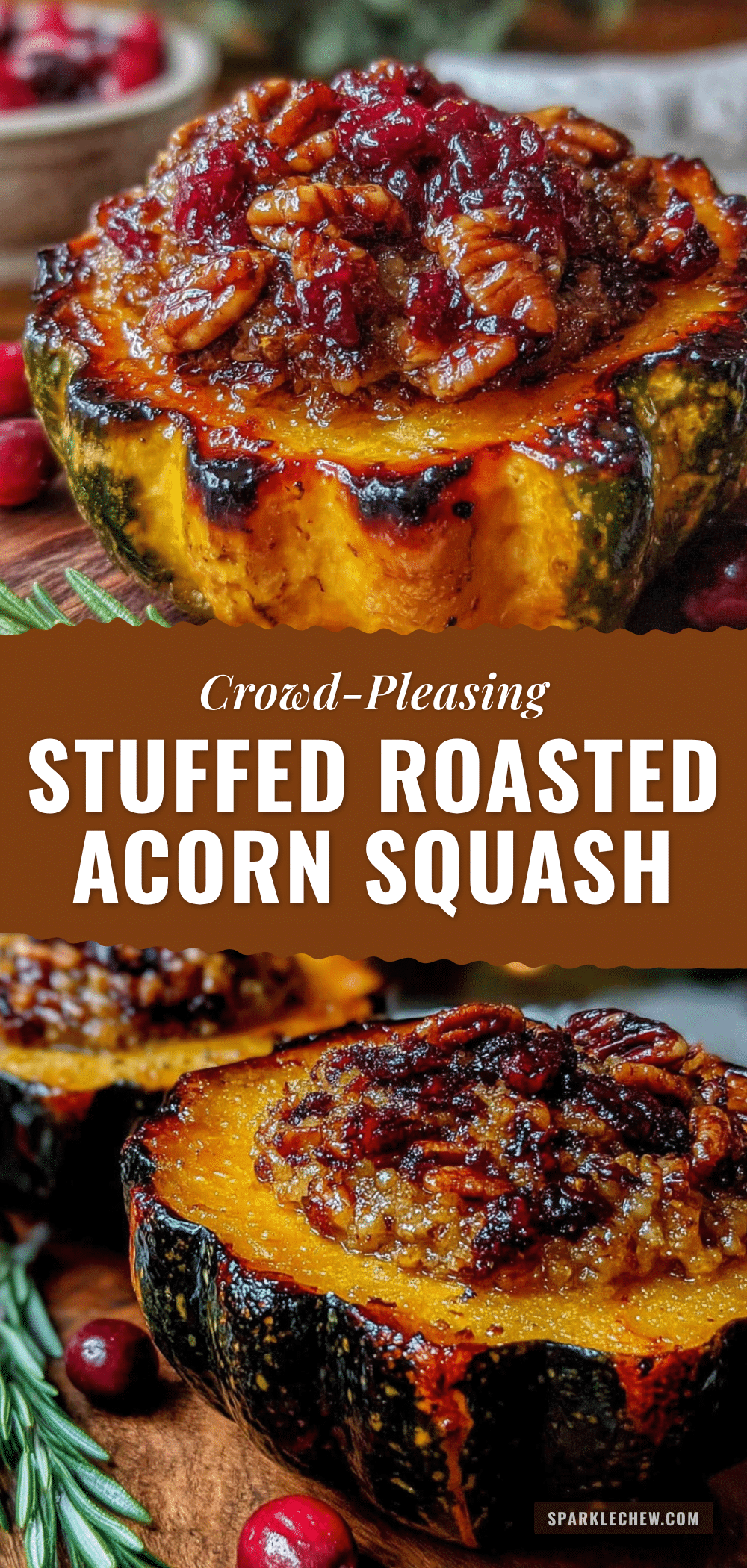
Best Stuffed Roasted Acorn Squash Recipe (Easy Crowd-Pleaser)
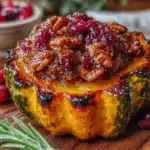
This stuffed roasted acorn squash is a crowd-pleasing fall dish featuring tender, caramelized squash halves filled with a savory quinoa, mushroom, kale, and cranberry stuffing, topped with crispy panko breadcrumbs. It’s naturally gluten-free and vegetarian, perfect for entertaining or a cozy dinner.
- Prep Time: 20 minutes
- Cook Time: 45 minutes
- Total Time: 1 hour 5 minutes
- Yield: 4 servings 1x
- Category: Main Course
- Cuisine: American
Ingredients
- 2 medium acorn squash (about 1.5 to 2 pounds each)
- 2 tablespoons olive oil
- Salt and black pepper to taste
- 1 cup cooked quinoa (about 1/3 cup dry)
- 1 tablespoon olive oil
- 1 medium yellow onion, diced
- 3 cloves garlic, minced
- 1 cup cremini mushrooms, finely chopped
- 1 cup chopped kale, stems removed
- 1/2 cup dried cranberries
- 1/3 cup toasted pecans, chopped
- 1 teaspoon dried thyme
- 1/2 teaspoon dried rosemary
- 1/4 teaspoon red pepper flakes (optional)
- 1/4 cup vegetable broth
- 1/2 cup shredded Parmesan cheese
- Salt and black pepper to taste
- 1/4 cup panko breadcrumbs
- 2 tablespoons melted butter or olive oil
- 2 tablespoons chopped fresh parsley
Instructions
- Preheat oven to 400°F (200°C). Line a large baking sheet with parchment paper or a silicone mat.
- Carefully cut each acorn squash in half from stem to tip. Scoop out seeds and stringy pulp. Brush cut sides and cavity with olive oil, season with salt and pepper. Place cut-side down on prepared baking sheet.
- Roast squash for 25-30 minutes until fork-tender and edges are caramelized. Remove from oven, let cool slightly, flip halves over so cavities face up. Reduce oven temperature to 375°F (190°C).
- While squash roasts, cook quinoa: rinse 1/3 cup dry quinoa, combine with 2/3 cup water or vegetable broth in a small saucepan. Bring to a boil, reduce heat, cover, and simmer for 15 minutes. Remove from heat, let sit covered for 5 minutes, then fluff with a fork.
- Heat 1 tablespoon olive oil in a medium skillet over medium heat. Add diced onion and cook 4-5 minutes until translucent. Add minced garlic and cook 30 seconds. Add chopped mushrooms and cook 5-6 minutes until liquid evaporates and they start to brown. Add chopped kale and cook 2-3 minutes until wilted. Season with salt and pepper.
- Transfer cooked vegetables to a medium mixing bowl. Add cooked quinoa, dried cranberries, toasted pecans, dried thyme, dried rosemary, red pepper flakes, and vegetable broth. Stir to combine. Fold in shredded Parmesan cheese. Taste and adjust seasoning.
- Divide stuffing evenly among the four squash halves, mounding slightly. Do not pack too tightly.
- In a small bowl, combine panko breadcrumbs with melted butter or olive oil. Sprinkle over stuffed squash halves.
- Bake at 375°F (190°C) for 15-20 minutes until stuffing is heated through and breadcrumbs are golden brown and crispy. If browning too quickly, tent loosely with foil for last 5 minutes.
- Remove from oven, let rest 5 minutes. Sprinkle with fresh chopped parsley before serving.
Notes
Pre-roasting the squash cut-side down creates a caramelized surface and prevents soggy stuffing. Toast nuts for best flavor. Season in layers for complex taste. For vegan version, replace Parmesan with 1/4 cup nutritional yeast plus 1 tablespoon olive oil, and use melted coconut oil or vegan butter for topping. Can be made ahead: roast squash and prepare stuffing up to 2 days in advance; assemble and bake when ready.
Nutrition
- Serving Size: 1 stuffed squash hal
- Calories: 385
- Sugar: 12
- Sodium: 480
- Fat: 18
- Saturated Fat: 5
- Carbohydrates: 48
- Fiber: 8
- Protein: 12
Keywords: stuffed acorn squash, roasted acorn squash, fall recipe, vegetarian, gluten-free, quinoa stuffing, Thanksgiving side dish