Love this? Save it for later!
Share the inspiration with your friends
My brother-in-law Mark asked why I couldn’t just use the bagged stuffing mix like everyone else. I started to explain why that wouldn’t work—then stopped. I mean, honestly, I had a whole speech ready about texture and homemade crumb structure and the importance of properly dried bread. But something made me pause. I was standing in his kitchen, watching him pull out a giant bag of pre-seasoned cubes, and I realized I’d never actually tried making dressing that way. Not once. So I shrugged and said, “You know what? Let’s try it.”
That Thanksgiving, I made two batches—one my way, one his. And let me tell you, the look on my face when everyone went back for seconds of his version was something else. It wasn’t that my homemade cornbread sausage dressing was bad—it was great, actually. But his was easier, faster, and somehow just as good. The real lesson hit me later, though. The reason his worked wasn’t the bagged mix. It was the cornbread sausage dressing with sage he’d added to it—the fresh herbs, the crumbled sausage, the roasted cornbread he’d made the night before. He’d taken the shortcut and turned it into something special.
That moment changed how I think about this dish. Now, I make a fully homemade version that captures all that flavor without the bag. It’s become the dish people ask for by name at every gathering. Maybe you’ve been there—standing over a hot stove, wondering if anyone will actually notice the extra hour you spent. This recipe is for those moments. It’s the one that gets passed around the table twice, the one someone asks for the recipe before they’ve finished eating.
So here’s my version of that lesson—a cornbread sausage dressing with sage that’s both impressive and forgiving. It’s the dish I bring to every potluck, the one that makes people close their eyes after the first bite, and the one I finally learned to trust.
Why You’ll Love This Recipe
This isn’t just another holiday side dish. It’s the kind of recipe that makes you look like you spent all day in the kitchen—when really, most of the work happens while you’re doing other things.
- Make-Ahead Magic : You can prep this cornbread sausage dressing with sage up to two days in advance. Just pop it in the oven when your guests arrive.
- Simple Ingredients : Nothing fancy here. Cornbread, sausage, sage, onions, celery—all stuff you can find at any grocery store.
- Perfect for Gatherings : This recipe scales beautifully. I’ve made it for 4 people and for 40 people with the same great results.
- Crowd-Pleaser : Even the picky eaters go back for seconds. The sausage adds just enough richness without overwhelming the sage.
- Unbelievably Delicious : That moment when the cornbread gets slightly crispy on top but stays soft underneath? Pure magic.
What makes this different from every other dressing recipe? It’s the balance. Most versions either have too much bread or not enough sausage. This one hits that sweet spot where every bite has a little bit of everything. Plus, the sage isn’t just sprinkled on top—it’s infused throughout the whole dish.
This recipe is the one that makes you close your eyes after the first bite. It’s comfort food at its best—rich, savory, and deeply satisfying. Perfect for impressing guests without the stress, or turning a simple holiday meal into something everyone remembers.
What Ingredients You Will Need
This recipe uses simple, wholesome ingredients that come together to create something truly special. Most of these are pantry staples, but a few are worth seeking out for the best results.
For the Cornbread
- 1 cup yellow cornmeal (I prefer stone-ground for better texture)
- 1 cup all-purpose flour
- 1 tablespoon baking powder
- 1 teaspoon salt
- 1/4 cup granulated sugar (just enough to balance the savory flavors)
- 1 cup buttermilk (adds tenderness; regular milk works too)
- 1/3 cup vegetable oil (or melted butter for richer flavor)
- 2 large eggs, room temperature
For the Dressing

- 1 pound pork sausage (breakfast or Italian, your choice—I use Jimmy Dean’s regular)
- 1 large yellow onion, diced (about 1 1/2 cups)
- 3 celery stalks, diced (about 1 cup)
- 4 cloves garlic, minced
- 2 tablespoons fresh sage, chopped (or 1 tablespoon dried)
- 1 tablespoon fresh thyme, chopped (or 1 teaspoon dried)
- 1 teaspoon dried rosemary
- 1/2 teaspoon black pepper
- 1/2 teaspoon salt (adjust based on sausage saltiness)
- 2 cups chicken broth (low-sodium is best—you can always add more salt later)
- 2 large eggs, beaten
- 4 tablespoons unsalted butter, melted
The cornbread is the foundation here, so don’t skip making it from scratch. Boxed mixes have a different texture that gets too mushy when soaked in broth. If you’re short on time, you can use day-old store-bought cornbread, but homemade really does make a difference.
For the sausage, I’ve tried several brands and always come back to Jimmy Dean’s regular breakfast sausage. It has the right balance of fat and seasoning. If you want a spicier dressing, use hot sausage instead. For a lighter option, turkey sausage works well—just add an extra tablespoon of oil since it’s leaner.
The fresh sage is non-negotiable in this cornbread sausage dressing with sage. Dried sage works in a pinch, but fresh gives that bright, peppery flavor that makes this dish special. I’ve even grown my own sage plant just for this recipe—it’s that important.
Equipment Needed
- 9×13-inch baking dish (glass or ceramic works best for even heating)
- 8×8-inch baking pan (for the cornbread)
- Large skillet (cast iron is ideal for browning the sausage)
- Large mixing bowl
- Medium mixing bowl
- Whisk
- Wooden spoon or spatula
- Chef’s knife
- Cutting board
- Measuring cups and spoons
- Aluminum foil (for covering during baking)
If you don’t have a 9×13 dish, you can use two 8×8 pans or even a cast iron skillet. Just adjust the baking time slightly—smaller dishes will cook faster. I’ve also used disposable aluminum pans when bringing this to potlucks, and it works great.
One tip: if you’re using a glass baking dish, reduce the oven temperature by 25 degrees to prevent the edges from burning before the center is done. Learned that one the hard way.
Preparation Method
Step 1: Make the Cornbread (Day Before or Early Morning)
Preheat your oven to 400°F (200°C). Grease an 8×8-inch baking pan with butter or cooking spray. In a medium bowl, whisk together the cornmeal, flour, baking powder, salt, and sugar. In a separate bowl, combine the buttermilk, oil, and eggs. Pour the wet ingredients into the dry and stir until just combined—lumps are fine, don’t overmix. Pour the batter into the prepared pan and bake for 20-25 minutes, until golden brown and a toothpick inserted in the center comes out clean. Let it cool completely, then cut into 1-inch cubes. Spread the cubes on a baking sheet and leave them out overnight to dry. This step is crucial—dry cornbread absorbs the broth without turning into mush.
Step 2: Brown the Sausage
The next day, preheat your oven to 375°F (190°C). Crumble the sausage into a large skillet over medium-high heat. Cook for 6-8 minutes, breaking it up with a wooden spoon, until it’s browned and cooked through. Use a slotted spoon to transfer the sausage to a plate, leaving about 2 tablespoons of drippings in the pan. If your sausage is lean, add a tablespoon of butter to the drippings.
Step 3: Cook the Vegetables
Add the diced onion and celery to the same skillet with the drippings. Cook over medium heat for 5-6 minutes, until the onions are translucent and the celery is tender. Add the minced garlic and cook for another minute, until fragrant. Your kitchen should smell amazing at this point—that’s the sage and thyme starting to work their magic.
Step 4: Combine the Ingredients
In a large mixing bowl, combine the dried cornbread cubes, cooked sausage, and sautéed vegetables. Add the fresh sage, thyme, rosemary, black pepper, and salt. Toss everything together gently with your hands or a spatula until the herbs are evenly distributed. In a separate bowl, whisk together the chicken broth, beaten eggs, and melted butter. Pour this mixture over the cornbread mixture and stir gently until everything is evenly moistened. The cornbread should be wet but not swimming—if it looks dry, add an extra 1/4 cup of broth.
Step 5: Bake the Dressing
Transfer the mixture to a greased 9×13-inch baking dish and spread it into an even layer. Cover with aluminum foil and bake for 30 minutes. Remove the foil and bake for another 20-25 minutes, until the top is golden brown and crispy around the edges. The center should be set but still slightly soft—it will continue to firm up as it rests. Let it cool for 10 minutes before serving.
Step 6: Rest and Serve
This step is easy to skip, but don’t. Letting the dressing rest allows the flavors to meld and the texture to settle. If you serve it straight out of the oven, it might fall apart on the plate. A 10-minute rest makes all the difference.
Cooking Tips & Techniques
The first time I made this cornbread sausage dressing with sage, I skipped the drying step for the cornbread. I thought, “How much difference can a few hours make?” A lot, apparently. The dressing came out more like cornbread pudding—good, but not what I was going for. Now I always plan ahead and dry the cornbread overnight.
Here are a few other things I’ve learned the hard way:
- Don’t overmix : Once you add the broth mixture, stir just until everything is combined. Overmixing breaks down the cornbread cubes and gives you a dense, pasty texture.
- Check your sausage : Different brands have different salt levels. If you’re using a salty sausage, cut back on the added salt. You can always add more at the table.
- Use low-sodium broth : This gives you more control over the final seasoning. Regular broth plus salty sausage can make the dressing overwhelming.
- Toast the cornbread cubes : If you’re short on time, you can dry the cornbread in a 300°F oven for 15-20 minutes instead of leaving it out overnight. Just watch it closely so it doesn’t burn.
- Make extra broth : I always make a little more than the recipe calls for. If the dressing looks dry after baking, you can drizzle a bit of warm broth over the top before serving.
One more thing—if you’re making this for a big gathering, double the recipe and bake it in two pans. It freezes beautifully, and having extra on hand is never a bad thing. Trust me, people will ask for seconds.
Variations & Adaptations
Dietary Variations
- Gluten-Free : Use gluten-free cornbread mix and gluten-free all-purpose flour for the cornbread. Make sure your sausage is gluten-free too—some brands add fillers.
- Dairy-Free : Substitute the butter with olive oil or vegan butter, and use dairy-free milk in the cornbread instead of buttermilk.
- Vegetarian : Omit the sausage and add 2 cups of sautéed mushrooms and 1 cup of roasted butternut squash. Use vegetable broth instead of chicken broth.
Flavor Twists
- Spicy Sausage Dressing : Use hot Italian sausage and add 1/2 teaspoon of red pepper flakes with the herbs.
- Apple & Sage : Add 1 cup of diced Granny Smith apples to the vegetable mixture. The sweetness balances the savory sausage perfectly.
- Southern Style : Add 1/2 cup of cooked bacon bits and use bacon drippings instead of butter in the cornbread.
Different Cooking Methods
- Slow Cooker : Prepare the dressing as directed but transfer it to a greased slow cooker instead of a baking dish. Cook on low for 3-4 hours or high for 1 1/2-2 hours. Remove the lid for the last 30 minutes to crisp the top.
- Cast Iron Skillet : Bake the dressing in a 12-inch cast iron skillet for extra-crispy edges. Reduce the oven temperature to 350°F and check for doneness 5 minutes earlier.
I’ve tried the apple variation at a fall potluck, and it was a huge hit. The sweetness of the apples with the savory sausage and sage is something special. If you’re feeling adventurous, give it a try.
Serving & Storage Suggestions
Serve this cornbread sausage dressing with sage warm, straight from the baking dish. The top should be golden and slightly crispy, while the inside stays moist and tender. I like to garnish with a few fresh sage leaves and a sprinkle of black pepper right before serving—it makes the dish look as good as it tastes.
This dressing pairs beautifully with roast turkey or chicken, but don’t limit yourself to Thanksgiving. It’s fantastic alongside pork chops, roasted vegetables, or even a simple green salad. For drinks, a dry white wine like Sauvignon Blanc or a crisp apple cider complements the sage and sausage flavors perfectly.
Storage Instructions
- Refrigerator : Store leftovers in an airtight container for up to 4 days. The flavors actually get better after a day or two as they meld together.
- Freezer : Freeze the unbaked dressing in a freezer-safe dish for up to 3 months. Thaw overnight in the refrigerator before baking. You can also freeze baked dressing—just reheat it covered in a 350°F oven until warmed through.
Reheating Tips
The best way to reheat this dressing is in the oven. Place it in a baking dish, cover with foil, and warm at 350°F for 15-20 minutes. Remove the foil for the last 5 minutes to re-crisp the top. The microwave works in a pinch, but the texture won’t be as good—the cornbread can get a bit rubbery.
One thing I love about this recipe is how the flavors develop over time. Day-old dressing is often better than fresh. The sage and thyme have more time to infuse, and the texture becomes more cohesive. So don’t be afraid to make it ahead—your future self will thank you.
Nutritional Information & Benefits
Per serving (based on 12 servings):
- Calories : 320
- Protein : 12g
- Fat : 18g
- Carbohydrates : 28g
- Fiber : 2g
- Sugar : 6g
- Sodium : 620mg
This dressing isn’t exactly health food, but it does have some redeeming qualities. The cornmeal provides complex carbohydrates for steady energy, while the sausage adds protein to keep you full. Sage is packed with antioxidants and has anti-inflammatory properties—so you’re getting some benefits with every bite. The onions and celery add fiber and vitamins A and C.
If you’re watching your sodium, use low-sodium broth and reduce the added salt. You can also swap half the sausage for crumbled tempeh to lower the fat content. For a lighter option, serve smaller portions alongside lots of roasted vegetables.
This is a once-in-a-while dish, not an everyday meal. And honestly, that’s part of what makes it special. When you do make it, savor every bite.
Conclusion
This cornbread sausage dressing with sage has become my go-to for every holiday gathering, potluck, and family dinner. It’s the dish that people remember, the one they ask for year after year. And the best part? It’s forgiving. You can make it ahead, scale it up or down, and tweak it to your taste without ruining it.
I love this recipe because it reminds me of that Thanksgiving with Mark—the one where I learned that being right isn’t always the point. Sometimes the best dishes come from letting go of perfection and trusting the process. This dressing is proof of that.
Now I want to hear from you. Have you tried making your own dressing from scratch? What’s your favorite variation? Drop a comment below and share your version. And if you make this recipe, tag me in your photos—I love seeing how it turns out in other kitchens.
Until next time, happy cooking. And remember: the best dishes are the ones made with a little love and a lot of butter.
Frequently Asked Questions
Can I make this cornbread sausage dressing with sage ahead of time?
Absolutely. You can assemble the dressing up to two days in advance and store it covered in the refrigerator. Just add 10-15 minutes to the baking time since you’re starting from cold. You can also freeze the unbaked dressing for up to three months.
Can I use boxed cornbread mix instead of homemade?
You can, but the texture will be different. Boxed mixes tend to be sweeter and more cake-like, which can make the dressing too soft. If you use a mix, reduce the sugar in the recipe and dry the cornbread cubes thoroughly before assembling.
How do I know when the dressing is done?
The top should be golden brown and crispy, and the center should be set but still slightly jiggly. A thermometer inserted in the center should read 165°F (74°C). Let it rest for 10 minutes before serving—it will continue to firm up.
Can I make this vegetarian?
Yes. Omit the sausage and add 2 cups of sautéed mushrooms and 1 cup of roasted butternut squash. Use vegetable broth instead of chicken broth. The mushrooms add a similar umami flavor that works beautifully with the sage.
What’s the best way to reheat leftover dressing?
The oven is your best bet. Place the dressing in a baking dish, cover with foil, and warm at 350°F for 15-20 minutes. Remove the foil for the last 5 minutes to re-crisp the top. The microwave works in a pinch but can make the cornbread rubbery.
Pin This Recipe!
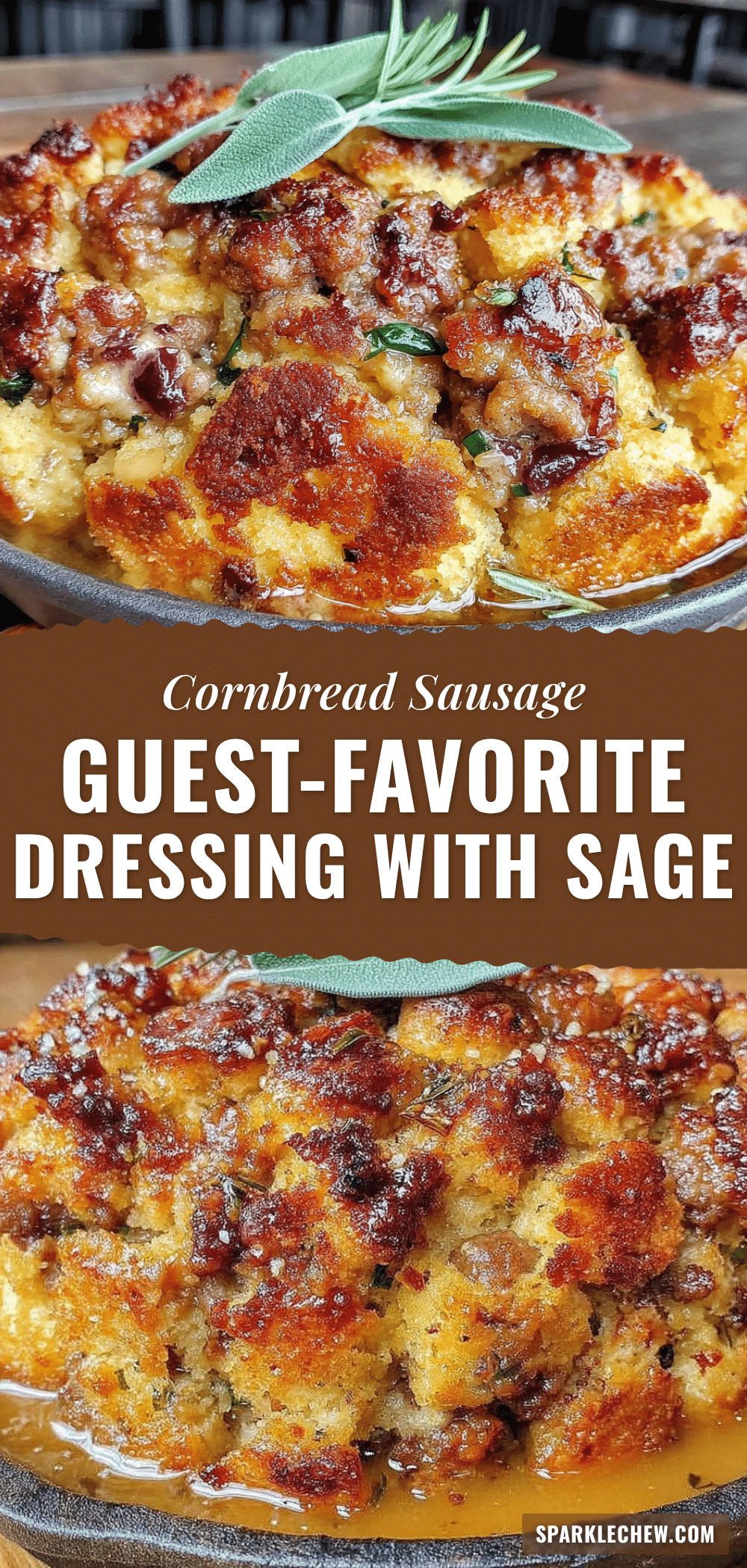
Best Homemade Cornbread Sausage Dressing with Sage

This cornbread sausage dressing with sage is a crowd-pleasing holiday side dish that balances savory sausage, fresh herbs, and tender cornbread. It’s make-ahead friendly, forgiving, and perfect for gatherings.
- Prep Time: 30 minutes
- Cook Time: 1 hour 15 minutes
- Total Time: 1 hour 45 minutes (plus overnight drying)
- Yield: 12 servings 1x
- Category: Side Dish
- Cuisine: American
Ingredients
- 1 cup yellow cornmeal (stone-ground preferred)
- 1 cup all-purpose flour
- 1 tablespoon baking powder
- 1 teaspoon salt
- 1/4 cup granulated sugar
- 1 cup buttermilk (regular milk works too)
- 1/3 cup vegetable oil (or melted butter)
- 2 large eggs, room temperature
- 1 pound pork sausage (breakfast or Italian, e.g., Jimmy Dean regular)
- 1 large yellow onion, diced (about 1 1/2 cups)
- 3 celery stalks, diced (about 1 cup)
- 4 cloves garlic, minced
- 2 tablespoons fresh sage, chopped (or 1 tablespoon dried)
- 1 tablespoon fresh thyme, chopped (or 1 teaspoon dried)
- 1 teaspoon dried rosemary
- 1/2 teaspoon black pepper
- 1/2 teaspoon salt (adjust based on sausage saltiness)
- 2 cups chicken broth (low-sodium)
- 2 large eggs, beaten
- 4 tablespoons unsalted butter, melted
Instructions
- Make the cornbread: Preheat oven to 400°F (200°C). Grease an 8×8-inch baking pan. In a medium bowl, whisk together cornmeal, flour, baking powder, salt, and sugar. In a separate bowl, combine buttermilk, oil, and eggs. Pour wet into dry and stir until just combined. Pour batter into prepared pan and bake for 20-25 minutes until golden and a toothpick comes out clean. Cool completely, cut into 1-inch cubes, spread on a baking sheet, and leave out overnight to dry.
- Brown the sausage: The next day, preheat oven to 375°F (190°C). Crumble sausage into a large skillet over medium-high heat. Cook for 6-8 minutes, breaking it up, until browned and cooked through. Transfer sausage to a plate with a slotted spoon, leaving about 2 tablespoons drippings in the pan.
- Cook the vegetables: Add diced onion and celery to the same skillet with drippings. Cook over medium heat for 5-6 minutes until onions are translucent and celery tender. Add minced garlic and cook for 1 minute until fragrant.
- Combine the ingredients: In a large mixing bowl, combine dried cornbread cubes, cooked sausage, and sautéed vegetables. Add fresh sage, thyme, rosemary, black pepper, and salt. Toss gently. In a separate bowl, whisk together chicken broth, beaten eggs, and melted butter. Pour over cornbread mixture and stir gently until evenly moistened. Add extra broth if needed.
- Bake the dressing: Transfer mixture to a greased 9×13-inch baking dish and spread evenly. Cover with aluminum foil and bake for 30 minutes. Remove foil and bake for another 20-25 minutes until top is golden brown and crispy around edges. Center should be set but slightly soft.
- Rest and serve: Let dressing rest for 10 minutes before serving to allow flavors to meld and texture to settle.
Notes
Dry the cornbread cubes overnight for best texture. Use low-sodium broth to control salt. Let dressing rest 10 minutes before serving. Can be assembled up to 2 days ahead and refrigerated. For gluten-free, use gluten-free cornbread mix and flour. For dairy-free, substitute butter with olive oil and use dairy-free milk. For vegetarian, omit sausage and add 2 cups sautéed mushrooms and 1 cup roasted butternut squash with vegetable broth.
Nutrition
- Serving Size: 1 serving (1/12 of r
- Calories: 320
- Sugar: 6
- Sodium: 620
- Fat: 18
- Saturated Fat: 6
- Carbohydrates: 28
- Fiber: 2
- Protein: 12
Keywords: cornbread dressing, sausage dressing, sage dressing, Thanksgiving side, holiday dressing, homemade dressing, cornbread sausage dressing