Love this? Save it for later!
Share the inspiration with your friends
I was standing in the spice aisle of our local Indian grocery store last Diwali when the scent of cardamom and ghee hit me — and suddenly I was seven years old at my Auntie Meera’s kitchen table, watching her hands move like they had a life of their own. She was rolling out a sheet of pearly white fudge, dusted with silver leaf, and I was convinced she was a magician. The way she pressed those diamond shapes into the soft dough, the way she lifted one and handed it to me with a wink — I can still feel the warmth of that piece melting on my tongue. Honestly, I’ve been chasing that exact feeling ever since.
I tried recreating that Kaju Katli a dozen times before I got it right. The first batch turned into a sticky mess that stuck to my teeth like caramel gone wrong. The second was grainy — like someone had sprinkled sand into the fudge. I almost gave up. But then, on a rainy Tuesday night with nothing better to do, I tried one more time. And this time, the cashew fudge came out smooth, silky, and so close to Auntie Meera’s that I actually teared up a little. Maybe you’ve been there — that moment when a recipe finally clicks and you feel like you’ve reclaimed a piece of your past.
That’s what this homemade Kaju Katli is for me. It’s not just a sweet treat; it’s a time machine made of four simple ingredients. And the best part? You don’t need any fancy equipment or years of practice to make it. Let me show you how.
Why You’ll Love This Recipe
I’ve tested this Kaju Katli recipe more times than I care to admit — and I mean that in the best way possible. Each batch taught me something new, and now I’m sharing the version that works every single time.
- Only 4 Ingredients — No condensed milk, no artificial flavors, no complicated stuff. Just cashews, sugar, water, and cardamom. That’s it.
- No Thermometer Needed — Most traditional Kaju Katli recipes require a candy thermometer and precise sugar syrup stages. This one uses a simple visual test. Trust me, if I can do it, you can too.
- Ready in 30 Minutes — From start to finish, this comes together faster than you’d expect. Perfect for last-minute guests or sudden sweet cravings.
- Better Than Store-Bought — Fresh homemade Kaju Katli has this melt-in-your-mouth texture that packaged versions just can’t match. The flavor is cleaner, more nutty, and perfectly balanced.
- Foolproof Once You Know the Tricks — I’ve included every mistake I made so you can skip the learning curve. The result is a smooth, non-grainy fudge that cuts into perfect diamond shapes.
This is the kind of recipe that makes you look like a pro even if you’ve never made Indian sweets before. It’s comfort food in its purest form — warm, sweet, and wrapped in memory.
What Ingredients You Will Need
This recipe uses simple, everyday ingredients to create something truly special. Each one plays a crucial role in getting that signature Kaju Katli texture and flavor.
- 2 cups raw cashews (unsalted) — These are the star of the show. Grind them into a fine powder using a high-powered blender or spice grinder. I recommend using whole cashew pieces rather than broken ones for consistent grinding. Let them come to room temperature before grinding to prevent clumping.
- 1 cup granulated sugar — Regular white sugar works perfectly here. The sugar syrup binds the cashew powder and creates that smooth, fudge-like texture. Don’t substitute with brown sugar or jaggery unless you’re experienced — the moisture content is different.
- 1/4 cup water — Just enough to dissolve the sugar and create a one-string consistency syrup. Use filtered water if your tap water has a strong taste.
- 1/2 teaspoon cardamom powder — Freshly ground cardamom makes a noticeable difference. I grind whole green cardamom pods using a mortar and pestle for the most aromatic result. You can use store-bought powder, but the flavor won’t be as vibrant.
Optional but recommended:
- 1 teaspoon ghee — Greasing your hands and the rolling surface with ghee prevents sticking and adds a subtle richness. Coconut oil works as a substitute.
- Silver leaf (varak) — Traditional Kaju Katli is often decorated with edible silver leaf. It’s purely decorative but adds that authentic touch for special occasions.
Pro tip from my kitchen: I prefer using organic cashews from a brand like True Elements or Urban Platter. They tend to be fresher and grind more evenly. Avoid cashews that smell rancid or have a yellow tint — they’ll affect the final taste.
Equipment Needed
You don’t need a professional kitchen to make this Kaju Katli. Here’s what I use:
- High-powered blender or spice grinder — This is crucial. A regular coffee grinder works too, but you need something that can turn cashews into a fine, fluffy powder without turning them into butter. I use my Nutribullet for this.
- Non-stick pan or kadhai — A heavy-bottomed pan ensures even heat distribution and prevents the mixture from burning. I’ve ruined a batch using a thin stainless steel pan.
- Flat surface for rolling — A clean kitchen counter or a large cutting board works. I use a marble slab because it stays cool and helps the fudge set faster.
- Rolling pin — Any rolling pin will do. I lightly grease mine with ghee to prevent sticking.
- Sharp knife or pizza cutter — For cutting clean diamond shapes. A pizza cutter gives straighter lines.
- Parchment paper or greased foil — For placing under the rolled fudge. Makes lifting and cutting so much easier.
Budget-friendly tip: If you don’t have a spice grinder, buy pre-ground cashew powder from an Indian grocery store. It saves time and works just as well.
Preparation Method
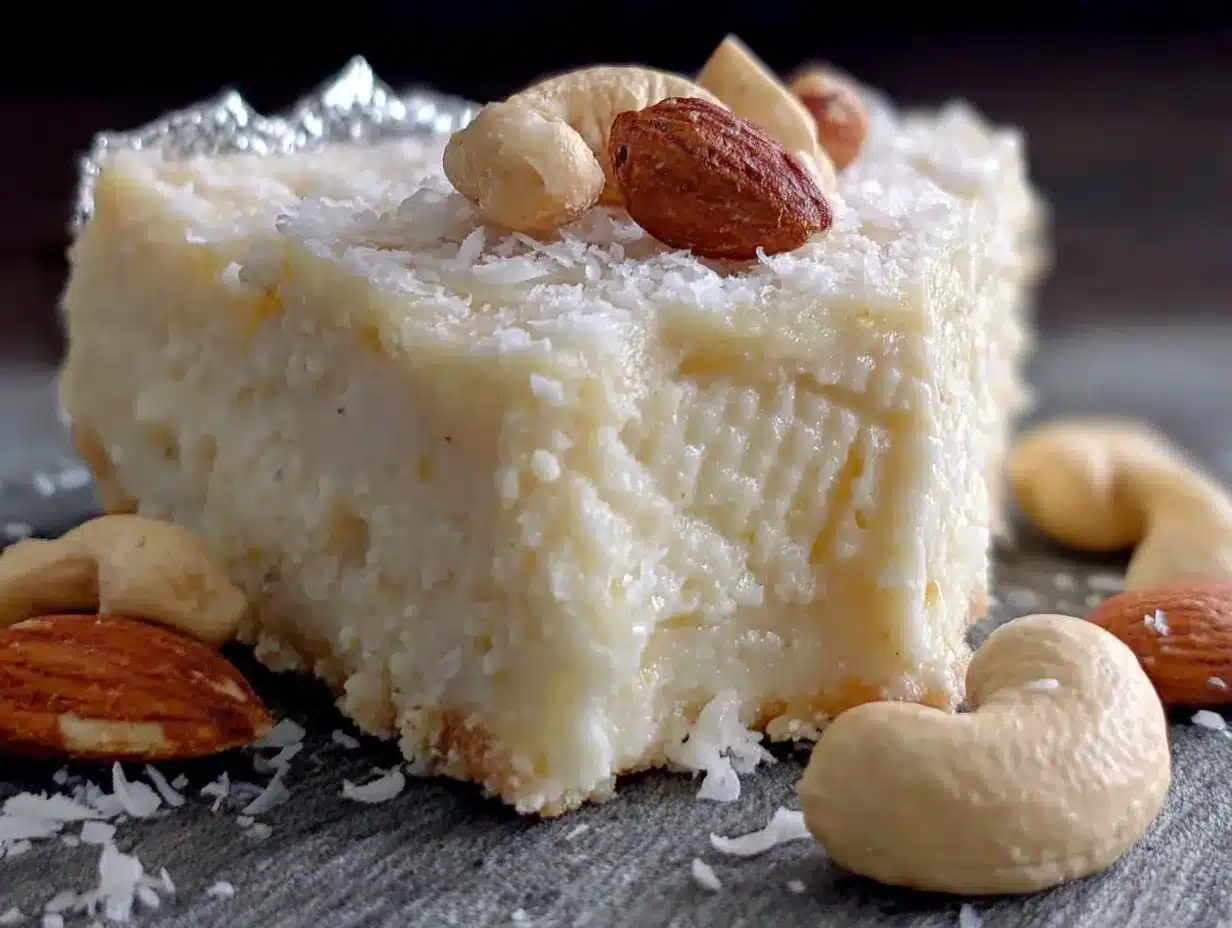
Let me walk you through this step by step. I’ve added all the little details I wish someone had told me the first time.
- Grind the cashews (5 minutes) — Add the raw cashews to your blender or grinder. Pulse in short bursts — 10 seconds on, 10 seconds off. You’re looking for a fine, powdery texture similar to almond flour. If you grind too long, the cashews release their oils and turn into butter. Sift the powder through a fine-mesh strainer into a bowl. Any coarse bits can be ground again. This step is non-negotiable for smooth Kaju Katli.
- Make the sugar syrup (8-10 minutes) — In a non-stick pan, combine the sugar and water. Stir gently over medium heat until the sugar dissolves completely. Once it starts boiling, stop stirring. Let it cook until it reaches a one-string consistency. How to test: Dip a clean spoon into the syrup, then touch the syrup between your thumb and index finger. When you pull them apart, a single thread should form. If you see multiple threads or the syrup feels sticky like honey, it’s ready. This usually takes about 5-7 minutes after boiling.
- Combine the cashew powder and syrup (2 minutes) — Reduce the heat to low. Add the cashew powder and cardamom powder to the syrup all at once. Stir vigorously with a wooden spoon or silicone spatula. The mixture will look crumbly at first — don’t panic. Keep stirring until it comes together into a soft, pliable dough. This happens faster than you expect, usually within 60 seconds.
- Knead the dough (2-3 minutes) — Turn the mixture onto a greased surface. Let it cool for just 30 seconds — it needs to be warm but not burning hot. Grease your hands with ghee and knead the dough gently for about a minute. It should be smooth, soft, and slightly oily. If it’s too dry, add a few drops of warm milk. If it’s too sticky, let it cool for another 30 seconds.
- Roll out the fudge (5 minutes) — Place the dough on a sheet of parchment paper or greased foil. Cover with another sheet of parchment paper. Using a rolling pin, roll the dough into a circle or rectangle about 1/4 inch thick. Try to keep the thickness even — this ensures uniform pieces. The edges might crack slightly, but that’s okay.
- Cut into diamond shapes (5 minutes) — Remove the top parchment paper. Let the rolled fudge rest for 2-3 minutes until it firms up slightly but is still soft. Using a sharp knife or pizza cutter, cut parallel lines about 1 inch apart, then cut diagonal lines to create diamond shapes. If the fudge sticks to the knife, wipe it clean between cuts.
- Cool completely (15-20 minutes) — Let the cut Kaju Katli rest at room temperature until fully set. Don’t refrigerate it at this stage — condensation can make the surface sticky. Once cool, separate the pieces gently.
Sensory cues to watch for: The dough should feel like soft play dough — pliable but not sticky. When you roll it, you should see a slight sheen on the surface. The finished Kaju Katli should be firm enough to hold its shape but soft enough to melt when you bite into it.
Cooking Tips & Techniques
I’ve made this Kaju Katli so many times that I’ve collected a list of things that can go wrong — and how to fix them.
The graininess problem: This is the most common issue. Grainy Kaju Katli happens when the sugar syrup isn’t cooked enough or when the cashew powder isn’t fine enough. Always sift your cashew powder, and always test the syrup for one-string consistency. I once rushed this step because I was hungry, and the result was a sandy-textured disaster.
The sticky situation: If your dough is too sticky to handle, it means the syrup was undercooked. Pop it back into the pan on low heat for 30 seconds, stirring constantly. If it’s still sticky after cooling, sprinkle a tiny bit of cashew powder and knead it in.
The dry crumble: On the flip side, if the dough crumbles when you try to roll it, the syrup was overcooked. Add a tablespoon of warm milk or water and knead until smooth. Don’t add too much liquid at once — you can always add more, but you can’t take it out.
Timing is everything: Have all your ingredients measured and ready before you start cooking. The syrup stage moves quickly, and you don’t want to be grinding cashews while your sugar is boiling over. I learned this the hard way — my kitchen smelled like burnt sugar for a week.
My personal failure: The first time I made Kaju Katli for a Diwali party, I forgot to grease my hands before kneading. The dough stuck to my fingers like glue, and I ended up with a sticky mess that looked more like abstract art than fudge. Now I keep a small bowl of ghee next to my work station. It’s the little things that save the day.
Variations & Adaptations
Once you’ve mastered the basic Kaju Katli, you can play around with flavors and textures. Here are some variations I’ve tried and loved:
- Chocolate Kaju Katli — Add 2 tablespoons of cocoa powder to the cashew powder before mixing. The chocolate version is richer and feels more indulgent. My nephew refuses to eat the plain version now.
- Saffron-infused Kaju Katli — Soak a few strands of saffron in 1 tablespoon of warm milk for 10 minutes. Add this to the sugar syrup along with the cashew powder. The golden color and floral aroma make this perfect for weddings or celebrations.
- Pistachio-crusted Kaju Katli — After rolling the fudge, press finely chopped pistachios onto the surface before cutting. The crunch of pistachios against the soft fudge is a wonderful textural contrast.
- Vegan adaptation — Use coconut oil instead of ghee for greasing. The recipe itself is naturally dairy-free since it uses only cashews, sugar, and water. Just make sure your cardamom powder doesn’t contain any additives.
- Low-sugar version — Replace half the sugar with powdered jaggery or coconut sugar. The flavor will be more complex and less sweet. Note that the texture might be slightly softer, so let it set for an extra 10 minutes before cutting.
My favorite variation: I once added a pinch of black pepper to the dough on a whim, and it was surprisingly amazing. The heat from the pepper cuts through the sweetness and makes each bite more interesting. Try it if you’re feeling adventurous.
Serving & Storage Suggestions
Kaju Katli is best served at room temperature. The texture is soft and melt-in-your-mouth, and the flavors are most pronounced when it’s not too cold.
Presentation ideas: Arrange the diamond-shaped pieces on a white platter for maximum visual impact. Sprinkle a few crushed pistachios or rose petals on top for color. If you’re serving this during Diwali or another festival, place the Kaju Katli in decorative boxes lined with silver foil — it makes a beautiful homemade gift.
Pairing suggestions: Kaju Katli pairs beautifully with a cup of hot chai. The sweetness of the fudge balances the tannins in the tea perfectly. For a dessert platter, serve it alongside other Indian sweets like gulab jamun or soan papdi for variety.
Storage instructions: Store Kaju Katli in an airtight container at room temperature for up to 2 weeks. Do not refrigerate — the cold temperature causes condensation, which makes the surface sticky and can lead to mold. If you live in a hot climate, store it in a cool, dry place away from direct sunlight.
Freezer instructions: You can freeze Kaju Katli for up to 3 months. Layer the pieces between parchment paper in a freezer-safe container. To thaw, let them sit at room temperature for 30 minutes. Don’t microwave them — it ruins the texture.
How flavors develop: Fresh Kaju Katli is soft and delicate. After a day or two, it firms up slightly and the flavors become more concentrated. I actually prefer it on day two — the cardamom flavor seems to bloom overnight.
Nutritional Information & Benefits
Here’s a rough estimate for one piece of Kaju Katli (assuming 20 pieces per batch):
- Calories: 110-120
- Carbohydrates: 12g
- Fat: 7g
- Protein: 2g
- Sugar: 8g
Health benefits of cashews: Cashews are a good source of healthy monounsaturated fats, which support heart health. They also contain magnesium, zinc, and iron. The copper in cashews helps with energy production and maintaining healthy skin and hair.
Dietary considerations: This Kaju Katli recipe is naturally gluten-free and dairy-free (if you skip the ghee). It’s suitable for vegetarians. However, it’s high in sugar and should be enjoyed in moderation, especially if you’re managing blood sugar levels.
My personal perspective: I believe in balance. Kaju Katli is a treat, not an everyday snack. But when I do indulge, I want it to be the best version possible — made with real ingredients and a lot of love. That’s what this recipe delivers.
Conclusion
This homemade Kaju Katli is more than just a recipe — it’s a way to bring a piece of tradition into your kitchen without the stress. With only four ingredients and a few simple techniques, you can create a sweet that rivals anything from a fancy mithai shop.
I love this recipe because it’s forgiving. Even if your first batch isn’t perfect, it’ll still be delicious. And with every attempt, you’ll get closer to that smooth, melt-in-your-mouth texture that makes Kaju Katli so special.
So go ahead — give it a try. Make a batch for Diwali, for a family gathering, or just because you deserve something sweet. And when you do, let me know how it turns out. Drop a comment below, share your photos, or tell me about your own memories tied to this beautiful cashew fudge. I’d love to hear your story.
Happy cooking, and remember — the best recipes are the ones made with love and a little bit of patience.
Frequently Asked Questions
Why is my Kaju Katli grainy?
Grainy Kaju Katli usually means the cashew powder wasn’t fine enough or the sugar syrup wasn’t cooked to the right consistency. Always sift your cashew powder and test the syrup for a one-string thread before adding the powder.
Can I use roasted cashews instead of raw?
I don’t recommend it. Roasted cashews have less moisture and a different oil content, which can make the fudge dry and crumbly. Stick with raw, unsalted cashews for the best texture.
How long does homemade Kaju Katli last?
Stored in an airtight container at room temperature, Kaju Katli stays fresh for up to 2 weeks. Avoid refrigerating it, as condensation can make the surface sticky.
Can I make Kaju Katli without a blender?
You can buy pre-ground cashew powder from Indian grocery stores. Just make sure it’s finely ground and free from lumps. Store-bought powder saves time and works perfectly.
Why did my Kaju Katli become hard and brittle?
This happens when the sugar syrup is overcooked. The syrup should reach a soft one-string consistency — not a hard ball stage. If it becomes too hard, you can try adding a tablespoon of warm milk and kneading it in, but the texture won’t be as soft as the original.
Pin This Recipe!
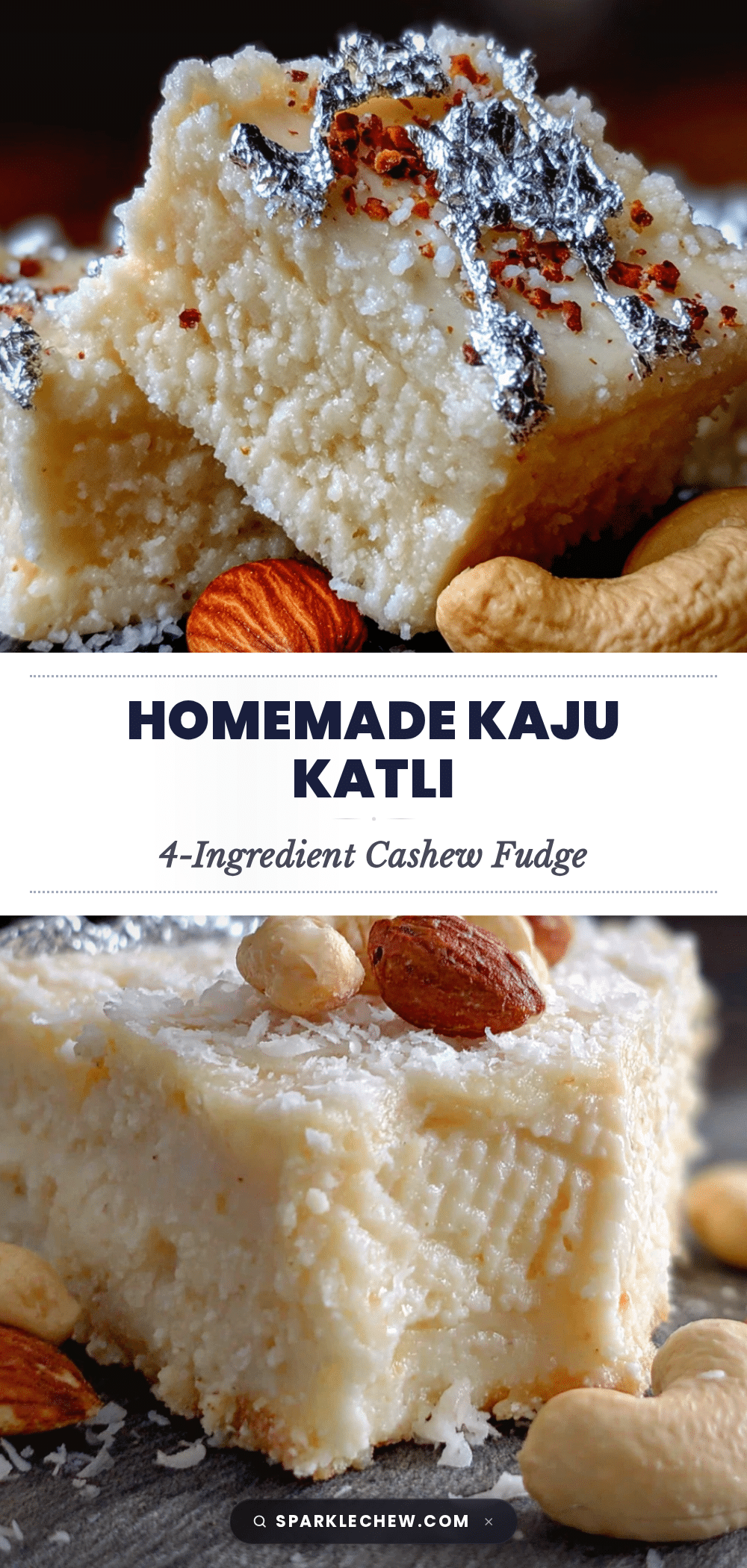
Best Easy 4-Ingredient Homemade Kaju Katli Recipe
This homemade Kaju Katli is a smooth, melt-in-your-mouth cashew fudge made with just four simple ingredients. It’s a foolproof recipe that recreates the traditional Indian sweet without a candy thermometer, ready in 30 minutes.
- Prep Time: 10 minutes
- Cook Time: 15 minutes
- Total Time: 30 minutes
- Yield: 20 pieces 1x
- Category: Dessert
- Cuisine: Indian
Ingredients
- 2 cups raw cashews (unsalted)
- 1 cup granulated sugar
- 1/4 cup water
- 1/2 teaspoon cardamom powder
- 1 teaspoon ghee (optional, for greasing)
- Silver leaf (varak) (optional, for decoration)
Instructions
- Grind the cashews: Add raw cashews to a blender or grinder. Pulse in short bursts (10 seconds on, 10 seconds off) until you get a fine, powdery texture similar to almond flour. Sift through a fine-mesh strainer and regrind any coarse bits.
- Make the sugar syrup: In a non-stick pan, combine sugar and water. Stir gently over medium heat until sugar dissolves. Once boiling, stop stirring and cook until it reaches a one-string consistency (test by dipping a clean spoon, then touching syrup between thumb and finger; a single thread should form when pulled apart). This takes about 5-7 minutes after boiling.
- Combine cashew powder and syrup: Reduce heat to low. Add cashew powder and cardamom powder to the syrup all at once. Stir vigorously with a wooden spoon or silicone spatula until it forms a soft, pliable dough (about 60 seconds).
- Knead the dough: Turn mixture onto a greased surface. Let cool for 30 seconds. Grease hands with ghee and knead gently for about 1 minute until smooth, soft, and slightly oily. If too dry, add a few drops of warm milk; if too sticky, let cool another 30 seconds.
- Roll out the fudge: Place dough on parchment paper or greased foil. Cover with another sheet of parchment. Roll into a circle or rectangle about 1/4 inch thick, keeping thickness even.
- Cut into diamond shapes: Remove top parchment. Let rest 2-3 minutes until slightly firm but still soft. Use a sharp knife or pizza cutter to cut parallel lines 1 inch apart, then diagonal lines to create diamond shapes.
- Cool completely: Let cut Kaju Katli rest at room temperature until fully set (15-20 minutes). Do not refrigerate. Separate pieces gently once cool.
Notes
Grainy texture usually means cashew powder wasn’t fine enough or syrup wasn’t cooked enough. Always sift cashew powder and test syrup for one-string consistency. If dough is too sticky, syrup was undercooked; return to pan on low heat for 30 seconds. If too dry/crumbly, syrup was overcooked; add a tablespoon of warm milk or water and knead. Store in airtight container at room temperature for up to 2 weeks; do not refrigerate. Can be frozen for up to 3 months.
Nutrition
- Serving Size: 1 piece
- Calories: 115
- Sugar: 8
- Sodium: 2
- Fat: 7
- Saturated Fat: 1
- Carbohydrates: 12
- Fiber: 0.5
- Protein: 2
Keywords: Kaju Katli, cashew fudge, Indian sweet, Diwali recipe, 4-ingredient dessert, homemade mithai, easy Indian dessert