Love this? Save it for later!
Share the inspiration with your friends
The dinner party was in six hours and I’d completely forgotten I was supposed to bring the main course. Not just any main course, either—this was my neighbor Carla’s annual “Welcome to Spring” gathering, and everyone else would be bringing something that took them all day. I’d been so caught up in work that I’d spaced it entirely. I opened my fridge in a mild panic, hoping for a miracle. Inside? A single pack of salmon fillets, a bunch of asparagus that was starting to look a little sad, and the tail end of a bottle of honey. Honestly, I almost called for takeout. But then I remembered a trick I’d picked up from a chef friend years ago about getting a perfect glaze on fish without dirtying every pan in the kitchen. I grabbed the soy sauce, minced some garlic, and decided to just go for it. I figured I’d show up with something decent and apologize for the simplicity. What happened next was totally unexpected. The salmon came out with this gorgeous, sticky, caramelized crust, and the asparagus was tender-crisp and soaked up all that garlicky honey goodness from the pan. I carried the whole thing over on one sheet pan, feeling a little sheepish. Carla took one bite and asked for the recipe before I’d even put my fork down. By the end of the night, three other people had asked for it too. The dish that took me twenty minutes and one pan to make was the star of a party full of elaborate dishes. It’s been a regular in my rotation ever since, and I think you’re going to love it just as much. Maybe you’ve been in that same spot—staring into the fridge with no plan and the clock ticking. This Easy One-Pan Honey Garlic Salmon with Asparagus is your answer.
Why You’ll Love This Recipe
This isn’t just another salmon recipe. It’s the one that makes you look like you spent hours in the kitchen when you really didn’t. Let me break down exactly why this Easy One-Pan Honey Garlic Salmon with Asparagus is going to become your new favorite weeknight hero.
- Quick & Easy: From fridge to table in under 25 minutes. Seriously. This is faster than waiting for delivery and way more satisfying.
- Simple Ingredients: You probably have soy sauce, honey, and garlic in your kitchen right now. No weird specialty items, no trips to three different stores.
- Perfect for Busy Weeknights: Whether you’re juggling kids, work, or just want a low-effort dinner, this recipe fits seamlessly into your schedule.
- Crowd-Pleaser: I’ve made this for picky eaters, seafood skeptics, and vegetable avoiders. It wins every single time. The sweet-savory glaze is universally loved.
- Unbelievably Delicious: The salmon stays incredibly moist and flaky, while the glaze caramelizes into a sticky, flavorful coating. The asparagus roasts right alongside it, soaking up all the garlicky honey goodness. It’s comfort food that feels a little fancy.
What makes this version different? It’s all in the technique. Instead of a watery marinade that slides off, we create a thick, concentrated glaze by whisking the honey, soy sauce, and garlic together and brushing it on during the last few minutes of cooking. This locks in moisture and creates that beautiful, glossy finish you usually only get at restaurants. No complicated steps, no extra bowls to wash—just pure, delicious results. This is the kind of meal that makes you close your eyes after the first bite and forget about the mess of the day. It’s fast, it’s foolproof, and it’s genuinely good for you.
What Ingredients You Will Need
This recipe uses simple, wholesome ingredients that work together to create something truly special. Most of these are pantry staples, and the few fresh items are easy to find at any grocery store. I’ve tested this with different brands and swaps, so I’ll share what works best.
- Salmon Fillets (4 fillets, about 6 ounces each): Look for fillets that are similar in thickness so they cook evenly. I prefer center-cut fillets for their even shape and higher fat content, which keeps them moist. If the skin is on, that’s fine—it gets crispy and delicious. For best results, use wild-caught salmon if your budget allows; it has a firmer texture and richer flavor.
- Asparagus (1 bunch, about 1 pound, trimmed): Choose spears that are bright green with tightly closed tips. Thicker spears hold up better to roasting and are less likely to get mushy. Snap off the woody ends—they naturally break where the tender part begins. I recommend medium-thick spears for the best texture.
- Honey (3 tablespoons): This is the star of the glaze. Use a good-quality, runny honey for the best consistency. Local honey adds a unique floral note, but any honey works. If your honey has crystallized, warm it slightly in the microwave for 10 seconds to loosen it up.
- Soy Sauce (3 tablespoons): Regular or low-sodium both work. I usually use low-sodium to control the salt level better. For a gluten-free option, use tamari or coconut aminos—they have a slightly different flavor but work beautifully.
- Garlic (4 cloves, minced): Fresh garlic is non-negotiable here. Pre-minced garlic from a jar won’t give you the same punch. Take the time to mince it yourself—it takes 30 seconds and makes a huge difference in flavor.
- Olive Oil (2 tablespoons, divided): You’ll use some for the salmon and some for the asparagus. A good extra virgin olive oil adds richness, but a lighter olive oil works too.
- Salt and Black Pepper (to taste): Simple seasonings that let the glaze shine. I use flaky sea salt for finishing, but regular kosher salt is fine for cooking.
- Optional Garnishes: Sesame seeds for a nutty crunch, sliced green onions for freshness, or a squeeze of lemon juice to brighten everything up. These are totally optional but take the presentation to the next level.
Ingredient Selection Tip: For the salmon, press the flesh gently with your finger. It should spring back—if it leaves an indent, it’s past its prime. Fresh salmon should smell like the ocean, not fishy. For the asparagus, look for firm spears that snap when bent, not limp ones.
Equipment Needed
You don’t need a fancy kitchen to make this recipe. In fact, that’s the whole point. Here’s what you’ll need:
- Large Baking Sheet (half-sheet pan, 18×13 inches): This is your main tool. A rimmed baking sheet is ideal because it catches any juices and prevents spills. I use a heavy-duty aluminum sheet pan—it distributes heat evenly and won’t warp in the oven. If you only have a smaller pan, just make sure everything fits in a single layer.
- Parchment Paper or Aluminum Foil: Lining the pan makes cleanup even easier. I prefer parchment paper because nothing sticks to it, and it’s non-toxic. Foil works too, but the salmon might stick slightly more.
- Small Bowl: For whisking together the honey, soy sauce, and garlic. Any small mixing bowl will do.
- Whisk or Fork: To combine the glaze ingredients smoothly. A fork works in a pinch.
- Chef’s Knife and Cutting Board: For trimming the asparagus and mincing the garlic. A sharp knife makes prep faster and safer.
- Measuring Spoons: For accurate measurements of honey, soy sauce, and oil. I’ve learned the hard way that eyeballing the honey leads to a too-sweet glaze.
- Pastry Brush (optional but helpful): For brushing the glaze onto the salmon evenly. If you don’t have one, you can use a spoon to drizzle it on.
Budget-Friendly Tip: You don’t need a fancy pastry brush. I’ve used a clean, unused paintbrush from the hardware store in a pinch—just make sure it’s natural bristles and wash it thoroughly first. Or just use the back of a spoon.
Preparation Method
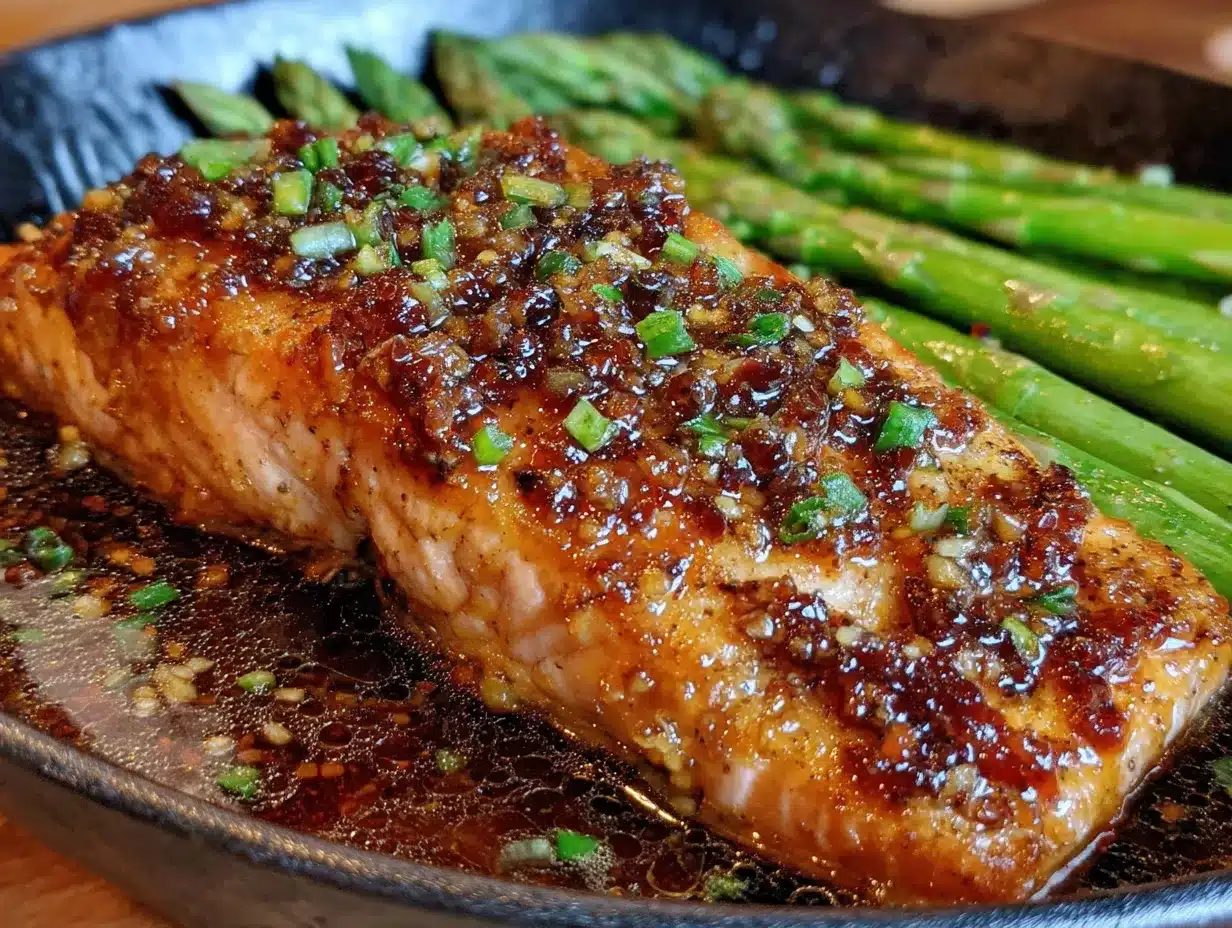
Let’s get cooking. This method is straightforward, but I’ll walk you through every step with the little details that make a big difference. Trust me on the timing—it’s everything.
- Preheat your oven to 400°F (200°C). This temperature is the sweet spot for this recipe. It’s hot enough to caramelize the glaze and roast the asparagus perfectly without drying out the salmon. While the oven heats, line your baking sheet with parchment paper or foil for easy cleanup.
- Prepare the asparagus. Rinse the asparagus spears and pat them dry. Snap off the woody ends by holding each spear at both ends and bending until it breaks naturally—discard the tough ends. Place the trimmed asparagus on one side of the prepared baking sheet. Drizzle with 1 tablespoon of olive oil, then season with a pinch of salt and a few grinds of black pepper. Toss gently with your hands to coat evenly, then spread them out in a single layer. Don’t overcrowd them—if they overlap, they’ll steam instead of roasting.
- Season the salmon. Pat the salmon fillets dry with paper towels. This is crucial for getting a nice sear and helping the glaze stick. Place the fillets on the other side of the baking sheet, skin-side down if they have skin. Drizzle with the remaining 1 tablespoon of olive oil and season lightly with salt and pepper. Don’t oversalt—the soy sauce in the glaze adds plenty of sodium.
- Make the honey garlic glaze. In a small bowl, whisk together the honey, soy sauce, and minced garlic until smooth. The garlic should be evenly distributed. Set aside about 2 tablespoons of the glaze for brushing on later—this prevents cross-contamination from raw salmon.
- Start roasting. Place the baking sheet in the preheated oven. Roast for 10 minutes. At this point, the asparagus should be starting to soften and the salmon should be partially cooked through. The timing is important here—we want to add the glaze at just the right moment so it caramelizes without burning.
- Brush with glaze. After 10 minutes, carefully remove the baking sheet from the oven. Using your pastry brush or a spoon, brush the reserved glaze generously over the top of each salmon fillet. Don’t brush it on the asparagus—they’ll get plenty of flavor from the pan juices. Return the sheet to the oven.
- Finish roasting. Roast for another 5-8 minutes, depending on the thickness of your salmon. The glaze should be bubbling and slightly caramelized. The salmon is done when it flakes easily with a fork and the internal temperature reaches 145°F (63°C) at the thickest part. The asparagus should be tender-crisp—still bright green with a little bite. If you like your asparagus softer, leave it in for the full 8 minutes.
- Rest and serve. Remove the baking sheet from the oven and let it rest for 2-3 minutes. This allows the juices to redistribute and the glaze to set. If you have them, sprinkle with sesame seeds and sliced green onions for a beautiful finish. Serve the salmon and asparagus directly from the pan for the ultimate easy clean-up.
Sensory Cue: At the 10-minute mark, you should smell the garlic and honey starting to bloom. When the glaze goes on, it should sizzle slightly on contact. The finished dish will have a glossy, amber-colored glaze on the salmon and the asparagus will be bright green with slightly charred edges. It’s a beautiful sight.
Cooking Tips & Techniques
I’ve made this recipe more times than I can count, and I’ve learned a few things the hard way. Here are my best tips to ensure your Easy One-Pan Honey Garlic Salmon with Asparagus turns out perfectly every time.
Don’t skip drying the salmon. This is the number one mistake I see. Patting the fillets dry with paper towels removes excess moisture that would otherwise steam the fish and prevent the glaze from sticking. A dry surface means a better caramelized crust.
Watch the glaze carefully. Honey burns quickly because of its high sugar content. That’s why we add it halfway through cooking rather than at the beginning. If you brush it on too early, it will blacken and turn bitter. Keep an eye on it during the last 5 minutes—if it’s browning too fast, you can tent the pan loosely with foil.
Use a meat thermometer. I’m not usually one for extra gadgets, but a simple instant-read thermometer is a game-changer for salmon. Overcooked salmon is dry and mealy. At 145°F (63°C), it’s perfectly cooked—flaky, moist, and tender. I’ve ruined plenty of fillets by guessing. Learn from my mistakes.
Space everything out. A crowded pan traps steam and prevents caramelization. Make sure your asparagus and salmon are in a single layer with a little space between each piece. If your baking sheet is too small, use two pans or cook in batches. It’s worth the extra minute of effort.
Multitask like a pro. While the oven preheats, trim the asparagus and mince the garlic. While the salmon roasts for the first 10 minutes, whisk the glaze and set the table. This recipe is fast, so having everything ready before you start makes the process smooth and stress-free.
One more thing— I once forgot to set aside the reserved glaze and used the same brush for raw and cooked salmon. Don’t do that. Cross-contamination is no joke. Always set aside a portion of the glaze before it touches the raw fish, or use a clean brush for the final application.
Variations & Adaptations
This recipe is incredibly versatile. Here are some ways to make it your own, depending on what you have on hand or what you’re craving.
Dietary Adaptations:
- Gluten-Free: Swap the soy sauce for tamari or coconut aminos. The flavor will be slightly different but still delicious. Make sure your honey is pure and not blended with wheat-based additives.
- Low-Carb/Keto: This recipe is naturally low in carbs if you use a sugar-free honey substitute or reduce the honey to 1 tablespoon. The asparagus is perfect for low-carb diets.
- Dairy-Free: This recipe is already dairy-free! Just use a dairy-free alternative for any optional garnishes like butter.
Flavor Variations:
- Spicy Honey Garlic: Add 1/2 teaspoon of red pepper flakes or a squirt of sriracha to the glaze for a sweet-and-spicy kick. I love this version when I want a little heat.
- Lemon Herb: Add the zest of one lemon and 1 teaspoon of dried thyme or rosemary to the glaze. It brightens the dish and pairs beautifully with the salmon.
- Ginger Garlic: Grate 1 teaspoon of fresh ginger into the glaze along with the garlic. The ginger adds warmth and complexity.
Vegetable Swaps:
- No asparagus? Try broccoli florets, green beans, or zucchini slices. Adjust the roasting time as needed—broccoli might need an extra 2-3 minutes, while zucchini cooks faster.
- Add cherry tomatoes or bell pepper strips to the pan for extra color and flavor. They roast beautifully alongside the salmon.
Personal Variation I Love: Sometimes I sprinkle a tablespoon of brown sugar over the glaze before the final roast. It creates an even stickier, more caramelized crust that reminds me of teriyaki. It’s a small tweak that makes a big difference when I’m craving something extra indulgent.
Serving & Storage Suggestions
This dish is beautiful on its own, but a few thoughtful touches can make it feel even more special.
Serving Temperature: Serve the salmon and asparagus warm, directly from the oven. The glaze is at its best when it’s still glossy and slightly sticky. If you let it sit too long, the glaze can harden slightly, so enjoy it within 10 minutes of taking it out of the oven.
Presentation Ideas:
- Arrange the salmon fillets on a platter with the asparagus alongside. Drizzle any remaining pan juices over the top for extra flavor.
- Sprinkle with sesame seeds, sliced green onions, or a squeeze of fresh lemon juice just before serving. These small touches add color and brightness.
- Serve with a side of steamed rice or quinoa to soak up the delicious glaze. A simple side salad with a vinaigrette also pairs beautifully.
Complementary Dishes:
- Rice: Jasmine rice, brown rice, or cauliflower rice all work well. The grains absorb the extra glaze and make every bite satisfying.
- Bread: A crusty baguette or garlic bread is perfect for mopping up any leftover sauce.
- Beverages: A crisp white wine like Sauvignon Blanc or a light Pinot Grigio complements the honey garlic flavors. For a non-alcoholic option, try sparkling water with lemon.
Storage Instructions:
- Refrigerator: Store leftovers in an airtight container for up to 3 days. The asparagus will soften over time, but the flavor will still be great.
- Freezer: This dish freezes surprisingly well. Place cooled leftovers in a freezer-safe container for up to 2 months. Thaw overnight in the refrigerator before reheating.
- Reheating: The best way to reheat is in a 350°F (175°C) oven for 5-7 minutes, or until warmed through. The microwave works in a pinch, but it can make the salmon rubbery. If using the microwave, cover the dish with a damp paper towel to retain moisture.
Flavor Development: The flavors actually meld together beautifully overnight. Leftovers taste just as good, if not better, the next day. The glaze soaks into the salmon and asparagus, making every bite even more flavorful.
Nutritional Information & Benefits
This recipe isn’t just delicious—it’s packed with nutrients that support a healthy lifestyle. Here’s a quick breakdown of what you’re getting in each serving (based on 4 servings).
| Nutrient | Amount Per Serving |
|---|---|
| Calories | 380 |
| Protein | 35g |
| Fat | 18g |
| Saturated Fat | 3g |
| Carbohydrates | 18g |
| Fiber | 3g |
| Sugar | 14g |
| Sodium | 680mg |
Health Benefits:
- Salmon is rich in omega-3 fatty acids, which support heart health, brain function, and reduce inflammation. It’s also an excellent source of high-quality protein and vitamin D.
- Asparagus is packed with fiber, folate, and vitamins A, C, and K. It’s a natural diuretic that supports digestion and kidney health.
- Garlic contains allicin, a compound known for its immune-boosting and anti-inflammatory properties.
- Honey provides natural sweetness and contains antioxidants that help protect your cells from damage.
Dietary Considerations: This recipe is naturally gluten-free (with tamari), dairy-free, and low in saturated fat. It’s a balanced meal that fits into most healthy eating plans. If you’re watching your sodium intake, use low-sodium soy sauce and go easy on the added salt.
Conclusion
This Easy One-Pan Honey Garlic Salmon with Asparagus is proof that simple ingredients and a little bit of technique can create something truly memorable. It’s the recipe I turn to when I need a guaranteed win—whether it’s a busy Tuesday night or a dinner party where I want to impress without the stress. The salmon stays perfectly moist, the glaze caramelizes into a sweet-savory coating, and the asparagus roasts to tender-crisp perfection, all on one pan. Honestly, it’s hard to beat that kind of convenience and flavor combination.
I hope you give this recipe a try and make it your own. Maybe you’ll add a little extra garlic, swap in broccoli, or sprinkle on some red pepper flakes. That’s the beauty of cooking—it’s yours to play with. I’d love to hear how it turns out for you. Did you try a variation? Did your family ask for seconds? Drop a comment below and let me know. And if you loved it, share it with a friend who needs an easy weeknight win. Happy cooking, friends—you’ve got this.
Frequently Asked Questions
Can I use frozen salmon for this recipe?
Yes, you can. Thaw the salmon completely in the refrigerator overnight, then pat it dry very well before cooking. Frozen salmon releases more water as it cooks, so you might need to add an extra 2-3 minutes to the roasting time. The glaze might be slightly thinner, but it will still taste great.
What if I don’t have a pastry brush?
No problem at all. Use a spoon to carefully drizzle the glaze over the salmon fillets, then spread it gently with the back of the spoon. A clean finger works in a pinch too—just make sure your hands are clean and you’re using the reserved glaze that hasn’t touched raw fish.
Can I make this recipe with other fish?
Absolutely. This glaze works beautifully with any firm, white fish like cod, halibut, or sea bass. Adjust the cooking time based on the thickness of the fillets. Thinner fillets like tilapia will cook faster, so check for doneness earlier. The asparagus timing stays the same.
How do I know when the salmon is fully cooked?
The most reliable method is using an instant-read thermometer inserted into the thickest part of the fillet. It should read 145°F (63°C). If you don’t have a thermometer, look for visual cues: the flesh should be opaque and flake easily when pressed with a fork. The center should no longer be translucent.
Can I double this recipe for a crowd?
Yes, but you’ll need to use two baking sheets or cook in batches. Overcrowding the pan will cause the salmon to steam instead of roast, and the glaze won’t caramelize properly. If using two pans, rotate them halfway through cooking for even results. You might need to add a few extra minutes of cooking time.
Pin This Recipe!
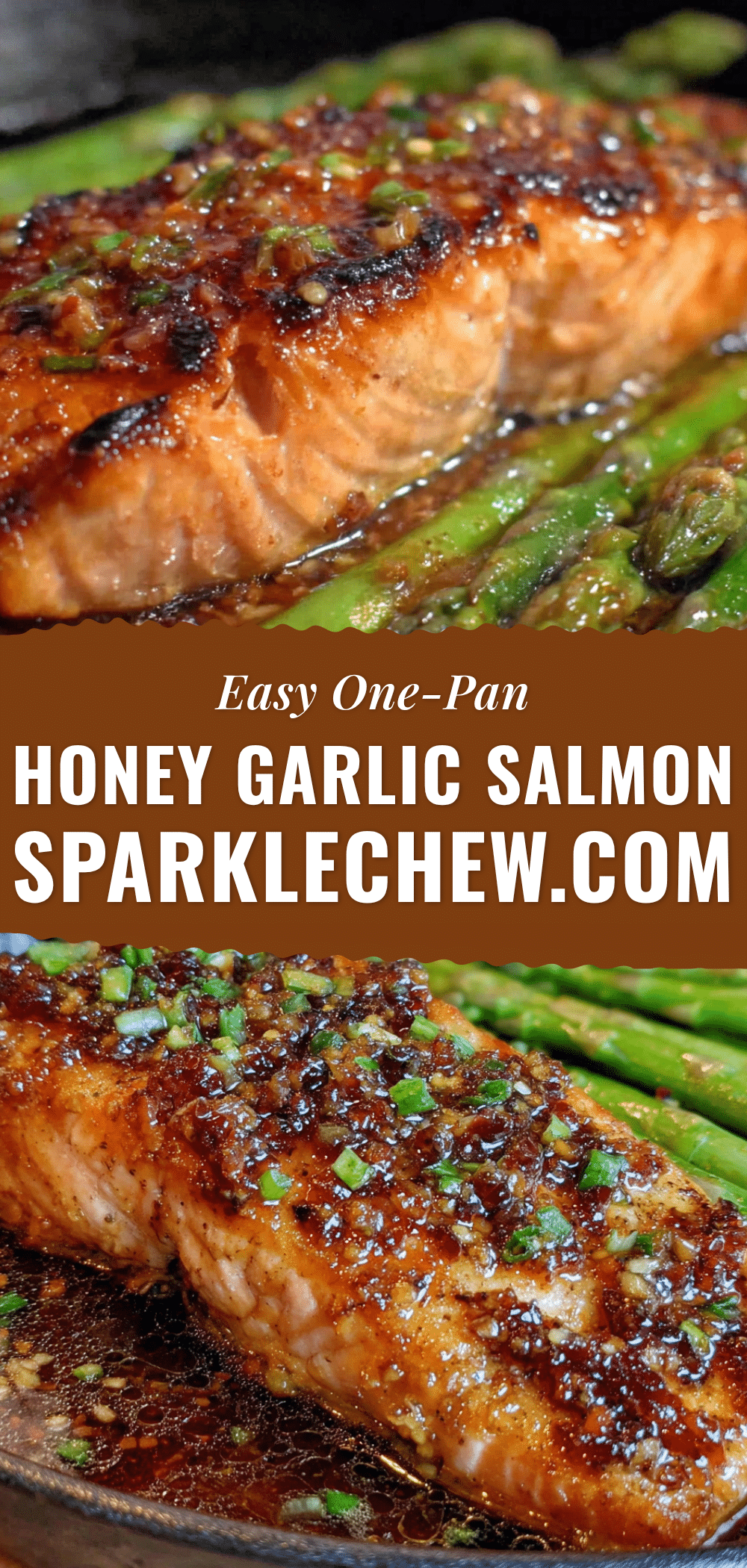
Easy One-Pan Honey Garlic Salmon with Asparagus
A quick and delicious one-pan meal featuring perfectly caramelized honey garlic salmon and tender-crisp asparagus, ready in under 25 minutes. Perfect for busy weeknights or impressing guests with minimal effort.
- Prep Time: 10 minutes
- Cook Time: 15 minutes
- Total Time: 25 minutes
- Yield: 4 servings 1x
- Category: Main Course
- Cuisine: American
Ingredients
- 4 salmon fillets (about 6 ounces each)
- 1 bunch asparagus (about 1 pound, trimmed)
- 3 tablespoons honey
- 3 tablespoons soy sauce (or tamari for gluten-free)
- 4 cloves garlic, minced
- 2 tablespoons olive oil, divided
- Salt and black pepper to taste
- Optional: sesame seeds, sliced green onions, lemon juice for garnish
Instructions
- Preheat oven to 400°F (200°C). Line a large baking sheet with parchment paper or aluminum foil.
- Rinse and pat dry asparagus. Snap off woody ends. Place on one side of the baking sheet, drizzle with 1 tablespoon olive oil, season with salt and pepper, and toss to coat. Spread in a single layer.
- Pat salmon fillets dry with paper towels. Place on the other side of the baking sheet, skin-side down if skin-on. Drizzle with remaining 1 tablespoon olive oil and season lightly with salt and pepper.
- In a small bowl, whisk together honey, soy sauce, and minced garlic until smooth. Set aside about 2 tablespoons of the glaze for later use.
- Roast for 10 minutes. Remove from oven and brush the reserved glaze over the salmon fillets.
- Return to oven and roast for another 5-8 minutes, until salmon flakes easily with a fork and internal temperature reaches 145°F (63°C). Asparagus should be tender-crisp.
- Let rest for 2-3 minutes. Garnish with sesame seeds, green onions, or lemon juice if desired. Serve directly from the pan.
Notes
Pat salmon dry for better caramelization. Add glaze halfway through cooking to prevent burning. Use a meat thermometer for perfect doneness. Space ingredients in a single layer to avoid steaming.
Nutrition
- Serving Size: 1 salmon fillet with
- Calories: 380
- Sugar: 14
- Sodium: 680
- Fat: 18
- Saturated Fat: 3
- Carbohydrates: 18
- Fiber: 3
- Protein: 35
Keywords: one-pan salmon, honey garlic salmon, asparagus, quick dinner, weeknight meal, healthy salmon recipe