Love this? Save it for later!
Share the inspiration with your friends
Rachel wasn’t trying to impress anyone. I’d stopped by to borrow a bundt pan—mine had mysteriously vanished after a cousin’s bake sale—and the smell hit me before I even got through the screen door. It was warm, yeasty, and sweet in a way that made my stomach actually growl. Embarrassing, honestly. She was standing at the counter in sweatpants, flour on her cheek, sliding a baking sheet out of the oven. “Oh, those are just sufganiyot,” she said when I asked. “Baked, not fried. Way less hassle.” Just sufganiyot. Like it was nothing. Like she hadn’t just created the most inviting scent I’d encountered in months.
I watched her fill them with a raspberry jam she’d canned herself last summer, and I mean, I was supposed to be impressed by the bundt pan situation, but let me tell you—I completely forgot why I was there. She handed me one, still warm, and that first bite had this unexpected lightness. Not greasy at all. The dough was pillowy, the raspberry filling tart and bright, and the powdered sugar dusted across the top made a mess on my shirt. Worth it. Maybe you’ve been there—standing in someone’s kitchen, eating something so good you forget to talk.
That casual moment stuck with me. Not because it was fancy, but because it wasn’t. Rachel made these like she’d done it a hundred times, and honestly, after testing this recipe in my own kitchen about six times, I get why. This baked version skips the deep fryer drama but keeps every bit of that Hanukkah magic. It’s the kind of recipe that makes you look like a hero at a gathering without breaking a sweat. And the best part? You can prep most of it before your guests arrive.
Why You’ll Love This Recipe
Listen, I’ve tested a lot of sufganiyot recipes over the years. Some were greasy disasters. Others took so long I wanted to cry. This one? It’s the real deal. Here’s why it works for hosts who want to impress without the stress:
- Baked, Not Fried: No deep fryer, no splattering oil, no lingering smell in your kitchen for days. You get that soft, airy texture without the mess.
- Perfect for a Crowd: This recipe scales beautifully. I’ve made it for Hanukkah parties with 20 people, and it’s always the first thing to disappear.
- Make-Ahead Friendly: The dough can rest in the fridge overnight. That means less chaos when your guests show up early (and they always do).
- Simple Ingredients: Flour, yeast, eggs, butter, jam—you probably have most of this already. No trips to specialty stores.
- Customizable Filling: Raspberry is my go-to, but you can swap in strawberry, apricot, or even chocolate ganache. I’ll share more ideas later.
- Crowd-Pleaser: Kids love the jelly surprise. Adults appreciate the lighter texture. Everyone reaches for seconds.
What makes this different from other sufganiyot recipes is the technique. Instead of frying, we bake the dough balls in a muffin tin, which gives them that perfect round shape and golden crust without the grease. The dough itself is enriched with egg yolks and butter, so it stays tender for days. I’ve tweaked the hydration ratio to ensure the pastries stay soft even after they cool—no sad, dry dough balls here. This isn’t just another recipe. It’s the one you’ll pull out every year, and then randomly on a Tuesday in March because you suddenly crave them.
What Ingredients You Will Need
This recipe uses straightforward ingredients to create something that tastes far more complicated than it is. Most of these are pantry staples, which makes last-minute sufganiyot cravings totally doable. Here’s what you’ll need:
For the Dough
- All-purpose flour, 3 ½ cups (440g) – I prefer King Arthur Flour for consistent results, but any brand works. Spoon and level your flour—don’t scoop straight from the bag or you’ll end up with dense dough.
- Active dry yeast, 2 ¼ teaspoons (one packet) – Make sure your yeast isn’t expired. I learned that lesson the hard way when my dough refused to rise for a holiday dinner. Check the date!
- Warm milk, ¾ cup (180ml), heated to about 110°F – Whole milk gives the richest flavor, but 2% works fine. If the milk is too hot, it’ll kill the yeast. Too cold, and the yeast won’t activate. Think warm bath water.
- Granulated sugar, ¼ cup (50g) – Just enough sweetness to balance the tangy filling.
- Large eggs, 2, at room temperature – Cold eggs will shock your dough. Leave them on the counter for 30 minutes, or place them in a bowl of warm water for 5 minutes.
- Egg yolk, 1, also room temperature – This extra yolk adds richness and that beautiful golden color.
- Unsalted butter, 4 tablespoons (57g), softened – I use Kerrygold because the higher fat content makes the dough tender. Cut it into small pieces so it incorporates evenly.
- Salt, 1 teaspoon – Don’t skip this. Salt controls yeast activity and enhances flavor.
- Vanilla extract, 1 teaspoon – Pure vanilla, not imitation. It makes a difference in the aroma.
For the Filling & Topping

- Seedless raspberry jam, ¾ cup (240g) – Bonne Maman is my go-to brand. The flavor is bright and not overly sweet. If you only have seeded jam, warm it slightly and strain it through a fine-mesh sieve.
- Powdered sugar, ½ cup (60g), for dusting – This is non-negotiable for that classic sufganiyot look. Sift it over the pastries right before serving.
- Vegetable oil, for greasing the bowl and muffin tin – A neutral oil like canola or grapeseed works best.
Ingredient Selection Tips
For the best texture, use a high-protein all-purpose flour. I’ve tested this with bread flour, and while it works, the pastries come out slightly chewier. Stick with all-purpose for that tender, pillowy crumb. If you’re using a different brand of yeast, like instant yeast, you can skip the proofing step and mix it directly with the flour. Just reduce the rise time slightly. For a dairy-free version, substitute the butter with vegan butter and use oat milk instead of whole milk. I’ve done this for a friend with lactose intolerance, and honestly, you can barely tell the difference.
Equipment Needed
You don’t need a lot of fancy gear for this recipe. Here’s what I use:
- Stand mixer with dough hook – This makes kneading effortless. If you don’t have one, you can knead by hand, but it’ll take about 10 minutes of arm work. I’ve done both, and the mixer is worth the investment if you bake often.
- 12-cup standard muffin tin – The key to getting that perfect round shape. Non-stick is ideal, but a regular tin works if you grease it well.
- Large mixing bowl – For proofing the dough. Glass or ceramic works well because they hold warmth.
- Piping bag with round tip – For filling the sufganiyot. No piping bag? No problem. A zip-top bag with the corner snipped off works just as well. I’ve used both methods, and honestly, the zip-top bag is less cleanup.
- Small saucepan – For warming the jam if it’s too thick to pipe.
- Fine-mesh sieve – For dusting powdered sugar evenly. A tea strainer works in a pinch.
- Plastic wrap or a clean kitchen towel – For covering the dough while it rises.
Budget-friendly tip: You can find a basic muffin tin at any grocery store for under $10. Don’t feel pressured to buy expensive equipment. I used a hand-me-down tin for years, and it worked perfectly.
Preparation Method
This process looks long, but I promise it’s straightforward. The active work time is about 25 minutes. The rest is just waiting for the dough to do its thing.
- Proof the yeast (5 minutes): In the bowl of your stand mixer, combine the warm milk (110°F), 1 tablespoon of the sugar, and the active dry yeast. Stir gently and let it sit for 5 minutes until it becomes foamy. If it doesn’t foam, your yeast might be dead. Start over with fresh yeast—trust me, I’ve wasted flour this way before.
- Mix the dough (5 minutes): Add the remaining sugar, eggs, egg yolk, vanilla, and salt to the yeast mixture. Attach the dough hook and mix on low speed. Gradually add the flour, 1 cup at a time, until a shaggy dough forms. This should take about 2 minutes.
- Add the butter (5 minutes): With the mixer running on low, add the softened butter pieces one at a time. The dough will look greasy and weird at first—don’t panic. Keep mixing until the butter is fully incorporated and the dough pulls away from the sides of the bowl. This takes about 4-5 minutes. The dough should be soft and slightly sticky.
- First rise (1-1.5 hours): Lightly oil a large bowl. Transfer the dough to the bowl, turning it once to coat. Cover tightly with plastic wrap and let it rise in a warm, draft-free spot until doubled in size. I usually put it in my oven with the light on. The dough should feel puffy and airy when you poke it.
- Shape the dough balls (10 minutes): Punch down the dough gently to release the air. Turn it out onto a lightly floured surface. Divide the dough into 12 equal pieces—a kitchen scale helps here, but eyeballing it works too. Roll each piece into a smooth ball. Place each ball into a well-greased muffin tin cup. Don’t crowd them; they need room to expand.
- Second rise (30-45 minutes): Cover the muffin tin with a clean kitchen towel and let the dough balls rise again until they’re puffy and reach the top of the muffin cups. This is a shorter rise, so keep an eye on them. They should look pillowy.
- Preheat and bake: While the dough rises, preheat your oven to 350°F (175°C). Once the dough is ready, bake for 12-15 minutes until the tops are golden brown and the pastries sound hollow when tapped. A toothpick inserted into the center should come out clean. Let them cool in the tin for 5 minutes, then transfer to a wire rack to cool completely. Don’t skip this cooling step—filling warm pastries will turn the jam into a runny mess.
- Fill the sufganiyot (10 minutes): Once the pastries are completely cool, use a piping bag fitted with a round tip to inject the raspberry jam. Insert the tip into the side or bottom of each pastry and squeeze gently until you feel resistance. You’ll see the pastry swell slightly. Don’t overfill, or the jam will burst out. I’ve done this—it’s messy but still delicious.
- Dust and serve: Right before serving, sift powdered sugar generously over the tops. Serve immediately for the best texture. If you’re making these for a party, fill them just before your guests arrive.
Cooking Tips & Techniques
After making this recipe more times than I care to count, here are the things I wish someone had told me:
Don’t skip the proofing step. I know it’s tempting to just dump everything together, but proofing the yeast ensures it’s alive and active. One time, I was in a rush and skipped it. My dough never rose, and I ended up with hockey pucks. Learn from my mistakes.
Temperature matters. Your ingredients should be at room temperature. Cold eggs and cold butter will slow down the yeast activity and make the dough stiff. Set everything out 30 minutes before you start. If you forget, place the eggs in a bowl of warm water for 5 minutes.
Watch the oven closely. Ovens vary wildly. My old oven baked these in exactly 13 minutes. My new one takes 15. Start checking at the 12-minute mark. The tops should be golden, and the bottoms should be lightly browned. Overbaking dries them out, and nobody wants a dry sufganiyah.
Fill just before serving. If you fill these too early, the jam will soak into the dough and make it soggy. I fill them while my guests are taking off their coats. It takes 10 minutes, and the presentation is much better.
Use a thermometer for the milk. Yeast is finicky. Milk that’s too hot (above 130°F) kills it. Milk that’s too cold (below 100°F) won’t activate it. A simple kitchen thermometer is cheap and worth every penny. I keep one clipped to my fridge.
Scaling for a crowd? This recipe doubles beautifully. Use two muffin tins or bake in batches. The dough can also be refrigerated after the first rise for up to 24 hours. Just punch it down, cover it tightly, and let it come to room temperature before shaping.
Variations & Adaptations
One of the best things about this recipe is how adaptable it is. Here are some variations I’ve tried:
Chocolate Hazelnut Sufganiyot: Swap the raspberry jam for Nutella or your favorite chocolate-hazelnut spread. Warm the spread slightly so it pipes easily. I made these for a friend’s birthday, and they disappeared in minutes. The combination of warm dough and melted chocolate is ridiculous.
Lemon Curd Filling: For a brighter, tangier option, use homemade or store-bought lemon curd. The tartness cuts through the richness of the dough beautifully. I’ve also mixed lemon curd with a little whipped cream cheese for a creamier texture.
Apple Cinnamon Variation: Mix ½ teaspoon of cinnamon into the dough along with the flour. For the filling, use apple butter or a spiced apple jam. This version feels perfect for fall gatherings. I served it at a Rosh Hashanah dinner once, and everyone asked for the recipe.
Dairy-Free Adaptation: Substitute the butter with vegan butter (I like Miyoko’s) and use oat milk instead of whole milk. The texture is slightly less tender, but still very good. My lactose-intolerant friend gives these a thumbs up.
Gluten-Free Option: This is trickier, but it can work. Use a 1:1 gluten-free flour blend that contains xanthan gum. The dough will be stickier, so wet your hands when shaping the balls. Bake for an extra 2-3 minutes. I’ve tested this with King Arthur’s Measure for Measure blend, and the results were solid.
Savory Twist: Okay, this isn’t traditional, but I once made these with a cheese filling—think ricotta mixed with herbs and a touch of salt. Skip the powdered sugar and serve them as appetizers. They were surprisingly popular at a potluck.
Serving & Storage Suggestions
Sufganiyot are best served the day they’re made, ideally within a few hours of baking. Here’s how to make them shine at your gathering:
Serving Temperature: Serve at room temperature. If you’ve refrigerated them, let them sit out for 20 minutes before serving. The dough loses its tenderness when cold. For a special touch, warm them in a 300°F oven for 3-4 minutes before dusting with powdered sugar and filling.
Presentation Ideas: Arrange the sufganiyot on a large wooden board or a white platter for contrast. Dust with powdered sugar right before carrying them to the table. I like to add a few fresh raspberries on the side and a small bowl of extra jam for dipping. It looks beautiful and gives guests options.
What to Serve Alongside: These pair beautifully with strong coffee or tea. For a Hanukkah party, I serve them alongside crispy latkes with applesauce for a sweet-and-savory balance. A platter of fresh fruit and cheese also works well to round out the spread.
Storage Instructions: Unfilled sufganiyot can be stored in an airtight container at room temperature for up to 2 days. After that, they start to stale. Once filled, eat them within 6 hours for the best texture. If you have leftovers (unlikely, but possible), store them in the fridge and reheat in a low oven.
Freezing Tips: You can freeze the unfilled, baked sufganiyot for up to 1 month. Wrap each one tightly in plastic wrap, then place them in a freezer bag. To serve, thaw at room temperature, warm in the oven for 5 minutes, then fill and dust. I do this when I’m prepping for a big party—it saves so much time.
Flavor Development: The dough actually tastes better the next day, oddly enough. The yeast flavor mellows out, and the texture becomes more tender. If you’re making these for a dinner party, bake them the day before, store them unfilled, and finish them just before your guests arrive.
Nutritional Information & Benefits
These baked sufganiyot are a lighter take on the traditional fried version, but they’re still a treat. Here’s the approximate nutritional breakdown per pastry (based on 12 servings):
- Calories: 210
- Total Fat: 7g
- Saturated Fat: 4g
- Cholesterol: 45mg
- Sodium: 210mg
- Total Carbohydrates: 33g
- Dietary Fiber: 1g
- Sugars: 12g
- Protein: 5g
Health Highlights: By baking instead of frying, you save about 80 calories and 6 grams of fat per pastry compared to traditional sufganiyot. The raspberry jam adds a small amount of fruit, though it’s still a source of added sugar. If you want to boost the fiber, you can substitute up to half the all-purpose flour with whole wheat pastry flour. The texture will be slightly denser, but still delicious.
Dietary Considerations: This recipe contains gluten, dairy, and eggs. For a dairy-free version, see the variations section. For a gluten-free version, use a quality 1:1 gluten-free flour blend. These are not low-carb or keto-friendly due to the flour and sugar content.
I’m not a nutritionist, and I believe in enjoying treats in moderation. These sufganiyot are a celebration food, meant to be shared with loved ones. Don’t stress about the numbers—enjoy the moment.
Conclusion
These baked sufganiyot have become a staple in my holiday rotation, and I think they’ll become one in yours too. They capture everything I love about this tradition—the soft, pillowy dough, the burst of sweet-tart jam, the snowy dusting of powdered sugar—without the stress of deep frying. You get to be the host who pulls off something special, and nobody has to know how simple it actually was.
What I love most about this recipe is how it brings people together. Every time I make these, I think about Rachel standing in her kitchen that afternoon, completely casual about creating something extraordinary. That’s the energy I want to bring to my own table. And honestly? You can bring it to yours too. This recipe is forgiving, adaptable, and genuinely crowd-pleasing in a way that feels effortless once you’ve made it once.
I’d love to hear how these turn out for you. Did you try a different filling? Did your guests devour them? Drop a comment below and let me know. And if you’re planning a Hanukkah party, don’t forget to check out my quick Hanukkah dessert board for more hosting inspiration. Happy baking, friends!
Frequently Asked Questions
Can I make the dough ahead of time?
Yes! After the first rise, punch down the dough, cover it tightly with plastic wrap, and refrigerate for up to 24 hours. When you’re ready to bake, let the dough sit at room temperature for 30 minutes, then shape and proceed with the second rise.
Why did my sufganiyot come out dense?
This usually happens for one of three reasons: the yeast was dead (check the date!), the dough wasn’t kneaded enough to develop gluten, or the second rise was too short. Make sure your milk is warm but not hot, and give the dough enough time to puff up both times.
Can I use a different type of jam?
Absolutely! Strawberry, apricot, blueberry, or even fig jam all work beautifully. Just make sure the jam is seedless or strained, so it pipes smoothly. If your jam is very thick, warm it slightly before filling.
How do I prevent the jam from leaking out?
Don’t overfill the pastries. Insert the piping tip about halfway into the pastry and squeeze gently. You’ll feel the pastry expand. Stop as soon as you feel resistance. Also, make sure the pastries are completely cool before filling—warm dough is more fragile.
Can I freeze these after baking?
Yes, but freeze them unfilled. Wrap each baked and cooled sufganiyah tightly in plastic wrap, then place them in a freezer bag. They’ll keep for up to 1 month. Thaw at room temperature, warm in a 300°F oven for 5 minutes, then fill and dust with powdered sugar.
Pin This Recipe!
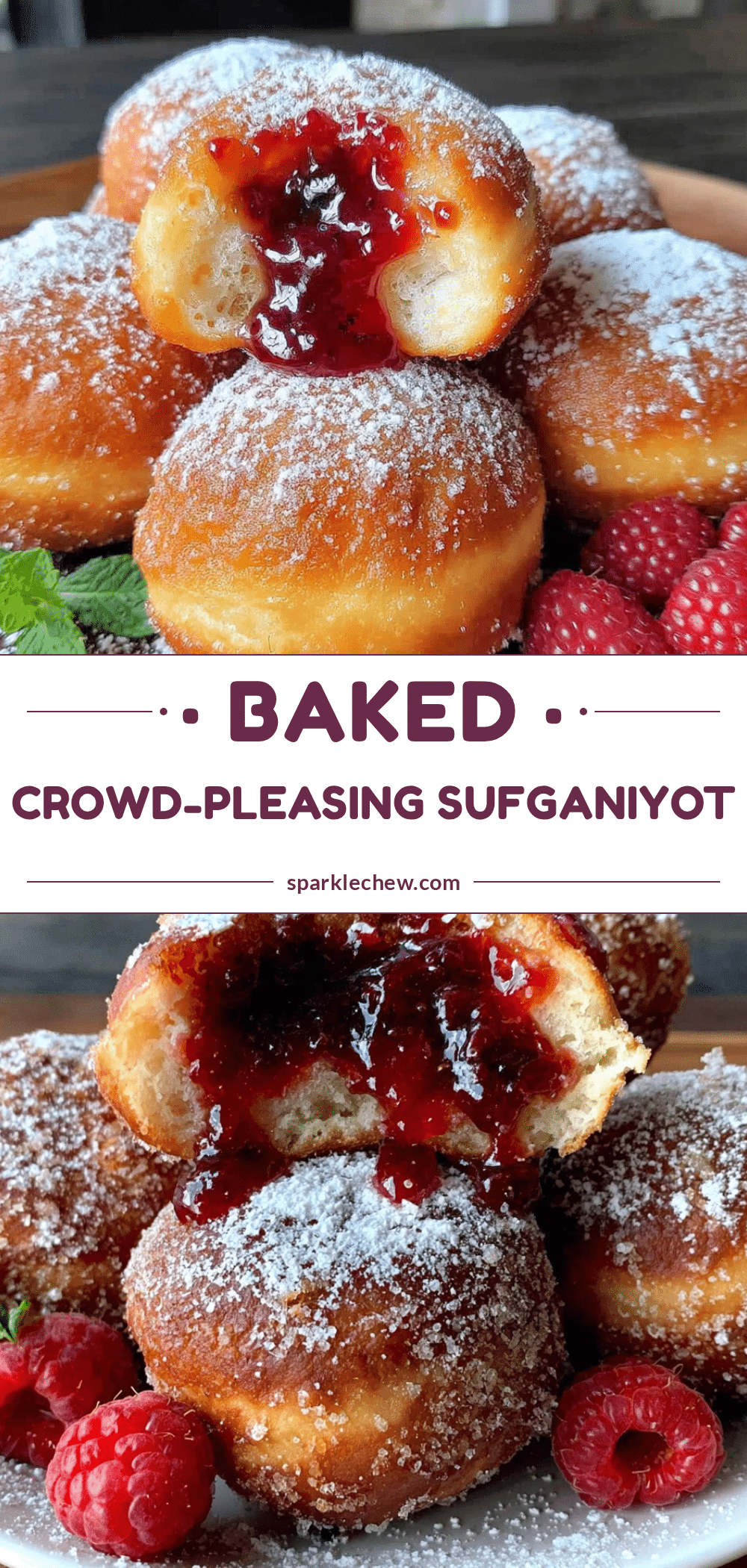
Best Homemade Baked Sufganiyot with Raspberry Filling

These baked sufganiyot capture all the magic of Hanukkah without the hassle of deep frying. Soft, pillowy dough filled with tart raspberry jam and dusted with powdered sugar—a crowd-pleasing treat that’s make-ahead friendly and surprisingly simple.
- Prep Time: 25 minutes
- Cook Time: 15 minutes
- Total Time: 2 hours 10 minutes
- Yield: 12 servings 1x
- Category: Dessert
- Cuisine: Jewish
Ingredients
- 3 ½ cups (440g) all-purpose flour
- 2 ¼ teaspoons (one packet) active dry yeast
- ¾ cup (180ml) warm milk (about 110°F)
- ¼ cup (50g) granulated sugar
- 2 large eggs, at room temperature
- 1 egg yolk, at room temperature
- 4 tablespoons (57g) unsalted butter, softened
- 1 teaspoon salt
- 1 teaspoon vanilla extract
- ¾ cup (240g) seedless raspberry jam
- ½ cup (60g) powdered sugar, for dusting
- Vegetable oil, for greasing
Instructions
- Proof the yeast: In the bowl of a stand mixer, combine warm milk, 1 tablespoon of the sugar, and the active dry yeast. Stir gently and let sit for 5 minutes until foamy.
- Mix the dough: Add remaining sugar, eggs, egg yolk, vanilla, and salt to the yeast mixture. Attach the dough hook and mix on low speed. Gradually add flour, 1 cup at a time, until a shaggy dough forms (about 2 minutes).
- Add the butter: With mixer on low, add softened butter pieces one at a time. Mix until butter is fully incorporated and dough pulls away from the sides of the bowl (about 4-5 minutes). Dough should be soft and slightly sticky.
- First rise: Lightly oil a large bowl. Transfer dough to bowl, turning once to coat. Cover tightly with plastic wrap and let rise in a warm, draft-free spot until doubled in size (1-1.5 hours).
- Shape the dough balls: Punch down dough gently. Turn out onto a lightly floured surface. Divide into 12 equal pieces. Roll each into a smooth ball. Place each ball into a well-greased muffin tin cup.
- Second rise: Cover muffin tin with a clean kitchen towel and let dough balls rise until puffy and reaching the top of the muffin cups (30-45 minutes).
- Preheat and bake: Preheat oven to 350°F (175°C). Bake for 12-15 minutes until tops are golden brown and pastries sound hollow when tapped. Cool in tin for 5 minutes, then transfer to a wire rack to cool completely.
- Fill the sufganiyot: Once completely cool, use a piping bag fitted with a round tip to inject raspberry jam into the side or bottom of each pastry. Squeeze gently until you feel resistance.
- Dust and serve: Right before serving, sift powdered sugar generously over the tops. Serve immediately.
Notes
Don’t skip proofing the yeast. Use room temperature ingredients. Fill just before serving to avoid soggy pastries. For a dairy-free version, substitute butter with vegan butter and use oat milk. For gluten-free, use a 1:1 gluten-free flour blend with xanthan gum. Unfilled baked sufganiyot can be frozen for up to 1 month.
Nutrition
- Serving Size: 1 pastry
- Calories: 210
- Sugar: 12
- Sodium: 210
- Fat: 7
- Saturated Fat: 4
- Carbohydrates: 33
- Fiber: 1
- Protein: 5
Keywords: sufganiyot, baked sufganiyot, Hanukkah, jelly donuts, raspberry jam, holiday dessert, baked donuts