Love this? Save it for later!
Share the inspiration with your friends
My neighbor, a retired librarian named Carol who grows more squash than she knows what to do with, knocked on my door last October holding a massive butternut squash. “I’m making soup,” she said, “but I have an extra. Want it?” I took it, mostly out of politeness, and it sat on my counter for three days. Every time I walked past, I felt a little guilty. Finally, I decided to roast it, planning to toss it into a simple pasta. But then my friend Jen, who was over helping me organize my spice cabinet (a mess, honestly), looked at the roasted squash and asked, “Why don’t you just blend it into the cheese sauce?”
I started to explain why that wouldn’t work—something about the sauce being too thin, the squash being too sweet, the whole thing being a disaster waiting to happen. Then I stopped. I had no real reason. I just assumed. So I shrugged, scooped out a cup of that soft, caramelized squash, and tossed it into the blender with the milk and cheddar. Let me tell you, that was a humbling moment. The sauce turned this gorgeous golden-orange, and it was thick and creamy without a single lump of flour. I stirred it into the macaroni, took a bite, and just stood there in my kitchen, fork in hand, completely wrong and completely delighted.
The funny thing is, I’d been making mac and cheese the same way for years—butter, flour, milk, cheese, done. I thought that was the only way. But that accidental experiment changed everything. The squash didn’t make it taste like a vegetable dish. It made it taste deeper, richer, and somehow cozier. It was the kind of meal you want on a Tuesday night when the wind is rattling the windows and you just need something warm. Maybe you’ve been there—staring at a squash, wondering what to do with it, or just craving a bowl of comfort that feels a little less heavy. This is that recipe. I keep making it because it reminds me that sometimes the best ideas come from someone else’s simple question.
Why You’ll Love This Recipe
This isn’t just another mac and cheese recipe. It’s the one that makes you forget you’re eating a vegetable. Honestly, I’ve served this to picky kids, skeptical husbands, and friends who swear they hate squash, and every single person has asked for seconds. Here’s why this one stands out:
- Quick & Easy: You’ll have dinner on the table in about 45 minutes, and most of that time is hands-off while the squash roasts. Perfect for those busy fall weeknights.
- Simple Ingredients: No fancy cheese shops or specialty stores. You need a butternut squash, some good cheddar, pasta, milk, and a few pantry staples. That’s it.
- Perfect for Fall Nights: This is the ultimate cozy meal for when the leaves are turning and the air gets crisp. It’s like a warm hug in a bowl.
- Crowd-Pleaser: I’ve brought this to potlucks and family dinners, and the dish comes back empty. Kids love the creamy texture, and adults appreciate the subtle, savory squash flavor.
- Unbelievably Delicious: The texture is next-level—creamy, velvety, and rich without being heavy. The squash blends right in, adding a natural sweetness that pairs perfectly with sharp cheddar.
What makes this recipe different from the rest? It’s the technique of roasting the squash first. Roasting brings out the natural sugars and gives the sauce a deeper, almost nutty flavor that you just can’t get from boiling or steaming. Plus, blending the squash into the milk base means you get that ultra-smooth, luscious sauce without the fuss of a traditional roux. It’s comfort food reimagined—healthier, faster, but with the same soul-soothing satisfaction. This is the kind of meal that makes you close your eyes after the first bite, and it’s perfect for impressing guests without any stress.
What Ingredients You Will Need
This recipe uses simple, wholesome ingredients that come together to create something truly special. The squash does the heavy lifting, adding creaminess and a hint of sweetness, while the sharp cheddar brings that classic mac and cheese tang. Here’s what you’ll need:
For the Roasted Squash
- 1 medium butternut squash (about 2-3 pounds), peeled, seeded, and cut into 1-inch cubes (I find the pre-cut cubes at the store save a ton of time on busy nights)
- 2 tablespoons olive oil
- 1/2 teaspoon salt
- 1/4 teaspoon black pepper
For the Pasta and Cheese Sauce
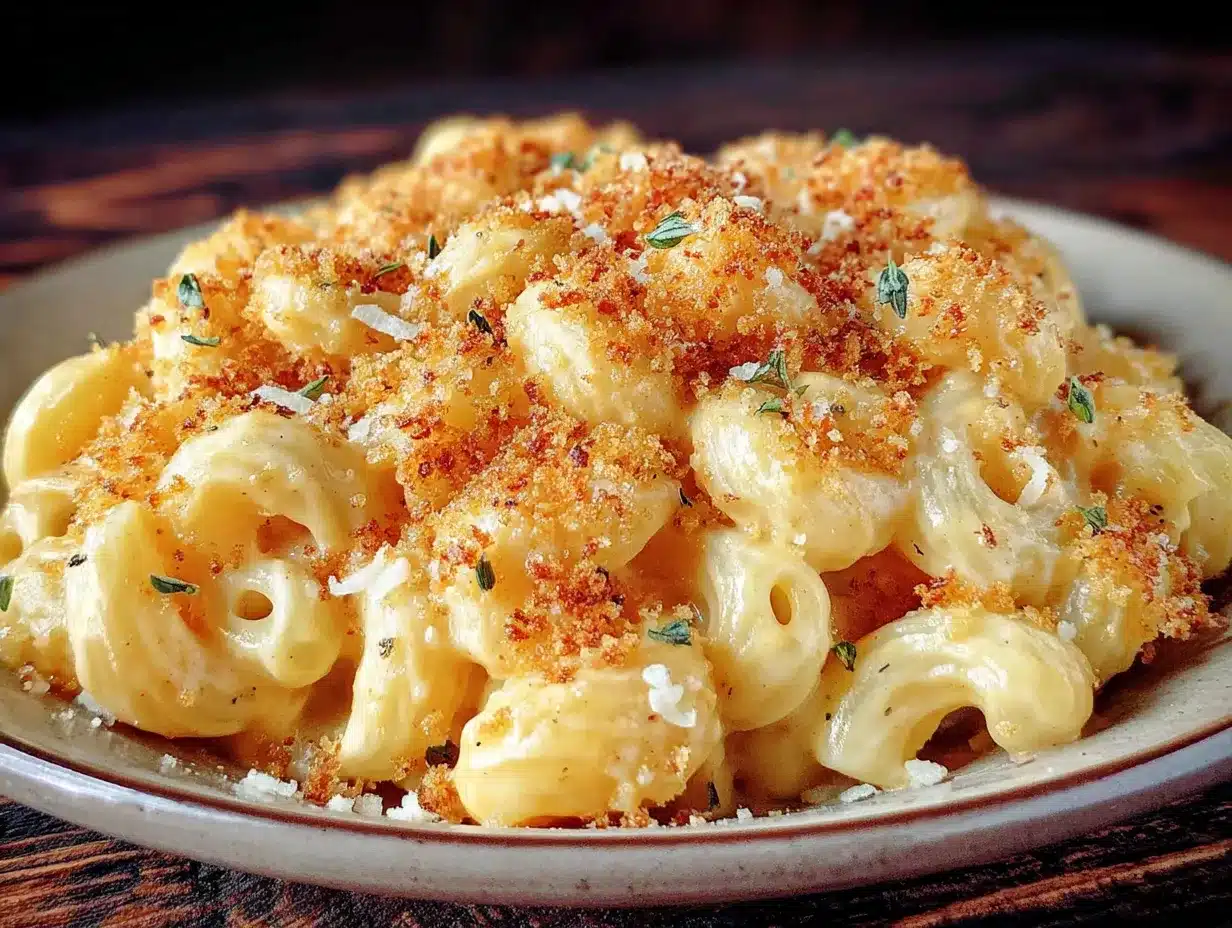
- 1 pound (16 ounces) elbow macaroni or any short pasta like cavatappi or shells (I prefer cavatappi because the ridges hold the sauce beautifully)
- 4 tablespoons unsalted butter
- 1 small onion, finely diced (optional, but adds a lovely savory depth)
- 3 cloves garlic, minced
- 2 cups whole milk (use 2% if that’s what you have, but avoid skim for the creamiest result)
- 1 cup reserved pasta water
- 2 cups (8 ounces) sharp cheddar cheese, freshly grated (please, please grate your own—pre-shredded has anti-caking agents that make the sauce grainy)
- 1/2 cup (2 ounces) Parmesan cheese, freshly grated
- 1 teaspoon Dijon mustard (don’t skip this—it brightens the whole dish)
- 1/2 teaspoon smoked paprika
- 1/4 teaspoon nutmeg, freshly grated if possible
- Salt and pepper to taste
For the Topping (Optional but Highly Recommended)
- 1/2 cup panko breadcrumbs
- 2 tablespoons melted butter
- 1/4 cup grated Parmesan
- 2 tablespoons fresh sage, chopped (or 1 teaspoon dried sage)
I always use Cabot’s sharp cheddar for this recipe—it melts like a dream and has that perfect tangy bite. For the squash, look for one that feels heavy for its size and has a firm, unblemished skin. If you’re in a pinch, you can use frozen butternut squash cubes, just thaw and pat them dry before roasting. For a dairy-free version, swap the butter for vegan butter, use your favorite plant-based milk (unsweetened, plain), and use a good-quality vegan cheddar shreds. It won’t be exactly the same, but it’s still pretty darn good.
Equipment Needed
You don’t need a ton of fancy equipment for this recipe, which is part of its charm. Here’s what you’ll need:
- Baking sheet: For roasting the squash. A rimmed sheet works best to catch any juices.
- Large pot: For boiling the pasta. A 5-6 quart pot is perfect.
- Blender or food processor: This is key for getting that silky smooth sauce. I use my trusty Vitamix, but any blender will work. An immersion blender also works if you’re careful.
- Large skillet or Dutch oven: For making the sauce and combining everything. A Dutch oven is great because you can bake the whole thing in it if you’re adding the topping.
- Box grater: For grating your cheese. It’s a small extra step, but it makes a huge difference.
- Wooden spoon or spatula: For stirring.
- 9×13-inch baking dish: If you want to bake it with the crispy topping.
If you don’t have a blender, you can mash the roasted squash very well with a potato masher and whisk it into the milk. The texture won’t be quite as smooth, but it will still be delicious. I’ve done it that way when my blender was in the dishwasher, and honestly, no one complained.
Preparation Method
Let’s get cooking! This recipe comes together in a few simple steps, and the result is pure comfort.
- Preheat and Prep (5 minutes): Preheat your oven to 400°F (200°C). Line a baking sheet with parchment paper for easy cleanup. Peel your butternut squash, scoop out the seeds, and cut it into 1-inch cubes. If you’ve never cut a butternut squash before, be careful—they’re tough. I usually cut off the top and bottom first, then use a vegetable peeler to remove the skin. It’s a little workout, but worth it.
- Roast the Squash (25-30 minutes): Toss the squash cubes with the olive oil, salt, and pepper on the prepared baking sheet. Spread them in a single layer—don’t overcrowd, or they’ll steam instead of roast. Roast for 25-30 minutes, flipping halfway through, until the squash is tender and the edges are starting to caramelize. You want it fork-tender and slightly golden. The smell in your kitchen at this point is incredible.
- Cook the Pasta (10 minutes): While the squash roasts, bring a large pot of salted water to a boil. Add your pasta and cook according to package directions until al dente. Reserve 1 cup of the pasta water before draining. This starchy water is liquid gold for your sauce. Drain the pasta and set it aside.
- Make the Sauce Base (10 minutes): In a large skillet or Dutch oven, melt the butter over medium heat. Add the diced onion (if using) and cook for 3-4 minutes until it’s soft and translucent. Add the minced garlic and cook for another 30 seconds until fragrant. Don’t let the garlic burn—it turns bitter fast. Pour in the milk and the reserved pasta water, and bring the mixture to a gentle simmer.
- Blend the Sauce (5 minutes): Carefully transfer the roasted squash and the milk mixture to your blender. Add the Dijon mustard, smoked paprika, and nutmeg. Blend on high until the sauce is completely smooth and velvety. This should take about 30-45 seconds. Be careful with the hot liquid—fill the blender no more than halfway, and hold the lid down with a towel. If your blender is small, do this in batches.
- Combine and Melt (5 minutes): Pour the smooth sauce back into the skillet or Dutch oven over low heat. Gradually add the grated cheddar and Parmesan, stirring constantly until the cheese is fully melted and the sauce is thick and glossy. Taste it. Seriously, taste it now. Add salt and pepper as needed. The sauce should be rich, creamy, and just slightly sweet from the squash.
- Assemble (2 minutes): Add the cooked pasta to the sauce and stir until every piece is coated. If the sauce seems too thick, add a splash of milk or pasta water to loosen it up. For a stovetop version, you’re done! Serve it right away.
- Optional Crispy Topping (15 minutes): If you want that golden, crunchy top, preheat your broiler. Transfer the mac and cheese to a 9×13-inch baking dish. In a small bowl, mix the panko, melted butter, Parmesan, and chopped sage. Sprinkle this evenly over the top. Broil for 2-3 minutes, watching closely, until the topping is golden brown and bubbly. Let it sit for 5 minutes before serving—it will be molten hot.
Cooking Tips & Techniques
I’ve made this recipe more times than I can count, and I’ve learned a few things along the way. First, don’t skip roasting the squash. I tried steaming it once to save time, and the sauce was watery and bland. Roasting concentrates the flavor and gives you that deep, caramelized sweetness. It’s worth the extra 20 minutes, I promise.
Another thing I’ve learned the hard way: always grate your own cheese. I know it’s tempting to buy the bagged shredded cheese, but the anti-caking agents in it (usually cellulose or potato starch) prevent the cheese from melting smoothly. You’ll end up with a gritty, clumpy sauce instead of that silky dream. Spend the two minutes grating a block of cheddar—your taste buds will thank you.
If your sauce seems too thick after adding the cheese, don’t panic. Just stir in a splash of the reserved pasta water or some warm milk. The starch in the pasta water helps everything stay smooth and creamy. On the flip side, if your sauce is too thin, let it simmer on low heat for a few extra minutes, stirring constantly, until it thickens up. Patience is key here.
Timing is everything with this dish. I like to start the squash roasting, then get the pasta water boiling. By the time the squash is done, the pasta is almost ready, and you can make the sauce while the pasta drains. It’s a smooth workflow that minimizes downtime. And if you’re making the baked version with the topping, you can assemble everything ahead of time and pop it under the broiler just before serving. Perfect for entertaining.
One more thing: don’t be shy with the salt. Pasta needs a heavily salted water—it should taste like the sea. This is your only chance to season the pasta itself. And for the sauce, taste it before you add the pasta. It should be slightly saltier than you think, because the pasta will absorb some of that saltiness. I learned this after making a few batches that were perfectly seasoned on their own but bland once mixed with the noodles.
Variations & Adaptations
This recipe is incredibly flexible, and I’ve tried quite a few variations over the years. Here are some of my favorites:
- Make it Gluten-Free: Simply swap the regular pasta for your favorite gluten-free pasta. I like the brown rice or chickpea-based ones. Use gluten-free panko for the topping. The sauce itself is naturally gluten-free since we’re not using a flour roux.
- Add Some Protein: I’ve stirred in cooked, crumbled bacon or crispy pancetta, and it’s absolutely divine. Shredded rotisserie chicken works great too, turning this into a complete one-dish meal. Leftover pulled pork? Yes, please.
- Veggie Boost: Fold in some steamed broccoli florets, sautéed spinach, or roasted mushrooms before baking. The broccoli adds a nice crunch, and the mushrooms soak up that cheesy sauce beautifully. My kids actually eat their vegetables this way without complaint.
- Spice It Up: Add a pinch of cayenne pepper or red pepper flakes to the sauce for a little heat. I sometimes add a diced jalapeño when I’m cooking the onion for a smoky, spicy kick. It’s fantastic.
- Herb Swap: If you don’t have sage for the topping, try fresh thyme or rosemary. Both pair wonderfully with the squash and cheese. I’ve even used a sprinkle of everything bagel seasoning on top for a fun twist.
- Dairy-Free Version: Use unsweetened oat milk or full-fat canned coconut milk (the kind in the can, not the carton) for the sauce. Use vegan butter and a good-quality vegan cheddar shreds. I’ve had success with the Violife brand. The sauce won’t be as creamy, but it’s still a solid comfort dish.
My personal favorite variation? I add a tablespoon of white miso paste to the sauce when I blend it. It sounds weird, but the miso adds an incredible savory depth, or umami, that makes the cheese taste even cheesier. I discovered this by accident when I was out of Dijon mustard and needed a flavor booster. It’s now my secret weapon.
Serving & Storage Suggestions
This mac and cheese is best served hot, straight from the pot or baking dish. I like to scoop it into warm bowls and top it with a little extra fresh sage or a sprinkle of black pepper. It’s a meal in itself, but it also pairs beautifully with a simple green salad dressed with a tangy vinaigrette—the acidity cuts through the richness perfectly. A side of roasted Brussels sprouts or green beans is also a fantastic choice. For a cozy fall dinner, I serve it alongside some crusty bread and a glass of crisp apple cider.
If you have leftovers (which is rare in my house, but it happens), store them in an airtight container in the refrigerator for up to 4 days. The flavors actually meld together overnight, so it might taste even better the next day. To reheat, I recommend using the stovetop. Add a splash of milk or water to the mac and cheese in a saucepan and warm it over low heat, stirring gently, until it’s creamy again. You can also use the microwave, but be careful not to overheat it, or the sauce can separate. Reheat in 30-second intervals, stirring in between.
This recipe freezes beautifully! Let the mac and cheese cool completely, then transfer it to a freezer-safe container or a zip-top bag. It will keep for up to 3 months. To reheat from frozen, thaw it in the refrigerator overnight, then reheat on the stovetop with a splash of milk. You can also bake it from frozen in a 350°F (175°C) oven for about 30-40 minutes, covered with foil. The topping won’t be as crispy, but it will still be delicious. I’ve done this on busy weeknights, and it’s a lifesaver.
Nutritional Information & Benefits
This cozy mac and cheese is a bit of a nutritional powerhouse, thanks to the butternut squash. A single serving (about 1.5 cups) provides roughly 450-500 calories, 18 grams of protein, 20 grams of fat, and 55 grams of carbohydrates. But let’s talk about what’s really inside.
Butternut squash is packed with vitamin A (over 400% of your daily needs per cup!), which is fantastic for eye health and your immune system. It’s also a great source of vitamin C, potassium, and fiber. The fiber from the squash helps keep you full and aids digestion, so this comfort food actually has some staying power. The cheese provides calcium and protein, making this a more balanced meal than your average boxed mac and cheese.
For those watching their intake, this recipe can be adapted. Use whole wheat pasta for extra fiber, or reduce the cheese by a quarter cup to lower the fat content. It’s naturally vegetarian and can be made gluten-free or dairy-free with the substitutions mentioned above. Just be aware that the dairy-free version will have less protein and calcium. I personally love that this recipe feels indulgent but has a secret healthy ingredient hiding in plain sight. It’s comfort food I can feel good about serving my family.
Conclusion
This butternut squash mac and cheese has become a fall staple in my kitchen, and I hope it becomes one in yours too. It’s everything you want from a cozy night in—warm, creamy, satisfying, and just a little bit unexpected. The roasted squash adds a depth of flavor that plain cheese sauce just can’t match, and it’s a wonderful way to sneak some extra vegetables into your dinner without anyone being the wiser.
I encourage you to make this recipe your own. Add your favorite mix-ins, try different cheeses, or play with the spices. That’s the beauty of cooking—it’s a conversation between you and the ingredients. And if you do make it, I’d love to hear about it. Leave a comment below and tell me how it turned out, or share your own twist on this recipe. Did you add bacon? Swap the sage for rosemary? Let me know! Don’t forget to pin this recipe for later and share it with a friend who needs a little comfort. Happy cooking, and here’s to many cozy fall nights ahead.
Frequently Asked Questions
Can I use frozen butternut squash instead of fresh?
Yes, you can! Just thaw the frozen cubes and pat them very dry with paper towels before roasting. Frozen squash tends to release more water, so drying it helps it caramelize properly. Roast it for a few minutes longer to evaporate any excess moisture.
What other cheeses can I use in this recipe?
Sharp cheddar is my go-to, but you can mix it up. Gruyère adds a nutty, creamy flavor. Smoked gouda gives a lovely smoky note. A little bit of fontina or mozzarella can make it extra stretchy. Just keep the total cheese amount the same, and avoid using only pre-shredded cheese.
Can I make this recipe ahead of time?
Absolutely! You can assemble the mac and cheese completely (without the topping) and refrigerate it for up to 24 hours. When you’re ready to bake, add the topping and bake at 350°F (175°C) for 20-25 minutes, then broil for the last 2 minutes. You may need to add a splash of milk before baking to keep it creamy.
Why did my sauce turn out grainy?
Grainy sauce usually happens for two reasons: the cheese was pre-shredded (with anti-caking agents), or the heat was too high when melting the cheese. Always grate your own cheese and add it to the sauce over low heat, stirring constantly. Never let the sauce boil after adding the cheese.
Can I skip the blender step?
Yes, but the texture will be different. You can mash the roasted squash with a potato masher or fork until it’s as smooth as possible, then whisk it into the milk mixture. The sauce will be a little more rustic and chunky, but it will still taste delicious. It’s a great shortcut if you don’t want to wash your blender.
Pin This Recipe!
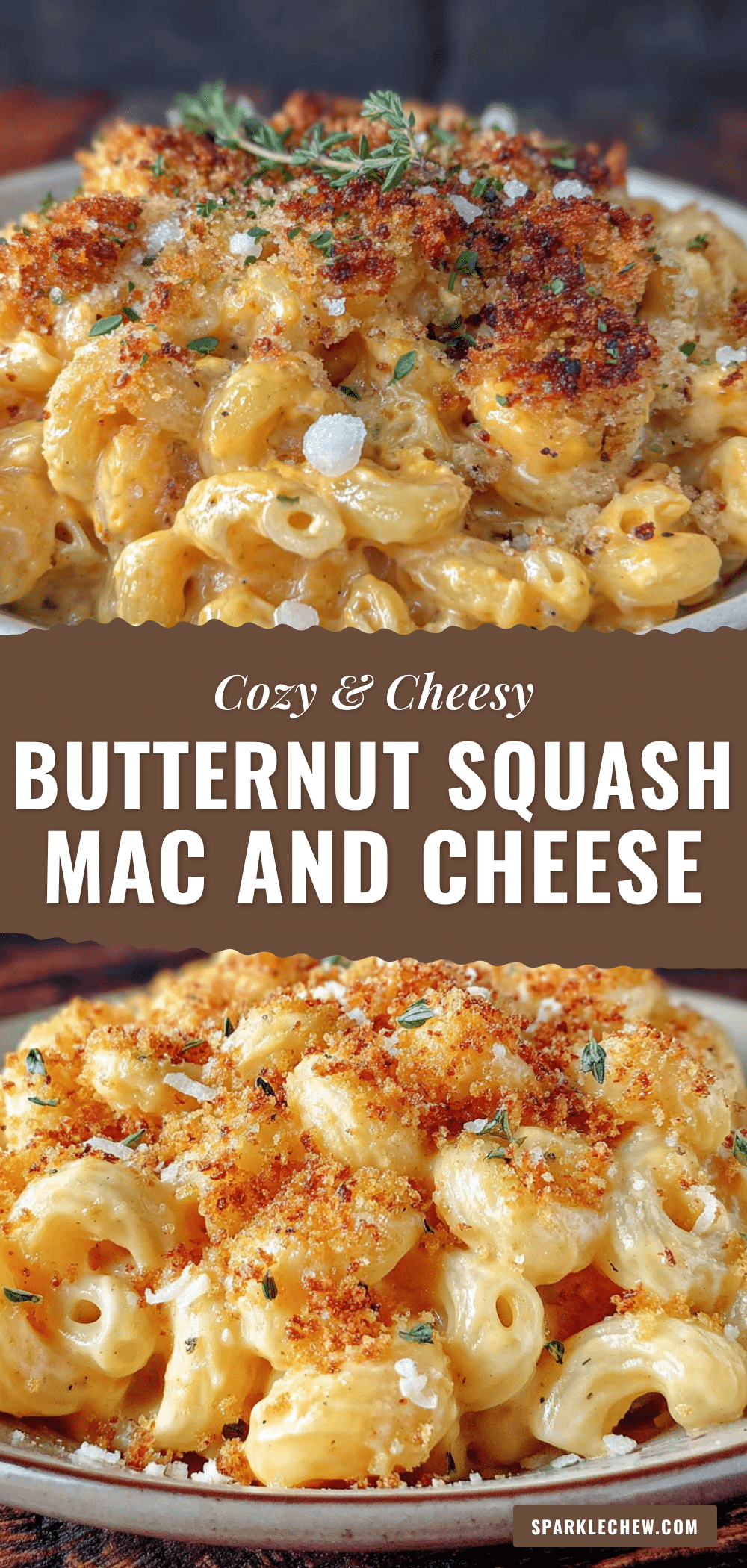
Cozy Butternut Squash Mac and Cheese: Best Fall Recipe

This creamy, velvety mac and cheese gets a secret boost from roasted butternut squash, adding natural sweetness and a rich, nutty flavor. It’s the ultimate cozy fall comfort food that even picky eaters will love.
- Prep Time: 15 minutes
- Cook Time: 30 minutes
- Total Time: 45 minutes
- Yield: 6 servings 1x
- Category: Main Course
- Cuisine: American
Ingredients
- 1 medium butternut squash (about 2–3 pounds), peeled, seeded, and cut into 1-inch cubes
- 2 tablespoons olive oil
- 1/2 teaspoon salt
- 1/4 teaspoon black pepper
- 1 pound (16 ounces) elbow macaroni or any short pasta like cavatappi or shells
- 4 tablespoons unsalted butter
- 1 small onion, finely diced (optional)
- 3 cloves garlic, minced
- 2 cups whole milk
- 1 cup reserved pasta water
- 2 cups (8 ounces) sharp cheddar cheese, freshly grated
- 1/2 cup (2 ounces) Parmesan cheese, freshly grated
- 1 teaspoon Dijon mustard
- 1/2 teaspoon smoked paprika
- 1/4 teaspoon nutmeg, freshly grated if possible
- Salt and pepper to taste
- 1/2 cup panko breadcrumbs (for topping, optional)
- 2 tablespoons melted butter (for topping, optional)
- 1/4 cup grated Parmesan (for topping, optional)
- 2 tablespoons fresh sage, chopped (or 1 teaspoon dried sage) (for topping, optional)
Instructions
- Preheat oven to 400°F (200°C). Line a baking sheet with parchment paper.
- Toss butternut squash cubes with olive oil, salt, and pepper. Spread in a single layer on the baking sheet. Roast for 25-30 minutes, flipping halfway, until tender and edges are caramelized.
- While squash roasts, bring a large pot of salted water to a boil. Cook pasta according to package directions until al dente. Reserve 1 cup pasta water, then drain pasta and set aside.
- In a large skillet or Dutch oven, melt butter over medium heat. Add onion (if using) and cook 3-4 minutes until soft. Add garlic and cook 30 seconds until fragrant.
- Pour in milk and reserved pasta water. Bring to a gentle simmer.
- Carefully transfer roasted squash and milk mixture to a blender. Add Dijon mustard, smoked paprika, and nutmeg. Blend on high until completely smooth (30-45 seconds).
- Pour smooth sauce back into skillet or Dutch oven over low heat. Gradually add cheddar and Parmesan, stirring constantly until melted and sauce is thick and glossy. Season with salt and pepper to taste.
- Add cooked pasta to sauce and stir until well coated. If sauce is too thick, add a splash of milk or pasta water.
- For optional crispy topping: Preheat broiler. Transfer mac and cheese to a 9×13-inch baking dish. Mix panko, melted butter, Parmesan, and sage. Sprinkle over top. Broil 2-3 minutes until golden brown. Let sit 5 minutes before serving.
Notes
Roasting the squash is key for flavor—don’t skip it. Always grate your own cheese to avoid a grainy sauce. If sauce is too thick, add a splash of pasta water or milk. For a dairy-free version, use vegan butter, plant-based milk, and vegan cheddar. The sauce can be made ahead and refrigerated for up to 24 hours.
Nutrition
- Serving Size: 1.5 cups
- Calories: 475
- Sugar: 8
- Sodium: 650
- Fat: 20
- Saturated Fat: 11
- Carbohydrates: 55
- Fiber: 5
- Protein: 18
Keywords: butternut squash mac and cheese, fall recipe, comfort food, vegetarian, easy mac and cheese, roasted squash, creamy mac and cheese