Love this? Save it for later!
Share the inspiration with your friends
The neighborhood soup swap was in two days and I’d completely forgotten. Everyone else would be bringing their grandmother’s legendary chicken noodle or some complicated French onion that had been simmering for hours. I had a butternut squash that was starting to look a little desperate on the counter and three apples that were past their prime for snacking. Honestly, I almost just bought a carton of something from the store. But then it hit me—roast them together, blend until smooth, and hope for the best. I mean, what’s the worst that could happen? So I chopped, tossed in olive oil, and threw everything in the oven while I cleaned up the mess I’d made earlier. The soup came together in maybe twenty minutes of actual work. The next day at the swap, that humble butternut squash and apple soup was the first empty pot. People kept asking for the recipe, and I had to laugh because it was barely a recipe at all. Maybe you’ve been there—scrambling at the last minute and accidentally making something that sticks. That’s this soup for me. It’s the one I keep coming back to, every single fall, because it proves you don’t need a complicated plan to make something truly memorable.
Why You’ll Love This Recipe
Let me tell you why this roasted butternut squash and apple soup has become my go-to for everything from quiet weeknight dinners to holiday gatherings. I’ve tested this recipe more times than I can count, tweaking the roast time and the apple-to-squash ratio until it was just right.
- Quick & Easy: Comes together in under an hour with just 15 minutes of active prep. Perfect for those busy fall evenings when you want something cozy without the fuss.
- Simple Ingredients: No fancy grocery trips needed. You likely already have the onions, garlic, and broth in your pantry. Just grab a squash and some apples.
- Perfect for Fall Gatherings: Great for Thanksgiving starters, potlucks, or a comforting lunch on a chilly day. It’s impressive without being stressful.
- Crowd-Pleaser: Always gets rave reviews from both kids and adults. The natural sweetness from the apples makes it approachable for even picky eaters.
- Unbelievably Delicious: The texture is velvety smooth without any cream. The roasting brings out this deep, caramelized flavor that you just can’t get from stovetop methods.
What makes this recipe different from the rest? It’s the roasting technique. Instead of boiling the squash, which waters down the flavor, we roast it until the edges are golden and slightly charred. That caramelization is pure magic. And the apples? They add a subtle sweetness that balances the earthiness of the squash perfectly. This isn’t just another soup recipe—it’s the one that’ll have you closing your eyes after that first spoonful. It’s comfort food reimagined: healthier, faster, but with the same soul-soothing satisfaction. Perfect for impressing guests without stress, or turning a simple meal into something memorable.
What Ingredients You Will Need
This recipe uses simple, wholesome ingredients to deliver bold flavor and satisfying texture without the fuss. Most of these are fall pantry staples, making this soup incredibly accessible.
For the Roasted Vegetables
- 1 medium butternut squash (about 2-3 pounds), peeled, seeded, and cut into 1-inch cubes (look for one that feels heavy for its size)
- 2 medium apples (I prefer Honeycrisp or Fuji for their natural sweetness), cored and cut into 1-inch chunks (leave the peel on for extra fiber and color)
- 1 medium yellow onion, roughly chopped
- 3 cloves garlic, peeled (whole cloves roast beautifully and blend smoothly)
- 2 tablespoons olive oil (use a good quality one for roasting)
- 1 teaspoon salt (I use kosher salt for better control)
- 1/2 teaspoon black pepper, freshly ground
- 1/2 teaspoon dried thyme (or 1 teaspoon fresh thyme leaves)
- 1/4 teaspoon ground nutmeg (freshly grated if you have it—it makes a difference)
For the Soup Base
- 4 cups vegetable broth (low-sodium preferred so you can control the salt), or chicken broth if not vegetarian
- 1/2 cup coconut milk (full-fat for creaminess, or use heavy cream if dairy is fine), plus more for drizzling
- 1 tablespoon maple syrup (optional, depending on the sweetness of your apples)
- 1 tablespoon apple cider vinegar (adds brightness and balances the sweetness)
For Garnish (Optional but Recommended)
- Toasted pumpkin seeds (pepitas) for crunch
- A drizzle of coconut milk or cream
- A sprinkle of cinnamon or nutmeg
- Fresh thyme sprigs
Ingredient Tips: I recommend using Honeycrisp or Fuji apples for the best natural sweetness. If you only have Granny Smith apples, you’ll definitely want that maple syrup to balance the tartness. For the squash, look for one that feels heavy and has a solid, tan skin without soft spots. If you’re short on time, many stores sell pre-cut butternut squash cubes—just know they might roast a bit faster, so keep an eye on them.
Substitution Guidance: For a dairy-free version, coconut milk works beautifully. If you prefer a richer soup, swap in heavy cream. Use almond flour for thickening if needed, though the roasted squash naturally creates a thick, creamy texture. For a lower-carb option, reduce the apples to one and add an extra cup of roasted cauliflower.
Equipment Needed
You don’t need a fancy kitchen to make this soup. Here’s what you’ll need:
- Large baking sheet (half-sheet pan works best for even roasting)
- Chef’s knife and cutting board (a sharp knife makes quick work of the squash)
- Vegetable peeler (or you can leave the skin on if you prefer—just scrub well)
- Large pot or Dutch oven (for simmering the soup)
- Immersion blender (my preferred method for safety and ease) or a countertop blender
- Measuring cups and spoons
- Wooden spoon or spatula
Personal Tip: I’ve used both an immersion blender and a countertop blender for this soup. The immersion blender is faster and creates less mess—you can blend right in the pot. But if you’re using a countertop blender, work in batches and never fill it more than halfway with hot liquid. Trust me on that one. I learned the hard way. For budget-friendly options, a basic immersion blender costs around $20 and is worth every penny for soup season.
Preparation Method
Let me walk you through this step by step. It’s simpler than you think.
- Preheat your oven to 400°F (200°C). Line a large baking sheet with parchment paper for easy cleanup. Trust me, you’ll thank yourself later.
- Prep the squash. Using a sharp chef’s knife, carefully cut off both ends of the butternut squash. Then cut it in half where the narrow neck meets the wider bulb. Peel each section with a vegetable peeler. Scoop out the seeds from the bulb section (save them for roasting if you like!). Cut the squash into 1-inch cubes. This takes about 5-7 minutes, but once you get the hang of it, it’s quick.
- Core and chop the apples. No need to peel them—the skin adds color and nutrients. Cut them into roughly 1-inch chunks, similar in size to the squash so they roast evenly.
- Roughly chop the onion and leave the garlic cloves whole. Whole garlic roasts beautifully without burning, and it blends smoothly later.
- Toss everything together. On your prepared baking sheet, combine the squash, apples, onion, and garlic cloves. Drizzle with 2 tablespoons olive oil, then sprinkle with salt, pepper, dried thyme, and nutmeg. Use your hands (the best tools in the kitchen!) to toss everything until evenly coated.
- Roast for 35-40 minutes, stirring halfway through. You’re looking for the squash to be fork-tender and the edges to have golden-brown caramelized spots. The apples should be soft and slightly wrinkled. Your kitchen will smell incredible at this point—like fall in a pan.
- Transfer to a pot. Once roasted, scrape all the vegetables and apples into a large pot or Dutch oven. Add the 4 cups of vegetable broth. The broth should just cover the vegetables—if it doesn’t, add a little more.
- Simmer for 10 minutes. Bring to a gentle boil, then reduce heat and let it simmer for about 10 minutes. This allows all the flavors to meld together. The roasted garlic will have softened completely by now.
- Blend until smooth. If using an immersion blender, blend directly in the pot until completely smooth. If using a countertop blender, work in batches. Fill the blender no more than halfway, hold the lid firmly with a kitchen towel, and blend until smooth. Return the blended soup to the pot.
- Add the finishing touches. Stir in the 1/2 cup coconut milk, 1 tablespoon maple syrup (if using), and 1 tablespoon apple cider vinegar. Taste and adjust seasoning—you might want more salt, a pinch more nutmeg, or an extra splash of vinegar for brightness.
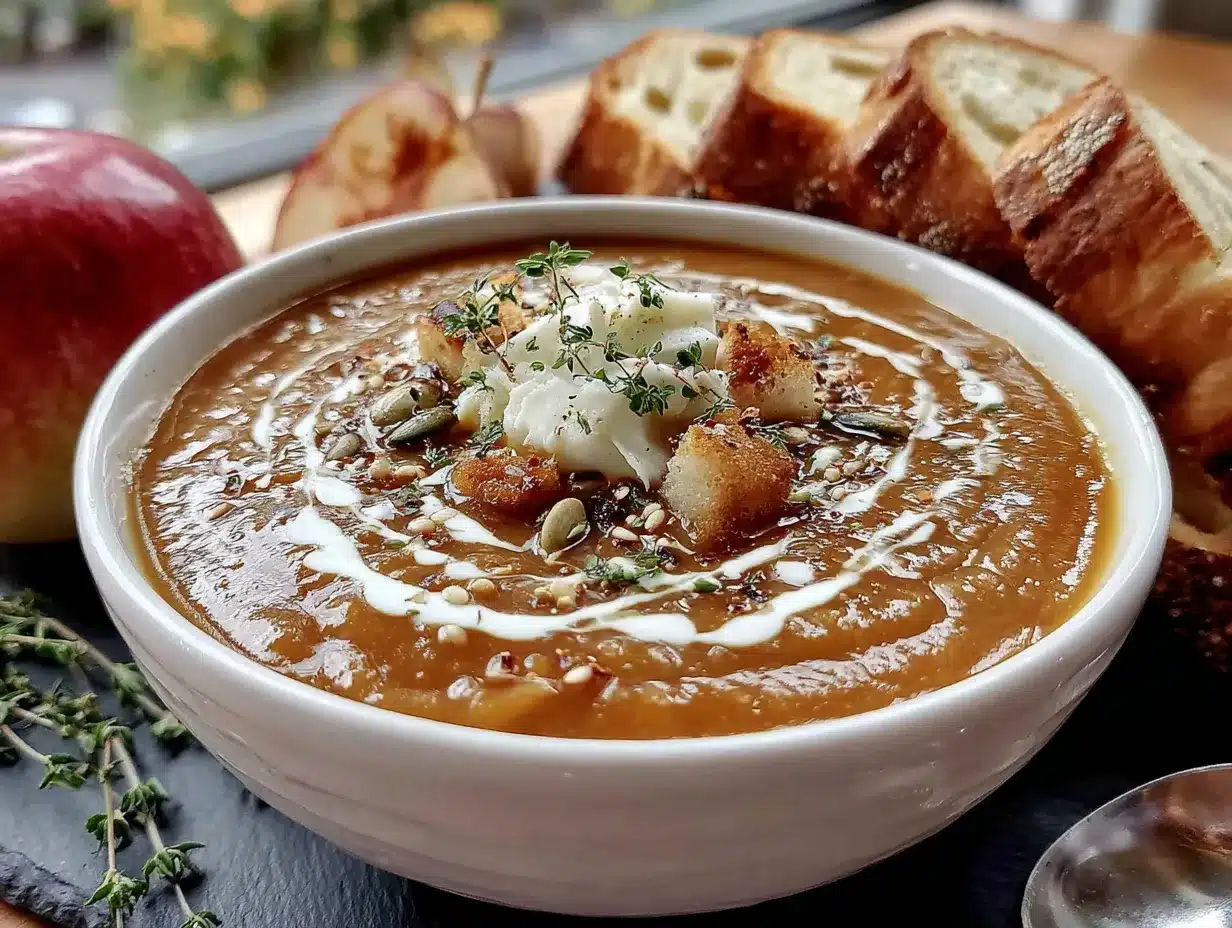
- Serve hot. Ladle into bowls and garnish with a drizzle of coconut milk, toasted pumpkin seeds, and a sprinkle of cinnamon or nutmeg. A fresh thyme sprig on top looks beautiful.
Sensory Cues: At step 6, the squash should be easily pierced with a fork. The apples will look slightly caramelized and smell sweet. At step 9, the soup should be thick and velvety, not watery. If it’s too thick, add more broth a quarter cup at a time until it reaches your desired consistency.
Troubleshooting Tip: If your soup tastes flat, it likely needs more salt or a splash of acid. The apple cider vinegar is key here—it brightens everything without making it taste vinegary.
Cooking Tips & Techniques
After making this soup more times than I can count, here are the things I wish I’d known from the start.
Don’t overcrowd the pan. This is the biggest mistake I made early on. If the squash pieces are piled on top of each other, they’ll steam instead of roast. Use a large enough baking sheet so everything has a little breathing room. If needed, use two sheets.
Cut uniform pieces. I know it’s tempting to chop quickly, but taking an extra minute to make sure your squash and apple pieces are similar in size means they’ll finish roasting at the same time. Nothing worse than some pieces being mushy while others are still hard.
Roast the garlic whole. Whole cloves of garlic roast into sweet, buttery perfection without burning. If you minced the garlic, it would burn in the oven and turn bitter. Whole cloves blend beautifully into the soup later.
Season in layers. I add salt and pepper before roasting, then adjust again after blending. This builds flavor from the ground up. Don’t skip the nutmeg—it’s subtle but adds that warm, cozy fall feeling.
Use an immersion blender for safety. I learned this one the hard way. Blending hot soup in a countertop blender can be dangerous. The steam builds up and can blow the lid off. If you’re using a countertop blender, let the soup cool for 10 minutes first and hold the lid down with a folded kitchen towel.
Make it ahead. This soup actually tastes better the next day. The flavors have time to meld and deepen. So if you’re making it for a gathering, do it a day ahead and just reheat gently.
Variations & Adaptations
One of the best things about this soup is how adaptable it is. Here are some ways I’ve changed it up over the years.
Vegan & Dairy-Free: This recipe is already vegan if you use vegetable broth and coconut milk. The coconut milk adds a lovely richness without any dairy. I’ve served this to dairy-loving friends who didn’t even notice the difference.
Spicy Version: Add 1/2 teaspoon of red pepper flakes or a small diced jalapeño (seeds removed) to the roasting pan. The heat pairs beautifully with the sweet squash and apples. I made this version for a friend who loves spicy food, and she said it was the best soup she’d ever had.
Herb Swap: Instead of thyme, try fresh rosemary or sage. Rosemary adds an almost piney, aromatic quality, while sage brings that classic fall flavor. Just use half the amount since dried herbs are more concentrated.
Add Some Heat: Stir in 1 tablespoon of fresh ginger, grated, along with the garlic before roasting. Ginger adds a warming, slightly spicy note that’s incredible on a cold day.
Make It a Meal: Add a can of drained and rinsed chickpeas to the soup after blending for extra protein and texture. Or serve it with a grilled cheese sandwich for the ultimate comfort food combo.
Roasted Carrot Variation: Swap half the squash for roasted carrots. The carrots add natural sweetness and a beautiful orange color. I tried this when I had extra carrots in the fridge, and it was a happy accident.
Serving & Storage Suggestions
Serving Temperature: This soup is best served hot, straight from the pot. But I’ve also enjoyed it at room temperature on a warm fall day. The flavors are still fantastic.
Presentation Ideas: Ladle the soup into bowls and drizzle with a swirl of coconut milk or heavy cream. Use a toothpick to drag the swirl into a pattern if you’re feeling fancy. Top with toasted pumpkin seeds for crunch, a sprinkle of cinnamon, and a fresh thyme sprig. Serve with crusty bread or a simple side salad for a complete meal.
Complementary Dishes: This soup pairs beautifully with a grilled cheese sandwich (try it with sharp cheddar and apple slices!), a simple arugula salad with lemon vinaigrette, or roasted Brussels sprouts. For drinks, a crisp apple cider or a dry white wine like Sauvignon Blanc works wonderfully.
Storage Instructions: Store leftover soup in an airtight container in the refrigerator for up to 5 days. The flavors actually deepen and improve over time. To freeze, let the soup cool completely, then transfer to freezer-safe containers or zip-top bags. It freezes well for up to 3 months. Thaw overnight in the refrigerator before reheating.
Reheating Methods: Reheat gently on the stovetop over medium-low heat, stirring occasionally. Add a splash of broth or water if the soup has thickened too much. You can also reheat individual portions in the microwave—just cover the bowl and heat in 30-second intervals, stirring between each. The coconut milk might separate slightly upon reheating, but a good stir brings it back together.
Flavor Development: This soup is one of those rare dishes that tastes even better the next day. The roasted flavors meld together overnight, creating a deeper, more complex taste. So don’t be afraid to make it ahead!
Nutritional Information & Benefits
This soup isn’t just delicious—it’s packed with nutrients that make you feel good from the inside out.
Estimated Nutritional Values (per serving, about 1.5 cups):
- Calories: 220
- Total Fat: 10g
- Saturated Fat: 4g
- Carbohydrates: 32g
- Fiber: 6g
- Sugar: 14g (natural from squash and apples)
- Protein: 4g
- Sodium: 580mg (varies with broth)
- Vitamin A: 350% DV (from the squash)
- Vitamin C: 40% DV
- Potassium: 700mg
Health Benefits: Butternut squash is loaded with vitamin A (beta-carotene) for healthy vision and immune function. Apples provide fiber and vitamin C, while the olive oil offers heart-healthy monounsaturated fats. The coconut milk adds medium-chain triglycerides (MCTs) that may support brain health. This soup is naturally gluten-free, dairy-free (if using coconut milk), and vegan.
Dietary Considerations: This recipe is naturally gluten-free and can be made nut-free by using sunflower seeds instead of pumpkin seeds for garnish. It’s low in saturated fat and contains no added sugars beyond the optional maple syrup. For a lower-sodium version, use low-sodium broth and reduce the added salt.
Personal Wellness Perspective: I love that this soup feels indulgent but is actually packed with vegetables. It’s the kind of meal that warms you up without weighing you down. Perfect for those days when you want comfort food that still makes you feel good.
Frequently Asked Questions
Can I use frozen butternut squash for this soup?
Yes, you can use frozen butternut squash cubes. Just toss them with oil and seasonings and roast directly from frozen—you may need to add 5-10 minutes to the roasting time. The texture won’t be quite as caramelized as fresh, but it still makes a delicious soup.
How do I peel a butternut squash easily?
The easiest method is to microwave the whole squash for 2-3 minutes to soften the skin slightly. Then cut off both ends, cut the squash in half where the neck meets the bulb, and use a sharp vegetable peeler. Alternatively, you can roast the squash whole and scoop out the flesh after it’s cooked—the skin comes off easily then.
Can I make this soup in a slow cooker?
Absolutely! To make this in a slow cooker, toss the squash, apples, onion, and garlic with oil and seasonings, then roast on a baking sheet at 400°F for 20 minutes (this step is crucial for flavor). Transfer to the slow cooker, add broth, and cook on low for 4-6 hours or high for 2-3 hours. Blend as directed.
Why did my soup turn out watery?
Watery soup usually happens when the squash isn’t roasted long enough or if you added too much broth. Make sure your squash is fork-tender and has caramelized edges before blending. Start with less broth and add more gradually until you reach your desired consistency. The roasted squash should naturally thicken the soup.
Can I leave the skin on the butternut squash?
Technically yes, but I don’t recommend it for this recipe. Butternut squash skin is edible but tough and fibrous. It won’t blend completely smooth, leaving you with a slightly stringy texture. If you’re in a hurry, you can leave it on, but peeling gives you that velvety smooth result.
Conclusion
This roasted butternut squash and apple soup is the kind of recipe that feels like a warm hug in a bowl. It’s proof that you don’t need a long list of ingredients or hours in the kitchen to create something truly special. The roasting brings out the natural sweetness of the squash and apples, the blending makes it velvety smooth, and the simple seasonings let the flavors shine. I hope you give this recipe a try and make it your own. Maybe you’ll add a pinch more nutmeg, or swap the apples for pears, or top it with crispy sage leaves. That’s the beauty of cooking—you can always adapt. If you make this soup, I’d love to hear about it. Drop a comment below and let me know how it turned out, or share your own twist on the recipe. And if you’re looking for more cozy fall recipes, be sure to check out our roasted carrot ginger soup and apple cider braised pork shoulder for a complete autumn meal. Happy cooking, friends—here’s to warm bowls and good company.
Pin This Recipe!
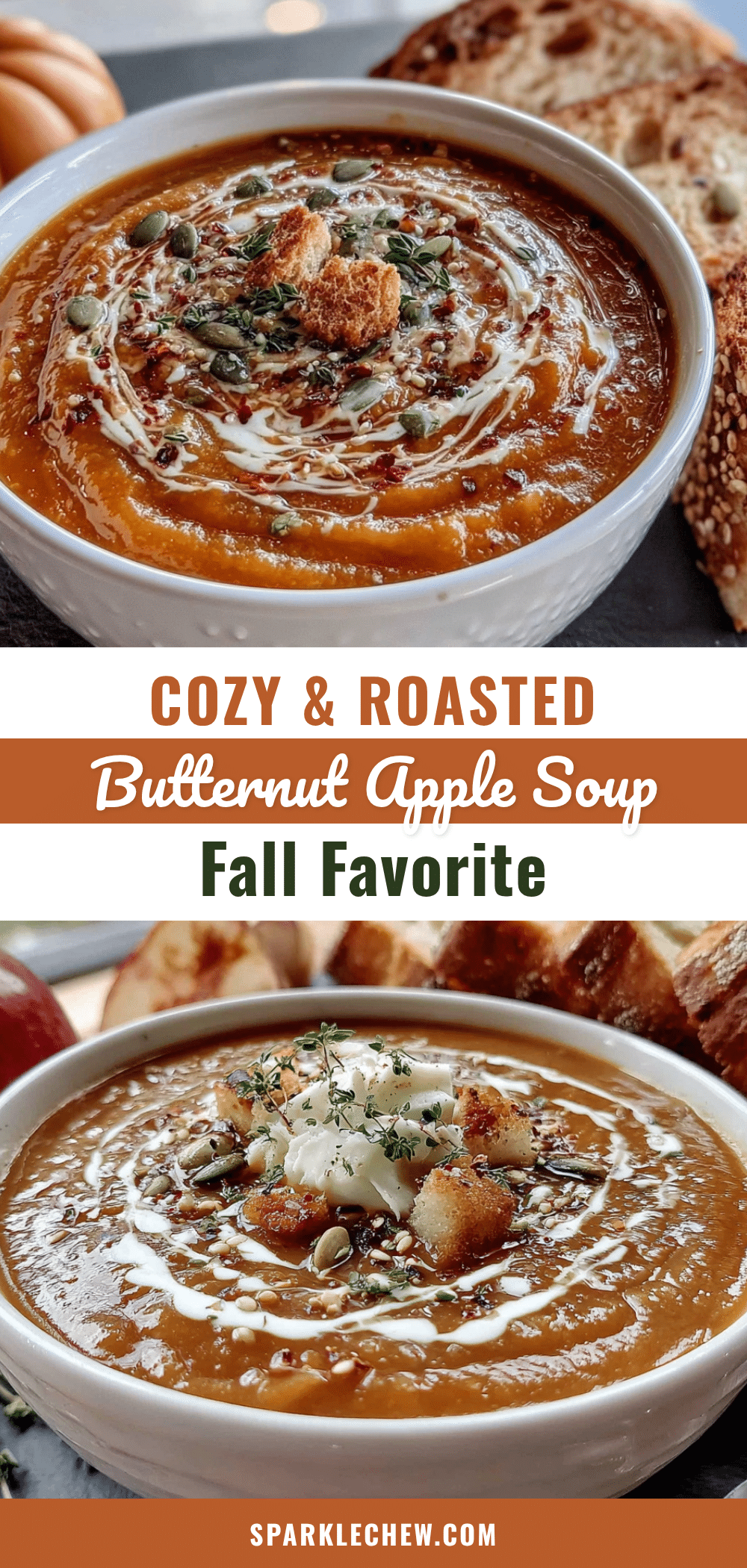
Cozy Roasted Butternut Squash and Apple Soup: Easy Fall Recipe

A velvety smooth roasted butternut squash and apple soup that’s quick to make with simple ingredients. Perfect for fall gatherings, this comforting soup gets its deep caramelized flavor from roasting rather than boiling.
- Prep Time: 15 minutes
- Cook Time: 40 minutes
- Total Time: 55 minutes
- Yield: 4 servings 1x
- Category: Soup
- Cuisine: American
Ingredients
- 1 medium butternut squash (about 2–3 pounds), peeled, seeded, and cut into 1-inch cubes
- 2 medium apples (Honeycrisp or Fuji), cored and cut into 1-inch chunks
- 1 medium yellow onion, roughly chopped
- 3 cloves garlic, peeled
- 2 tablespoons olive oil
- 1 teaspoon kosher salt
- 1/2 teaspoon black pepper, freshly ground
- 1/2 teaspoon dried thyme
- 1/4 teaspoon ground nutmeg
- 4 cups vegetable broth (low-sodium preferred)
- 1/2 cup coconut milk (full-fat)
- 1 tablespoon maple syrup (optional)
- 1 tablespoon apple cider vinegar
- Toasted pumpkin seeds (for garnish)
- Extra coconut milk or cream (for garnish)
- Cinnamon or nutmeg (for garnish)
- Fresh thyme sprigs (for garnish)
Instructions
- Preheat your oven to 400°F (200°C). Line a large baking sheet with parchment paper.
- Prep the squash: Cut off both ends, cut in half where the narrow neck meets the wider bulb, peel with a vegetable peeler, scoop out seeds, and cut into 1-inch cubes.
- Core and chop the apples into roughly 1-inch chunks, leaving the peel on.
- Roughly chop the onion and leave the garlic cloves whole.
- On the prepared baking sheet, combine the squash, apples, onion, and garlic cloves. Drizzle with 2 tablespoons olive oil, then sprinkle with salt, pepper, dried thyme, and nutmeg. Toss until evenly coated.
- Roast for 35-40 minutes, stirring halfway through, until the squash is fork-tender and the edges have golden-brown caramelized spots.
- Transfer the roasted vegetables and apples to a large pot or Dutch oven. Add 4 cups of vegetable broth, enough to just cover the vegetables.
- Bring to a gentle boil, then reduce heat and simmer for 10 minutes to meld flavors.
- Blend until smooth using an immersion blender directly in the pot, or in batches in a countertop blender (fill no more than halfway and hold lid firmly with a towel).
- Stir in 1/2 cup coconut milk, 1 tablespoon maple syrup (if using), and 1 tablespoon apple cider vinegar. Taste and adjust seasoning.
- Serve hot, garnished with a drizzle of coconut milk, toasted pumpkin seeds, a sprinkle of cinnamon or nutmeg, and a fresh thyme sprig.
Notes
For best results, don’t overcrowd the pan—use two sheets if needed. Cut uniform pieces for even roasting. Roast garlic whole to prevent burning. Season in layers for deeper flavor. The soup tastes even better the next day as flavors meld. If soup tastes flat, add more salt or a splash of apple cider vinegar.
Nutrition
- Serving Size: 1.5 cups
- Calories: 220
- Sugar: 14
- Sodium: 580
- Fat: 10
- Saturated Fat: 4
- Carbohydrates: 32
- Fiber: 6
- Protein: 4
Keywords: butternut squash soup, apple soup, fall soup, roasted squash soup, vegan soup, gluten-free soup, easy soup recipe