Love this? Save it for later!
Share the inspiration with your friends
Jen wasn’t trying to impress anyone. I’d stopped by her place last October to drop off a garden trowel she’d loaned me, and this smell hit me before I even got past the screen door. It was nutty and sweet, but also kind of savory — like autumn had been distilled into something you could eat with a spoon.
“What is that?” I asked, probably sounding a little too eager.
She just shrugged and pointed at the stove. “Oh, just some risotto I’m messing around with. Got an acorn squash from the CSA box I needed to use up.”
Just some risotto. Like it was nothing. Meanwhile, I was standing there practically drooling on her welcome mat. She handed me a spoon — not even a proper tasting spoon, just a regular spoon from the drawer — and let me try it. And honestly? I think I made some kind of noise. You know that feeling when something is so unexpectedly good that you forget to use words? That was me, standing in Jen’s kitchen, holding a dirty garden trowel, eating risotto off a regular spoon.
She didn’t even watch me taste it. She was too busy digging through the fridge for sage leaves. “I saw this trick online where you fry them in butter until they get crispy,” she said, like she was telling me about a new brand of dish soap. “They’re pretty good.”
Pretty good. Let me tell you — those crispy sage leaves are the kind of thing you start dreaming about. They’re almost unfair, honestly. A creamy, velvety risotto studded with sweet roasted squash, topped with these papery, buttery, crackling leaves of sage. It’s the kind of meal that makes you want to cancel your plans and stay home with a bowl and a good book.
I asked for the recipe, and she kind of laughed and said she just “winged it.” So I spent the next week in my own kitchen, trying to figure out exactly what she did. I burned the first batch. The second one was too salty. But the third time? That was it. That was the one. And now I’m sharing it with you because honestly, this kind of thing shouldn’t be kept secret.
Why You’ll Love This Recipe
Let me tell you why this creamy acorn squash risotto is going to become your new favorite fall obsession. I’ve tested this recipe more times than I care to admit — through burnt pans, undercooked rice, and one particularly sad attempt where I forgot the sage entirely — and I’ve landed on something that actually works. Every. Single. Time.
- Restaurant-quality at home — This risotto has that velvety, luxurious texture you usually only get at a nice Italian place. The roasted squash melts right into the rice, creating this gorgeous golden color and a sweetness that balances the savory broth perfectly.
- Surprisingly simple ingredients — You don’t need anything fancy here. Acorn squash, arborio rice, some good broth, and a bundle of fresh sage. That’s it. No truffle oil, no exotic cheeses, no special trips to a gourmet market.
- Perfect for a cozy night in — This is the kind of meal you make when you want to feel like you’re treating yourself. It’s warm, it’s comforting, and the whole process of stirring the risotto is almost meditative. Put on some music, pour yourself a glass of wine, and enjoy the rhythm of it.
- Impressive without being stressful — If you’re having people over, this dish looks and tastes like you spent hours slaving away. But between us? It’s actually pretty forgiving once you get the hang of it. The crispy sage leaves on top make it look incredibly elegant.
- Seasonal and satisfying — Acorn squash is at its best in the fall, and this recipe really lets it shine. It’s hearty enough to be a main course but also works beautifully as a side dish for roasted chicken or pork.
This isn’t just another risotto recipe. The trick here is roasting the squash first — that extra step caramelizes the natural sugars and gives the whole dish a deeper, more complex flavor. Plus, you blend some of the roasted squash into the broth, which makes the risotto incredibly creamy without needing a ton of heavy cream or butter. It’s comfort food that actually feels good to eat.
What Ingredients You Will Need
This recipe uses simple, wholesome ingredients that come together to create something truly special. Most of these are pantry staples or easy to find at any grocery store, especially during fall.
- 1 medium acorn squash (about 1.5 lbs / 680g) — Look for one that feels heavy for its size and has a deep green color with some orange patches. That orange color means it’s ripe and sweet. You’ll be roasting this, so pick one that’s firm with no soft spots.
- 4 cups (960 ml) vegetable or chicken broth — I prefer using a good-quality low-sodium broth so I can control the salt. If you use homemade broth, even better. The broth is the backbone of the risotto’s flavor, so don’t skimp here.
- 1 cup (200 g) arborio rice — This is important. Don’t substitute with regular long-grain rice. Arborio rice has a high starch content, which is what gives risotto that signature creamy texture. Carnaroli or vialone nano rice also work great.
- 1/2 cup (120 ml) dry white wine — Something you’d actually drink, like a Pinot Grigio or Sauvignon Blanc. The wine adds acidity that balances the sweetness of the squash. If you don’t cook with alcohol, you can skip it and use an extra 1/2 cup of broth.
- 1 small yellow onion (about 150 g), finely diced — The onion provides the aromatic base. You want it cooked until it’s translucent and soft, almost melted into the rice.
- 2 cloves garlic, minced — Fresh garlic is non-negotiable here. Don’t use the jarred stuff. It adds a subtle warmth that complements the sage beautifully.
- 3 tablespoons (45 g) unsalted butter, divided — You’ll use some for sautéing the aromatics and some for finishing the risotto at the end. That final pat of butter stirred in off the heat is what makes it extra glossy and rich.
- 1/3 cup (40 g) freshly grated Parmesan cheese — Please grate it yourself. The pre-shredded stuff has anti-caking agents that prevent it from melting smoothly. Parmesan adds that nutty, salty umami that makes risotto irresistible.
- 1 small bunch fresh sage leaves (about 15-20 leaves) — You’ll use most of these for the crispy topping, but you can chop a couple and stir them into the risotto at the end for extra flavor. Fresh sage is a must here — dried sage just won’t give you the same texture or taste.
- 2 tablespoons olive oil — For roasting the squash and for the initial sauté. A good extra virgin olive oil adds a nice fruity note.
- Salt and black pepper to taste — I use kosher salt for cooking and flaky sea salt for finishing. Freshly cracked black pepper makes a difference.
- Optional: 1/4 cup (60 ml) heavy cream — This is totally optional, but if you want an extra-decadent risotto, stir this in at the very end. I often skip it because the squash makes it creamy enough, but sometimes I’m feeling fancy.
Equipment Needed
You don’t need a ton of fancy equipment for this recipe, which is part of why I love it. Here’s what you’ll need:
- Large, heavy-bottomed pot or Dutch oven — This is your most important tool. A heavy pot distributes heat evenly and prevents the rice from burning. I use my trusty 5-quart Le Creuset Dutch oven, but any heavy pot will work. Don’t use a thin non-stick pan — you need something with some heft.
- Baking sheet — For roasting the squash. Line it with parchment paper for easy cleanup.
- Medium saucepan — To warm the broth. Keeping the broth hot is crucial for proper risotto-making.
- Wooden spoon or silicone spatula — For stirring the risotto. A wooden spoon is traditional and works great. Avoid metal spoons that could scratch your pot.
- Sharp chef’s knife and cutting board — For dicing the onion, mincing the garlic, and slicing the sage.
- Vegetable peeler — If you want to peel the squash (though I usually leave the skin on for roasting — it softens and becomes edible).
- Small skillet — For frying the sage leaves. A small non-stick skillet works perfectly here.
- Measuring cups and spoons — For accuracy, especially with the rice and liquid.
- Ladle — For adding the warm broth to the risotto one scoop at a time.
If you don’t have a Dutch oven, a deep stainless steel pot works fine. Just keep an eye on the heat and stir frequently. And honestly, I’ve made risotto in a cast-iron skillet before — it works, you just have to stir more often.
Preparation Method

Okay, let’s get cooking. This looks like a lot of steps, but I promise it’s not complicated. It’s more about patience than skill. Put on some music, pour yourself a drink, and enjoy the process.
- Preheat your oven to 400°F (200°C). While it’s heating up, carefully cut the acorn squash in half from top to bottom. Scoop out the seeds and stringy bits with a spoon. You can save the seeds and roast them separately with a little salt — they make a great snack. Rub the cut sides of the squash with 1 tablespoon of olive oil and season with salt and pepper. Place them cut-side down on a parchment-lined baking sheet. Roast for 35-40 minutes, until the flesh is tender and easily pierced with a fork. Let it cool slightly, then scoop the flesh out with a spoon. You should have about 1.5 cups (350 g) of roasted squash.
- While the squash roasts, start warming your broth. Pour the 4 cups of broth into a medium saucepan and bring it to a gentle simmer over medium-low heat. Then reduce the heat to low and keep it warm. This is important — adding cold broth to the risotto will stop the cooking process and mess up the texture.
- Make the squash-broth mixture. Take about half of the roasted squash (about 3/4 cup) and mash it with a fork, or better yet, blend it with 1 cup of the warm broth until smooth. I use an immersion blender right in the saucepan, but a regular blender works too. This step is the secret to an extra-creamy risotto without tons of butter or cream. Set the remaining roasted squash aside — you’ll stir it in at the end for those lovely chunks of sweetness.
- Start the risotto base. In your large pot or Dutch oven, melt 2 tablespoons of butter with 1 tablespoon of olive oil over medium heat. Add the finely diced onion and cook for 4-5 minutes, stirring occasionally, until it’s soft and translucent. Don’t let it brown — you want it sweet, not caramelized. Add the minced garlic and cook for another 30 seconds until fragrant. I once walked away at this point and burned the garlic — don’t be like me. Stay close.
- Toast the rice. Add the arborio rice to the pot and stir it around for about 1-2 minutes. You’ll notice the grains start to turn slightly translucent at the edges and make a little clicking sound against the pot. This toasting step helps the rice hold its shape during the long cooking process.
- Add the wine. Pour in the white wine and stir until it’s mostly absorbed by the rice. This should take about 1-2 minutes. The alcohol cooks off, leaving behind a lovely acidity that balances the sweetness of the squash. Scrape up any browned bits from the bottom of the pot — that’s flavor.
- Begin the slow addition of broth. Now comes the patient part. Add the squash-broth mixture to the rice and stir until it’s mostly absorbed. Then begin adding the remaining warm broth, one ladleful (about 1/2 cup) at a time, stirring frequently. Wait until each addition is almost fully absorbed before adding the next. This whole process should take about 18-22 minutes. The risotto should be bubbling gently but not boiling furiously. Adjust the heat if needed.
- Know when it’s done. After about 18 minutes, start tasting the rice. You’re looking for a texture that’s creamy and tender but still has a tiny bit of bite at the center — al dente, like good pasta. The risotto should flow slowly when you tilt the pot, not be stiff or soupy. If you run out of broth before the rice is done, just use hot water.
- Finish the risotto. Once the rice is perfectly cooked, remove the pot from the heat. Stir in the reserved roasted squash chunks, the remaining 1 tablespoon of butter, and the grated Parmesan cheese. If you’re using the heavy cream, add it now. Stir vigorously for about 30 seconds — this extra stirring, called “mantecatura” in Italian, makes the risotto extra creamy and glossy. Season with salt and pepper to taste. Remember that the Parmesan is salty, so taste before adding more salt.
- Make the crispy sage leaves. While the risotto rests, melt 1 tablespoon of butter in a small skillet over medium heat. Add the sage leaves in a single layer — don’t overcrowd the pan. Cook for about 30-45 seconds per side, until they turn bright green and start to crisp up. They’ll curl slightly at the edges. Transfer them to a paper towel-lined plate and sprinkle with a tiny pinch of flaky salt. They’ll crisp up more as they cool.
And that’s it. Spoon the risotto into warm bowls, top with a few crispy sage leaves, and maybe an extra sprinkle of Parmesan if you’re feeling generous. Serve immediately — risotto waits for no one.
Cooking Tips & Techniques
I’ve made this creamy acorn squash risotto more times than I can count, and I’ve definitely learned some things the hard way. Here are my best tips to help you avoid my mistakes.
Keep that broth hot. This is probably the most important tip I can give you. Cold broth shocks the rice and slows down the cooking process, which can lead to unevenly cooked grains. Keep your broth at a gentle simmer on the back burner. I learned this after my second batch turned out crunchy on the inside and mushy on the outside. Not cute.
Don’t stop stirring, but don’t stir constantly either. I know this sounds contradictory, but hear me out. You want to stir frequently enough that the rice doesn’t stick to the bottom, but not so much that you break the grains. I stir every 30-45 seconds or so, using a gentle, sweeping motion. It gives me a moment to sip my wine, check my phone, or just stare out the window. It’s meditative, not stressful.
Trust the visual cues. Your eyes and nose are better than any timer. The risotto is ready when it has a nice, slow “wave” movement when you tilt the pot — what Italians call “all’onda.” It should be loose enough to spread slightly on the plate but not watery. The rice grains should be tender with just a tiny white dot in the center.
Don’t skip roasting the squash. I tried microwaving it once when I was short on time. Big mistake. The texture was watery and the flavor was flat. Roasting concentrates the natural sugars and gives the squash that deep, caramelized sweetness that makes this dish so special. It’s worth the extra time, I promise.
Fresh sage is non-negotiable. I know dried sage is easier, but it won’t give you the same result. Fresh sage leaves have a delicate, slightly peppery flavor that becomes nutty and crisp when fried. Dried sage is more intense and can be overpowering. Plus, you can’t get those beautiful crispy leaves from dried sage. If you can’t find fresh sage, try fresh thyme or rosemary instead.
Let it rest for a minute. After you finish the risotto with butter and Parmesan, let it sit off the heat for about 60 seconds before serving. This allows the starches to relax and the texture to become even creamier. It’s a small step that makes a real difference.
Variations & Adaptations
One of the best things about this creamy acorn squash risotto is how adaptable it is. Here are some ways to make it your own.
Make it vegan. This is surprisingly easy. Use vegetable broth instead of chicken broth. Replace the butter with a good-quality olive oil or vegan butter. Skip the Parmesan and use a tablespoon of nutritional yeast instead — it adds that same umami flavor. And obviously, leave out the heavy cream. The blended squash makes it plenty creamy on its own.
Swap the squash. Acorn squash is my favorite for this recipe, but butternut squash, kabocha, or even pumpkin work beautifully. Each one will give the risotto a slightly different sweetness and color. Butternut squash is a little sweeter and smoother, while kabocha has a richer, almost chestnut-like flavor. If you use pumpkin, go for a sugar pumpkin — not the carving kind, which is too watery.
Add some protein. This risotto is hearty enough to be a main dish, but if you want to bulk it up, try adding some cooked Italian sausage (casings removed and crumbled), roasted chicken, or sautéed mushrooms. I love adding crispy pancetta or bacon bits on top for a salty, crunchy contrast. Just cook the meat first and stir it in at the end.
Try different herbs. While sage is the classic pairing with squash, you can also experiment with fresh thyme, rosemary, or even a little fresh basil stirred in at the end. Thyme adds an earthy, slightly floral note that’s lovely with the sweet squash. Rosemary is more piney and assertive — use it sparingly.
Make it gluten-free. Risotto is naturally gluten-free as long as you use pure arborio rice and check your broth label. Some broths contain wheat or gluten-based flavorings. Also, make sure your Parmesan is gluten-free (most are, but it’s worth checking).
Add a little heat. If you like a bit of spice, add a pinch of red pepper flakes when you sauté the onion and garlic. The heat cuts through the richness of the risotto beautifully. Or drizzle a little chili oil on top before serving.
Serving & Storage Suggestions
This risotto is best served immediately, while it’s still warm and luscious. Here’s how to make the most of it.
Serving temperature and presentation. Serve the risotto in shallow, warmed bowls. A warm bowl keeps the risotto from cooling down too quickly. Spoon it into the center of the bowl and let it spread slightly. Top with 3-4 crispy sage leaves arranged in a little cluster. A final grating of fresh Parmesan and a crack of black pepper finishes it beautifully. If you want to get fancy, drizzle a tiny bit of aged balsamic vinegar around the edge of the bowl — the acidity is a lovely contrast.
What to serve with it. This risotto is substantial enough to be a main course, especially with a simple green salad on the side dressed with lemon and olive oil. If you’re serving it as a side dish, it pairs beautifully with roasted chicken, pan-seared pork chops, or a simple grilled fish like trout or salmon. A glass of dry white wine, like a Pinot Grigio or unoaked Chardonnay, is a perfect match.
Storage instructions. Look, I’m going to be honest with you — risotto is best eaten fresh. The texture changes as it sits. But if you have leftovers (which is rare in my house), let the risotto cool completely, then transfer it to an airtight container. It will keep in the refrigerator for up to 3 days. The texture will be firmer and less creamy, but the flavor will still be good.
Reheating tips. To reheat, transfer the risotto to a saucepan and add a splash of broth or water — about 2-3 tablespoons per cup of risotto. Warm it over medium-low heat, stirring frequently, until it’s heated through and creamy again. You can also reheat it in the microwave, but add a little liquid and stir every 30 seconds. Don’t expect it to be quite as good as fresh, but it’s still delicious. I actually love leftover risotto formed into patties and pan-fried until crispy — risotto cakes! They’re a whole different dish and totally worth making extra for.
Freezing instructions. I don’t recommend freezing this risotto. The texture becomes grainy and watery when thawed. If you absolutely must freeze it, undercook the rice by about 5 minutes, cool it quickly, and freeze in a freezer-safe bag. When you’re ready to eat, thaw it in the refrigerator overnight, then reheat with extra broth, stirring constantly. It won’t be as good as fresh, but it’s better than nothing.
Nutritional Information & Benefits
This creamy acorn squash risotto is comfort food that actually has some nutritional perks. Here’s the breakdown.
Estimated nutritional values per serving (based on 4 servings, without optional heavy cream): approximately 420 calories, 14g fat, 62g carbohydrates, 8g fiber, 10g protein, 480mg sodium. These are estimates and will vary based on your specific ingredients and portion sizes.
Health benefits of key ingredients. Acorn squash is a nutritional powerhouse — it’s packed with vitamin A (great for your eyes and immune system), vitamin C, potassium, and fiber. The orange color comes from beta-carotene, an antioxidant that your body converts into vitamin A. Arborio rice provides energy in the form of complex carbohydrates, and the slow-cooking process helps you feel full and satisfied. Sage has been used for centuries in traditional medicine and is known for its anti-inflammatory properties. Olive oil and butter provide healthy fats that help your body absorb the fat-soluble vitamins from the squash.
Dietary considerations. This recipe is naturally vegetarian and can easily be made vegan (see variations above). It’s also gluten-free as long as you use certified gluten-free broth. It’s not low-carb or keto-friendly due to the rice, but it is a whole-food dish with no processed ingredients. If you’re watching your sodium, use low-sodium broth and go easy on the salt.
Potential allergens. This recipe contains dairy (butter and Parmesan). It does not contain nuts, eggs, soy, or shellfish. If you’re lactose intolerant, you can use lactose-free butter and a dairy-free Parmesan alternative.
I love that this dish feels indulgent but is actually made from real, whole ingredients. It’s the kind of meal that nourishes you from the inside out — warm, comforting, and packed with good stuff. You don’t have to feel guilty about going back for seconds.
Conclusion
This creamy acorn squash risotto with crispy sage leaves is one of those recipes that feels special without being complicated. It’s the kind of dish that makes you slow down and actually enjoy the process of cooking — the rhythmic stirring, the amazing smells filling your kitchen, the satisfaction of watching simple ingredients turn into something extraordinary.
I love that this recipe came from such an unassuming moment — just a friend making dinner on a random Tuesday, not trying to impress anyone. That’s the kind of cooking I want to share with you. Real food, made by real people, for the simple joy of eating something delicious.
I hope you’ll give this risotto a try. Maybe make it on a chilly Sunday afternoon when you have time to savor the process. Or on a weeknight when you need a little comfort. And don’t be afraid to make it your own — swap the herbs, add some protein, or go heavy on the crispy sage leaves (I won’t judge).
When you make it, I’d love to hear how it turns out. Leave a comment below and let me know — did you add anything? Change anything? Burn anything? (We’ve all been there.) And if you share a photo on Pinterest, tag me so I can see your beautiful creation. Happy cooking, friend!
Frequently Asked Questions
Can I use a different type of rice for this risotto?
Arborio rice is the best choice for this recipe because of its high starch content, which creates that creamy texture. You can also use carnaroli or vialone nano rice, which are even higher quality and hold their shape slightly better. Don’t use long-grain rice like basmati or jasmine — they won’t release enough starch and your risotto will be thin and watery.
Do I have to peel the acorn squash before roasting?
Nope! Acorn squash skin is edible once it’s cooked, and roasting it whole or in halves makes it easy to scoop out the flesh. The skin becomes tender during roasting, so you can eat it if you want. I usually just scoop out the flesh and leave the skin behind, but it’s totally personal preference.
Can I make this risotto ahead of time for a dinner party?
Risotto is best made fresh, but you can partially prep it. Roast the squash and make the crispy sage leaves up to a day ahead. You can also cook the risotto about 75% of the way (stop adding broth when the rice is still a bit firm), spread it on a baking sheet to cool quickly, and finish it the next day. When you’re ready to serve, reheat it with extra broth and finish cooking. It won’t be quite as good as fresh, but it’s a great time-saver.
Why did my risotto turn out mushy?
Mushy risotto usually means you added too much liquid too quickly, or you cooked it too long. Make sure you’re adding the broth one ladleful at a time and waiting until it’s mostly absorbed before adding more. Also, keep the heat at a gentle simmer — if it’s boiling too hard, the rice can break down and become mushy. Taste the rice frequently during the last 5 minutes of cooking so you can stop at the perfect al dente texture.
Can I use dried sage instead of fresh for the crispy topping?
I really don’t recommend it. Dried sage leaves are too brittle and will burn almost immediately in the hot butter. They also have a much more concentrated flavor that can be overpowering. Fresh sage is widely available in the produce section of most grocery stores, and a small bunch goes a long way. If you absolutely can’t find fresh sage, try using fresh thyme sprigs or even small basil leaves for a different but delicious topping.
Pin This Recipe!
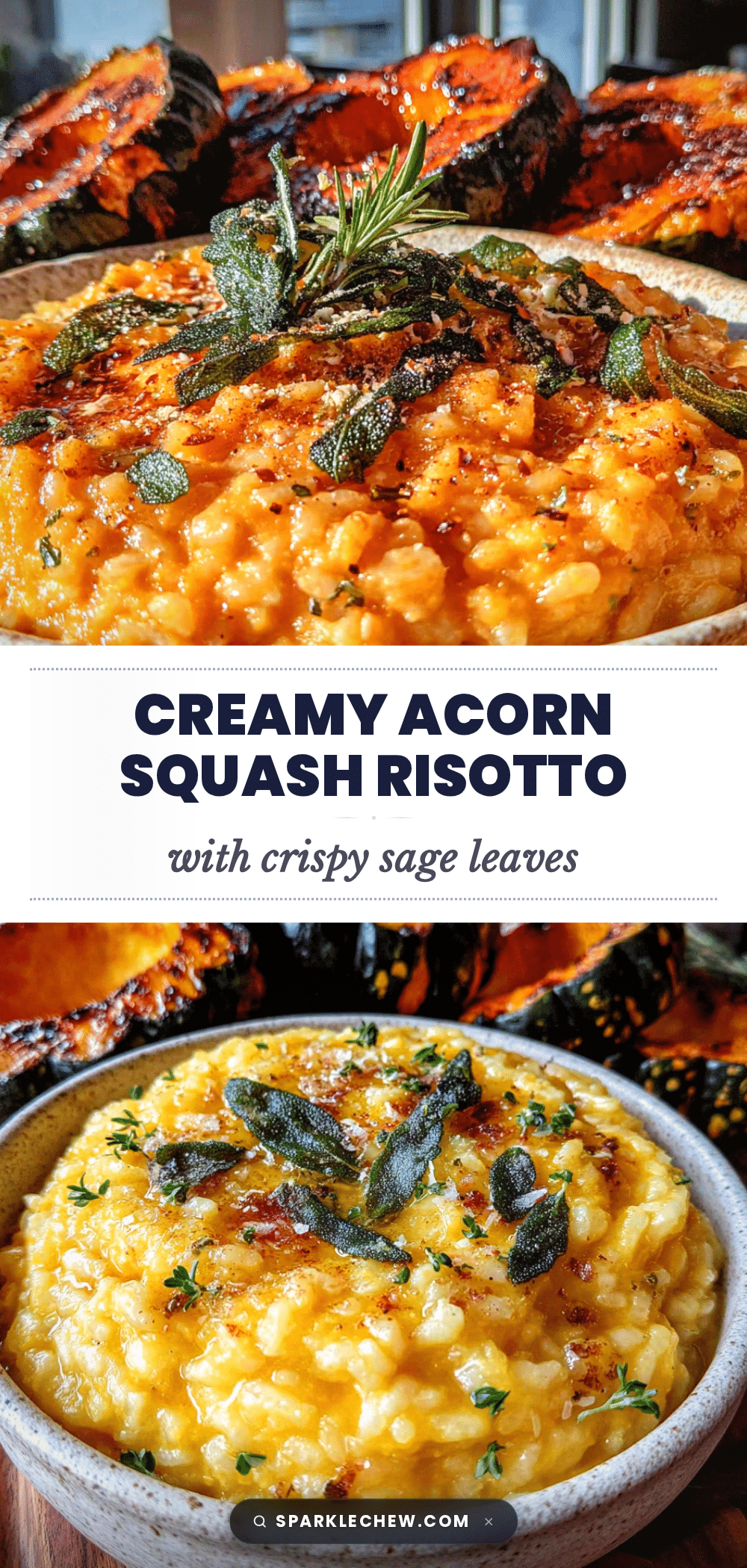
Creamy Acorn Squash Risotto with Crispy Sage

A velvety risotto studded with sweet roasted acorn squash and topped with crispy fried sage leaves. This comforting fall dish is surprisingly simple to make and perfect for a cozy night in.
- Prep Time: 15 minutes
- Cook Time: 45 minutes
- Total Time: 1 hour
- Yield: 4 servings 1x
- Category: Main Course
- Cuisine: Italian
Ingredients
- 1 medium acorn squash (about 1.5 lbs / 680g)
- 4 cups (960 ml) vegetable or chicken broth
- 1 cup (200 g) arborio rice
- 1/2 cup (120 ml) dry white wine
- 1 small yellow onion (about 150 g), finely diced
- 2 cloves garlic, minced
- 3 tablespoons (45 g) unsalted butter, divided
- 1/3 cup (40 g) freshly grated Parmesan cheese
- 1 small bunch fresh sage leaves (about 15–20 leaves)
- 2 tablespoons olive oil
- Salt and black pepper to taste
- Optional: 1/4 cup (60 ml) heavy cream
Instructions
- Preheat your oven to 400°F (200°C). Carefully cut the acorn squash in half from top to bottom. Scoop out the seeds and stringy bits. Rub the cut sides with 1 tablespoon olive oil and season with salt and pepper. Place cut-side down on a parchment-lined baking sheet. Roast for 35-40 minutes until tender. Let cool slightly, then scoop out the flesh (about 1.5 cups).
- While the squash roasts, warm the broth in a medium saucepan over medium-low heat until simmering, then reduce heat to low and keep warm.
- Take about half of the roasted squash (about 3/4 cup) and mash with a fork or blend with 1 cup of the warm broth until smooth. Set aside the remaining squash chunks.
- In a large pot or Dutch oven, melt 2 tablespoons butter with 1 tablespoon olive oil over medium heat. Add the diced onion and cook for 4-5 minutes until soft and translucent. Add the minced garlic and cook for 30 seconds until fragrant.
- Add the arborio rice and stir for 1-2 minutes until the grains become slightly translucent at the edges.
- Pour in the white wine and stir until mostly absorbed, about 1-2 minutes. Scrape up any browned bits from the bottom.
- Add the squash-broth mixture to the rice and stir until mostly absorbed. Then begin adding the remaining warm broth, one ladleful (about 1/2 cup) at a time, stirring frequently. Wait until each addition is almost fully absorbed before adding the next. This should take about 18-22 minutes.
- After about 18 minutes, taste the rice. It should be creamy and tender with a tiny bit of bite at the center (al dente). The risotto should flow slowly when you tilt the pot.
- Remove the pot from the heat. Stir in the reserved roasted squash chunks, the remaining 1 tablespoon butter, and the grated Parmesan cheese. If using heavy cream, add it now. Stir vigorously for about 30 seconds. Season with salt and pepper to taste.
- While the risotto rests, melt 1 tablespoon butter in a small skillet over medium heat. Add the sage leaves in a single layer and cook for 30-45 seconds per side until bright green and crispy. Transfer to a paper towel-lined plate and sprinkle with a tiny pinch of flaky salt.
- Spoon the risotto into warm bowls, top with crispy sage leaves, and serve immediately.
Notes
Keep the broth hot throughout the process. Don’t stop stirring, but stir gently every 30-45 seconds. Fresh sage is non-negotiable for the crispy topping. Let the risotto rest for 60 seconds before serving for optimal creaminess.
Nutrition
- Serving Size: 1 serving
- Calories: 420
- Sugar: 6
- Sodium: 480
- Fat: 14
- Saturated Fat: 6
- Carbohydrates: 62
- Fiber: 8
- Protein: 10
Keywords: acorn squash risotto, creamy risotto, fall risotto, vegetarian risotto, crispy sage, comfort food