Love this? Save it for later!
Share the inspiration with your friends
The neighborhood potluck was in three hours and I’d completely forgotten. Not just forgotten—I mean, I’d blocked it out entirely. My phone buzzed with a reminder notification while I was standing in my kitchen staring at a sad salmon fillet and some asparagus that was starting to look a little limp. Everyone else would be bringing those elaborate dishes they’d probably spent all day on. You know the ones—the casseroles with the perfect golden crust, the salads with homemade dressings in fancy jars. And there I was, with basically nothing and zero time.
Let me tell you, panic cooking is a real thing. I almost ordered takeout and just pretended I’d made it myself. But something made me grab that sheet pan I’d bought on a whim last month. It was still in the plastic wrap, honestly. I figured, how bad could garlic butter salmon and asparagus be? If it flopped, I’d just grab a bag of chips on the way. Maybe you’ve been there—that moment when you’re about to give up but decide to throw something together anyway.
The timer went off, I pulled that pan out of the oven, and I swear the smell alone made my neighbor knock on my door. The salmon was flaky, the asparagus had these perfect crispy tips, and the garlic butter had created this glossy little sauce in the corners of the pan. I walked into that potluck feeling like a fraud, but I left with an empty dish and three people asking for the recipe. That’s the thing about this easy garlic butter salmon and asparagus sheet pan dinner—it doesn’t look like a last-minute save. It looks like you planned it all along.
Why You’ll Love This Recipe
I’ve tested this sheet pan dinner more times than I care to admit. The first few attempts were fine, but I wanted it to be great. After tweaking the cooking times, adjusting the butter ratio, and figuring out the perfect asparagus placement, I landed on a version that works every single time. Here’s why you’ll love it too:
- Ready in 20 Minutes: From fridge to table in under half an hour. That’s faster than delivery.
- One Pan, Zero Fuss: Everything cooks together on a single sheet pan. Less cleanup means more time to relax.
- Simple Ingredients: You probably already have garlic, butter, and salt in your kitchen. Just grab salmon and asparagus from the store.
- Perfect for Busy Weeknights: This is the kind of dinner that saves you after a long day when cooking feels like a chore.
- Impressive Enough for Guests: It looks fancy without the stress. Trust me, no one needs to know it only took you 20 minutes.
- Healthy Without Trying: Salmon is packed with omega-3s, and asparagus is loaded with fiber. You get a nutritious meal without feeling like you’re eating diet food.
What makes this recipe different from the dozens of other salmon recipes out there? It’s the timing and the method. Most sheet pan recipes either overcook the fish or leave the veggies raw. I spent weeks figuring out the exact oven temperature and placement so everything finishes at the same moment. The garlic butter doesn’t just sit on top—it bastes the salmon as it cooks, creating this golden crust that locks in moisture. And the asparagus? It roasts right alongside, getting those caramelized edges that make vegetables actually craveable.
This isn’t just another salmon recipe. It’s the one I make when I’m tired, when I’m stressed, and when I want to feel like I’ve got my life together even if I don’t. That first bite—the flaky salmon, the buttery garlic, the slightly charred asparagus—it’s comfort food that doesn’t weigh you down.
What Ingredients You Will Need
This recipe uses simple, wholesome ingredients to deliver bold flavor and satisfying texture without the fuss. Most of these are pantry staples, which makes this an easy last-minute dinner option.
For the Salmon
- 4 salmon fillets (6 ounces each, skin on or off—I prefer skin on for extra crispiness)
- 3 tablespoons unsalted butter, melted (I use Kerrygold for its rich flavor)
- 4 cloves garlic, minced (fresh is non-negotiable here, the jarred stuff won’t give you the same punch)
- 1 tablespoon lemon juice (fresh squeezed, about half a lemon)
- 1 teaspoon lemon zest (adds brightness without extra acidity)
- 1 teaspoon salt (I use kosher salt for better control)
- ½ teaspoon black pepper, freshly ground
- 1 teaspoon dried parsley (or 1 tablespoon fresh, chopped)
- ½ teaspoon paprika (optional, but adds a lovely color and subtle warmth)
For the Asparagus
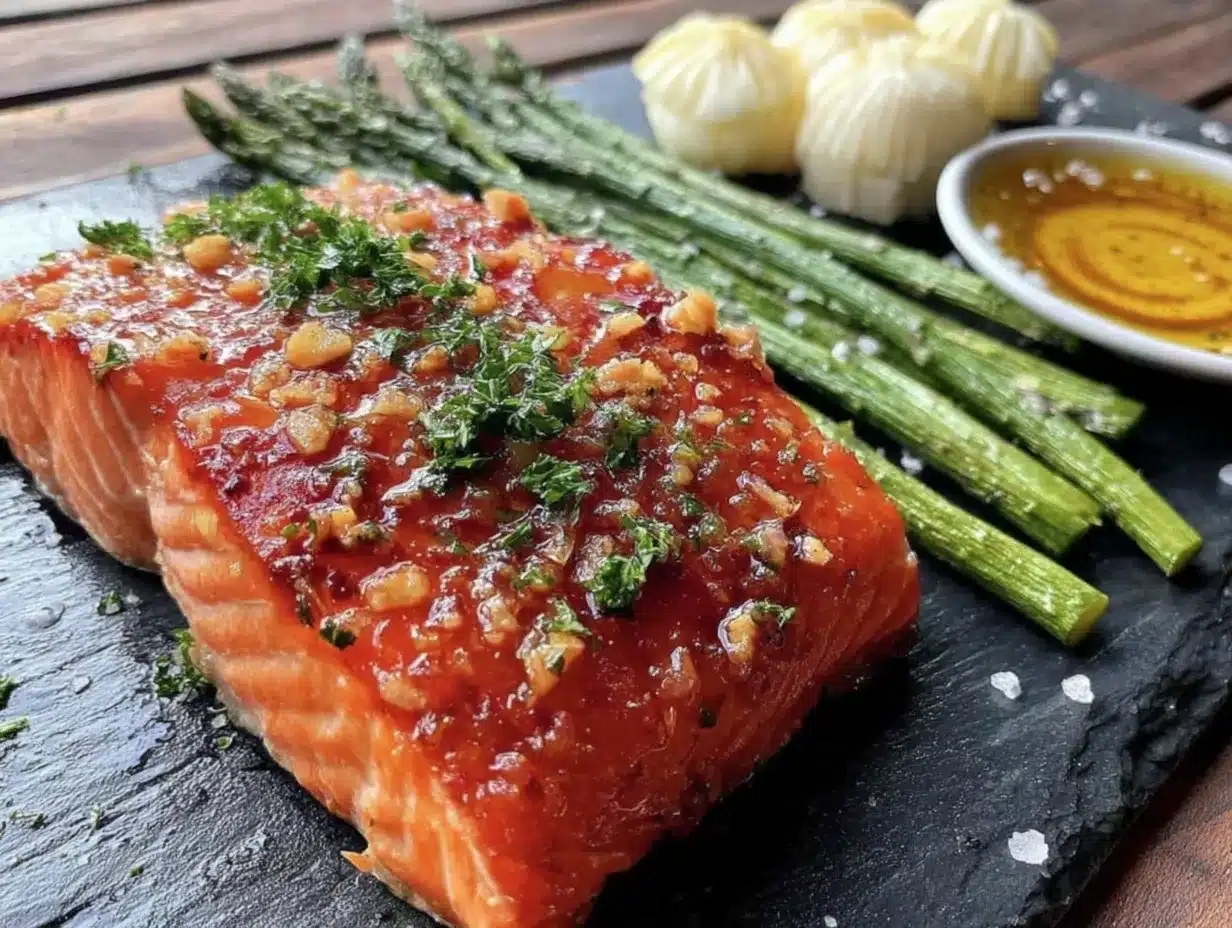
- 1 pound asparagus, woody ends trimmed (about 1 bunch)
- 1 tablespoon olive oil (extra virgin for best flavor)
- ½ teaspoon salt
- ¼ teaspoon black pepper
- 1 clove garlic, minced (or use the same garlic mixture from the salmon)
For Garnish
- Fresh lemon wedges (for squeezing right before serving)
- Fresh parsley, chopped (optional, but pretty)
- Red pepper flakes (for those who like heat)
Ingredient Notes: Look for salmon fillets that are similar in thickness so they cook evenly. If your fillets are thinner, reduce cooking time by 2-3 minutes. For the asparagus, thicker spears hold up better to roasting—they get tender without turning mushy. You can use frozen asparagus in a pinch, but pat it dry thoroughly first to avoid steaming instead of roasting.
Substitution Options: If you don’t have fresh garlic, use 1 teaspoon garlic powder mixed into the butter. Swap the butter for ghee if you’re dairy-sensitive—it still gives that rich flavor. No asparagus? Green beans or broccoli florets work beautifully with the same cooking time. For a lower-fat option, use olive oil instead of butter, though you’ll miss some of that richness.
Equipment Needed
You don’t need much for this recipe, which is part of the beauty. Here’s what you’ll need:
- Large sheet pan (half-sheet size, about 18×13 inches—I love my Nordic Ware for even heating)
- Parchment paper or aluminum foil (for easy cleanup, though you can skip this if you don’t mind scrubbing)
- Small bowl (for mixing the garlic butter)
- Chef’s knife (for trimming asparagus and mincing garlic)
- Cutting board
- Measuring spoons
- Citrus juicer or reamer (or just use your hands—I won’t judge)
- Instant-read thermometer (optional, but takes the guesswork out of cooking salmon to perfection)
If you don’t have a large sheet pan, use two smaller ones and rotate them halfway through cooking. I’ve also made this on a baking stone in a pinch—it worked fine, just added a few minutes to the cooking time. For the garlic, a microplane zester makes mincing effortless, but a regular knife works perfectly. You don’t need fancy equipment here. I’ve made this with a dollar-store cutting board and a dull knife, and it still turned out great.
Preparation Method
Let me walk you through this step by step. I’ve made this recipe dozens of times, so I’ll share the little tricks I’ve picked up along the way.
- Preheat your oven to 400°F (200°C). This is important—don’t skip the preheat. A hot oven ensures the salmon gets that nice golden exterior while staying tender inside. While the oven heats, line your sheet pan with parchment paper or foil for easy cleanup.
- Prepare the garlic butter. In a small bowl, combine 3 tablespoons melted butter, 4 minced garlic cloves, 1 tablespoon lemon juice, 1 teaspoon lemon zest, 1 teaspoon salt, ½ teaspoon black pepper, 1 teaspoon dried parsley, and ½ teaspoon paprika (if using). Stir until everything is well combined. The smell at this point is incredible—I always take a moment to appreciate it.
- Prep the asparagus. Rinse the asparagus and snap off the woody ends. Here’s a trick I learned: hold a spear at both ends and bend it gently—it will naturally snap where the tough part ends. Discard the ends. Pat the asparagus dry with a paper towel. In a bowl, toss the asparagus with 1 tablespoon olive oil, ½ teaspoon salt, and ¼ teaspoon pepper. Spread them on one side of the sheet pan in a single layer.
- Season the salmon. Pat the salmon fillets dry with paper towels—this helps the butter mixture stick and promotes browning. Place the fillets on the other side of the sheet pan, leaving a little space between each. Spoon the garlic butter mixture over each fillet, spreading it evenly. Don’t forget to get some on the sides too. Reserve about a tablespoon of the butter mixture for brushing after cooking.
- Arrange everything properly. Make sure the asparagus is in a single layer, not overlapping. If they’re crowded, they’ll steam instead of roast. The salmon should have its own space too. If your pan is too small, use two pans or cook in batches.
- Roast for 12-15 minutes. The exact time depends on the thickness of your salmon. At 12 minutes, check the salmon—it should flake easily with a fork and reach an internal temperature of 145°F (63°C). The asparagus should be tender with slightly crispy tips. I usually start checking at 10 minutes because I’ve accidentally overcooked salmon before and it’s heartbreaking.
- Broil for 1-2 minutes (optional but recommended). If you want that gorgeous golden crust, switch your oven to broil for the last minute or two. Watch it carefully—broiling can go from perfect to burnt in seconds. This step gives the garlic butter a chance to caramelize and the asparagus tips to get extra crispy.
- Finish and serve. Remove the pan from the oven. Brush the salmon with the reserved garlic butter mixture. Squeeze fresh lemon juice over everything. Garnish with fresh parsley and red pepper flakes if desired. Serve immediately while everything is hot.
Visual Cues: The salmon should look opaque and flake easily when pressed with a fork. If it’s still translucent in the center, give it another minute or two. The asparagus should be bright green with some brown spots—that’s caramelization, and it’s where the flavor lives. The garlic butter should be bubbly and slightly golden around the edges of the pan.
Troubleshooting: If your salmon is done but the asparagus is still crunchy, remove the salmon to a plate and let the asparagus roast for another 3-4 minutes. If the opposite happens—asparagus is done but salmon isn’t—remove the asparagus and keep cooking the salmon. It’s not ideal, but it saves the meal.
Cooking Tips & Techniques
I’ve learned a lot from my mistakes with this recipe. Here are the things I wish someone had told me earlier:
Don’t overcrowd the pan. This is the number one mistake people make with sheet pan dinners. If everything is crammed together, it steams instead of roasts. You want that beautiful caramelization, not soggy vegetables and pale fish. Give everything room to breathe.
Pat your salmon dry. I know it seems fussy, but it makes a huge difference. Wet salmon won’t brown properly, and you’ll end up with pale, unappetizing fish. Take two seconds to blot it with a paper towel. Your future self will thank you.
Use room temperature ingredients. Cold salmon straight from the fridge will cook unevenly. Let it sit on the counter for 10-15 minutes while the oven preheats. Same goes for the butter—melt it gently, don’t nuke it until it’s boiling.
Watch the garlic carefully. Garlic burns easily at high temperatures. If you’re worried about it, you can add half the garlic halfway through cooking instead of all at the beginning. I’ve had more than one batch ruined by bitter, burnt garlic bits.
Invest in an instant-read thermometer. This was a game-changer for me. Salmon is perfectly cooked at 145°F (63°C). Without a thermometer, you’re guessing. With one, you nail it every time. They’re cheap and worth every penny.
Multitask like a pro. While the oven preheats, prep your ingredients. While the salmon roasts, set the table or make a quick side salad. The active prep time is only about 10 minutes, so use the cooking time wisely.
Learn from my failures. I once forgot to trim the asparagus ends and served woody, chewy stalks. Another time, I used salted butter and added extra salt—the dish was nearly inedible. And let’s not talk about the time I broiled for five minutes instead of two and ended up with charcoal salmon. Every mistake taught me something, and now this recipe is foolproof.
Variations & Adaptations
This recipe is incredibly versatile. Here are some ways to change it up:
Spicy Garlic Butter Salmon: Add ½ teaspoon red pepper flakes and ¼ teaspoon cayenne pepper to the garlic butter mixture. The heat pairs beautifully with the richness of the salmon. I make this version when I want something with a kick.
Lemon Herb Version: Swap the parsley for fresh dill and add 1 teaspoon dried thyme. Increase the lemon zest to 2 teaspoons. This gives the dish a brighter, more herbal profile that’s perfect for spring.
Honey Garlic Glaze: Add 1 tablespoon honey to the garlic butter mixture. The sweetness caramelizes beautifully under the broiler, creating a sticky, glossy glaze. This is my kids’ favorite version.
Vegetable Swap: No asparagus? Try broccoli florets, green beans, or zucchini slices. Adjust cooking times as needed—broccoli takes about the same time, while zucchini might need 2-3 minutes less. Cherry tomatoes are also amazing—they burst and create a little sauce.
Dairy-Free Adaptation: Use olive oil or avocado oil instead of butter. Add an extra clove of garlic to compensate for the lost flavor. The texture will be slightly different, but it’s still delicious.
Air Fryer Method: Cook the salmon at 380°F (193°C) for 8-10 minutes, then add the asparagus and cook for another 3-4 minutes. You’ll need to cook in batches depending on your air fryer size. The results are incredibly crispy.
Pesto Salmon: Skip the garlic butter and spread 2 tablespoons basil pesto over each fillet. Roast as directed. It’s a completely different flavor profile but equally delicious. I discovered this when I ran out of garlic and it’s become a regular rotation.
Serving & Storage Suggestions
Serving Temperature: Serve immediately while the salmon is hot and flaky. The asparagus should be warm but not steaming. I like to let the pan rest for 2-3 minutes after removing it from the oven—this allows the juices to redistribute.
Presentation Tips: Arrange the salmon and asparagus on a platter rather than serving straight from the pan if you’re feeling fancy. Drizzle any remaining garlic butter from the pan over everything. Add lemon wedges and fresh herbs for color. A sprinkle of flaky sea salt right before serving adds a nice crunch.
What to Serve With It: This dish pairs beautifully with rice, quinoa, or crusty bread to soak up the garlic butter sauce. A simple green salad with lemon vinaigrette complements the richness. For a low-carb option, serve with cauliflower rice or extra roasted vegetables. I personally love it with garlic bread—because you can never have too much garlic.
Storage: Store leftovers in an airtight container in the refrigerator for up to 3 days. The salmon will lose some of its flakiness when reheated, but the flavor remains delicious. Keep the asparagus separate if possible, as it can make the salmon soggy.
Reheating: The best way to reheat is in the oven at 350°F (175°C) for 5-7 minutes. The microwave works in a pinch but will make the salmon rubbery. If using the microwave, reheat in 30-second intervals and stop as soon as it’s warm. For the asparagus, a quick pan sauté with a little olive oil brings back some of the crispiness.
Freezing: I don’t recommend freezing the cooked dish, as the texture of both the salmon and asparagus will suffer. However, you can freeze the raw salmon fillets with the garlic butter mixture in a freezer bag for up to 3 months. Thaw in the refrigerator overnight and roast as directed.
Flavor Development: This dish is best fresh, but the flavors meld together nicely overnight. The garlic butter sauce soaks into the salmon, making it even more flavorful the next day. I’ve been known to make extra just for lunch the following day.
Nutritional Information & Benefits
Here’s the approximate nutritional breakdown for one serving (1 salmon fillet with asparagus):
- Calories: 420
- Protein: 38g
- Fat: 26g (10g saturated)
- Carbohydrates: 8g
- Fiber: 3g
- Sugar: 3g
- Sodium: 680mg
- Vitamin D: 15mcg (75% DV)
- Vitamin A: 900IU (18% DV)
- Iron: 2.5mg (14% DV)
Health Benefits: Salmon is one of the best sources of omega-3 fatty acids, which support heart and brain health. It’s also packed with high-quality protein and vitamin D. Asparagus is rich in fiber, folate, and vitamins A, C, and K. The garlic in this recipe has anti-inflammatory properties and may support immune function. Together, these ingredients create a meal that’s as nutritious as it is delicious.
Dietary Considerations: This recipe is naturally gluten-free and low-carb. For a dairy-free version, use olive oil instead of butter. It’s also suitable for paleo and keto diets with minimal adjustments. If you’re watching sodium, reduce the added salt to ½ teaspoon total and use unsalted butter.
Allergen Notes: This recipe contains fish (salmon) and dairy (butter). It does not contain nuts, eggs, soy, or gluten as written. Always check your specific ingredients for potential cross-contamination if you have severe allergies.
Conclusion
This easy garlic butter salmon and asparagus sheet pan dinner has saved me more times than I can count. It’s the recipe I turn to when I’m tired, when I’m busy, and when I want to feel like I’ve got my act together. The best part? It actually delivers on its promise—real food, real flavor, and real simplicity.
I love that this recipe doesn’t pretend to be something it’s not. It’s not fussy or complicated. It’s just good food made with simple ingredients and a little bit of love. The garlic butter gets all bubbly and golden, the salmon turns out perfectly flaky, and the asparagus gets those crispy edges that make vegetables feel like a treat. Every time I make it, I remember that night I showed up to that potluck with basically nothing and left with an empty dish. That’s the power of a good recipe—it makes you look like you planned it all along.
I’d love to hear how this recipe works for you. Did you try any of the variations? Did you discover a new favorite side dish? Drop a comment below and let me know. And if you loved it as much as I do, share it with a friend who needs a quick dinner win. Happy cooking, friends!
Frequently Asked Questions
Can I use frozen salmon for this recipe?
Yes, but you’ll need to thaw it completely first. Place frozen fillets in the refrigerator overnight or submerge them in cold water for 30 minutes. Pat dry thoroughly before seasoning. Frozen salmon releases more moisture, so increase cooking time by 2-3 minutes.
How do I know when the salmon is fully cooked?
The safest way is to use an instant-read thermometer—salmon is done at 145°F (63°C). Without a thermometer, look for the flesh to turn opaque and flake easily when pressed with a fork. The internal color should be slightly translucent in the center but not raw.
Can I prep this recipe ahead of time?
Absolutely! You can trim the asparagus and mix the garlic butter up to 24 hours in advance. Store the butter mixture in the refrigerator and bring it to room temperature before using. You can also season the salmon up to 2 hours ahead and keep it refrigerated.
What if I don’t have a sheet pan?
Use a baking dish, a cast-iron skillet, or even a foil-lined baking stone. The key is to have a flat surface that allows even heat distribution. If using a smaller pan, cook in batches or use two pans to avoid overcrowding.
How do I prevent the garlic from burning?
Garlic burns quickly at high temperatures. To prevent this, make sure the garlic is well mixed into the butter rather than sitting on top. You can also add half the garlic at the beginning and the remaining half halfway through cooking. If you see the garlic turning dark brown, reduce the oven temperature by 25°F.
Pin This Recipe!
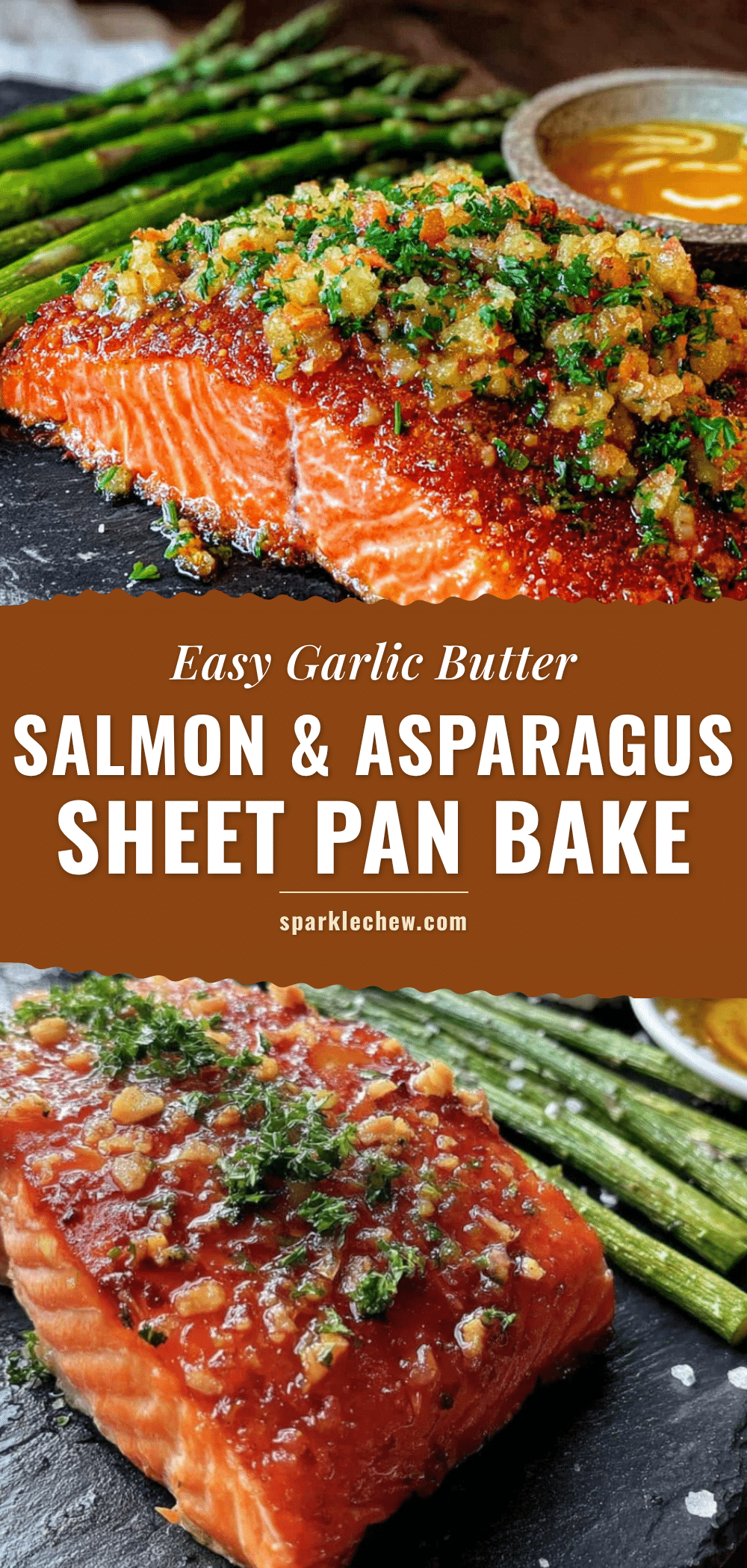
Easy Garlic Butter Salmon and Asparagus: Best 20-Minute Sheet Pan Dinner

A quick and delicious sheet pan dinner featuring flaky salmon and tender asparagus in a rich garlic butter sauce. Ready in just 20 minutes, this one-pan meal is perfect for busy weeknights and impressive enough for guests.
- Prep Time: 10 minutes
- Cook Time: 15 minutes
- Total Time: 25 minutes
- Yield: 4 servings 1x
- Category: Main Course
- Cuisine: American
Ingredients
- 4 salmon fillets (6 ounces each, skin on or off)
- 3 tablespoons unsalted butter, melted
- 4 cloves garlic, minced
- 1 tablespoon lemon juice (fresh squeezed)
- 1 teaspoon lemon zest
- 1 teaspoon salt (kosher salt preferred)
- ½ teaspoon black pepper, freshly ground
- 1 teaspoon dried parsley (or 1 tablespoon fresh, chopped)
- ½ teaspoon paprika (optional)
- 1 pound asparagus, woody ends trimmed
- 1 tablespoon olive oil (extra virgin)
- ½ teaspoon salt
- ¼ teaspoon black pepper
- 1 clove garlic, minced
- Fresh lemon wedges (for serving)
- Fresh parsley, chopped (optional, for garnish)
- Red pepper flakes (optional, for heat)
Instructions
- Preheat your oven to 400°F (200°C). Line a large sheet pan with parchment paper or aluminum foil for easy cleanup.
- In a small bowl, combine 3 tablespoons melted butter, 4 minced garlic cloves, 1 tablespoon lemon juice, 1 teaspoon lemon zest, 1 teaspoon salt, ½ teaspoon black pepper, 1 teaspoon dried parsley, and ½ teaspoon paprika (if using). Stir until well combined. Reserve about 1 tablespoon for later.
- Rinse the asparagus and snap off the woody ends by bending each spear until it breaks naturally. Pat dry with a paper towel. In a bowl, toss the asparagus with 1 tablespoon olive oil, ½ teaspoon salt, and ¼ teaspoon pepper. Spread in a single layer on one side of the sheet pan.
- Pat the salmon fillets dry with paper towels. Place them on the other side of the sheet pan, leaving space between each. Spoon the garlic butter mixture over each fillet, spreading evenly. Reserve about 1 tablespoon for brushing after cooking.
- Ensure the asparagus is in a single layer and not overlapping. The salmon should have its own space. If the pan is too small, use two pans or cook in batches.
- Roast for 12-15 minutes. Check at 12 minutes—the salmon should flake easily with a fork and reach an internal temperature of 145°F (63°C). The asparagus should be tender with slightly crispy tips.
- Optional: Switch the oven to broil for 1-2 minutes to get a golden crust. Watch carefully to prevent burning.
- Remove the pan from the oven. Brush the salmon with the reserved garlic butter mixture. Squeeze fresh lemon juice over everything. Garnish with fresh parsley and red pepper flakes if desired. Serve immediately.
Notes
For even cooking, use salmon fillets of similar thickness. Thinner fillets may need 2-3 minutes less cooking time. Thicker asparagus spears hold up better to roasting. If using frozen asparagus, pat dry thoroughly before roasting. To prevent garlic from burning, ensure it is well mixed into the butter. For a dairy-free version, substitute olive oil for butter. Leftovers can be stored in an airtight container in the refrigerator for up to 3 days. Reheat in the oven at 350°F (175°C) for 5-7 minutes for best results.
Nutrition
- Serving Size: 1 salmon fillet with
- Calories: 420
- Sugar: 3
- Sodium: 680
- Fat: 26
- Saturated Fat: 10
- Carbohydrates: 8
- Fiber: 3
- Protein: 38
Keywords: garlic butter salmon, sheet pan dinner, easy salmon recipe, asparagus recipe, 20-minute dinner, healthy dinner, one-pan meal, weeknight dinner