Love this? Save it for later!
Share the inspiration with your friends
I was standing in the grocery store parking lot last Tuesday when the smell hit me—someone was searing beef in their kitchen with the back door open, and the scent of caramelizing meat and onions drifted across the asphalt. And just like that, I was eight years old again, sitting on a stool in my aunt Maggie’s tiny kitchen, watching her drop flour-dusted chunks of chuck into a screaming hot cast iron pan. She’d let me press the button on the slow cooker—that satisfying click—and then she’d pour in a whole cup of red wine she’d pulled from a bottle I wasn’t supposed to know about. I haven’t thought about those Tuesday nights in years. Aunt Maggie moved to Florida a decade ago, and I’d never once asked for her stew recipe. So for the last three years, I’ve been trying to recreate it from memory alone. This version—my version—is what I landed on after burning through six different attempts and at least one very sad, watery batch that tasted more like regret than beef stew. It’s not hers exactly, but honestly? It might be even better for a busy weeknight. And if you’ve ever stood in your kitchen at 5:45 PM wondering how dinner is supposed to happen, let me tell you—this one’s for you.
Why You’ll Love This Recipe
Let’s be real for a second—most beef stew recipes are a project. They want you to brown the meat in batches, deglaze the pan, sauté the aromatics, then simmer everything for two hours while you babysit the pot. That’s fine for a Saturday, but on a Wednesday? No thanks. This easy slow cooker beef stew with red wine throws all that fuss out the window. Here’s why it works so hard for you:
- Minimal Hands-On Time: You’re looking at about 15 minutes of active work. After that, your slow cooker does everything while you handle your actual life.
- Simple Ingredients: Nothing fancy here. Beef chuck, carrots, potatoes, onion, garlic, tomato paste, beef broth, and a bottle of red wine you probably already have sitting around.
- Weeknight Savior: Throw it together in the morning (or even the night before), and dinner is ready the second you walk through the door. No stress, no takeout guilt.
- Crowd-Pleaser Status: I’ve served this to picky kids, in-laws, and neighbors who showed up unannounced. It disappears every single time.
- Next-Level Comfort: The red wine does something magical here—it doesn’t make the stew boozy, just deep and rich and a little bit fancy. You’ll close your eyes after the first bite. I promise.
What makes this recipe different from all the other stews out there? It’s the method. Most recipes tell you to brown the beef first, then dump everything in the slow cooker. But I’ve found that if you take two extra minutes to bloom the tomato paste with the garlic before adding the liquid, you get this incredible savory depth that usually requires hours of simmering. It’s a tiny step that makes a huge difference—and it keeps the whole thing easy enough for a Tuesday.
What Ingredients You Will Need
This recipe uses simple, hearty ingredients that come together to create something truly special. Most of these are pantry staples, and the ones that aren’t are easy to find at any grocery store. Let’s walk through what you’ll need and why each one matters.
- Beef Chuck (2 lbs, cut into 1.5-inch cubes) — This is the cut you want. Chuck has enough marbling to stay tender after hours of cooking, and it breaks down into those perfect, fork-tender pieces. Don’t use lean cuts like sirloin—they’ll turn dry and stringy. I usually buy a whole chuck roast and cube it myself; it’s cheaper and I can control the size.
- Red Wine (1 cup, preferably a dry red like Cabernet Sauvignon or Merlot) — This is non-negotiable for the flavor profile we’re building. The wine adds acidity that tenderizes the beef and a richness that plain broth can’t touch. Use something you’d actually drink—not the cooking wine from the grocery store aisle. I usually grab a $10 bottle of Cabernet and it works perfectly.
- Beef Broth (2 cups, low-sodium) — You need the liquid to cover the meat and vegetables. Low-sodium is key here because the wine and tomato paste already add saltiness. If you use regular broth, your stew might end up too salty after hours of cooking.
- Tomato Paste (3 tablespoons) — This is the secret weapon. Tomato paste adds umami and body without making the stew taste like tomatoes. I recommend the tube kind (like Amore) because you can squeeze out exactly what you need and refrigerate the rest.
- Yellow Onion (1 large, diced) — Onions form the aromatic base of the stew. They soften and almost melt into the broth during the long cook time, adding sweetness and depth.
- Garlic (4 cloves, minced) — Fresh garlic is worth the extra 30 seconds it takes to peel and chop. Pre-minced jarred garlic works in a pinch, but it won’t give you the same punch.
- Carrots (3 large, peeled and cut into 1-inch chunks) — Carrots add sweetness and color. I like to cut them on the bias (diagonally) because they look prettier and cook more evenly.
- Yukon Gold Potatoes (1.5 lbs, cut into 1.5-inch chunks) — These hold their shape better than russets and have a buttery texture that’s perfect for stew. If you can’t find Yukon Golds, red potatoes are a good substitute.
- All-Purpose Flour (¼ cup) — This helps thicken the stew. You’ll toss the beef cubes in flour before browning, which also helps create a nice crust.
- Olive Oil (2 tablespoons) — For browning the beef. Use a neutral olive oil, not extra-virgin, since we’re cooking at high heat.
- Dried Thyme (1 teaspoon) — Thyme and beef are a classic pairing. It adds an earthy, slightly floral note that complements the wine beautifully.
- Bay Leaves (2) — These add subtle depth. Remember to fish them out before serving—nobody wants to bite into a bay leaf.
- Salt and Black Pepper (to taste) — Season generously. I usually start with 1 teaspoon of salt and ½ teaspoon of pepper, then adjust at the end.
- Frozen Peas (1 cup, optional) — I add these in the last 15 minutes for a pop of color and sweetness. They’re not traditional, but I love the brightness they bring.
Equipment Needed
You don’t need a professional kitchen to pull this off. Here’s what you’ll actually use:
- Slow Cooker (5 to 6-quart) — This is the star of the show. A 6-quart model is ideal because it gives you enough room to layer everything without overcrowding. I use a Cuisinart programmable model and love it, but any brand works.
- Large Skillet or Dutch Oven — You need this for browning the beef. A cast iron skillet works beautifully, but any heavy-bottomed pan will do. Don’t skip this step—browning is where the flavor lives.
- Cutting Board and Sharp Knife — A good chef’s knife makes prep go so much faster. I use a 8-inch Wusthof and it’s worth every penny.
- Measuring Cups and Spoons — For the wine, broth, and seasonings. Eyeballing works for some things, but not for liquid ratios in a slow cooker.
- Wooden Spoon or Spatula — For stirring the beef as it browns and scraping up the browned bits (fond) from the pan.
- Mixing Bowl — For tossing the beef cubes with flour and seasonings before browning.
- Tongs — For turning the beef cubes as they brown. Much easier than a fork.
If you don’t have a slow cooker, you can use a Dutch oven and cook this in the oven at 300°F for 3 to 4 hours. It’s not quite as hands-off, but it works beautifully. I’ve also made this in an Instant Pot using the slow cook function, and it turned out great—just adjust the time according to your model’s instructions.
Preparation Method
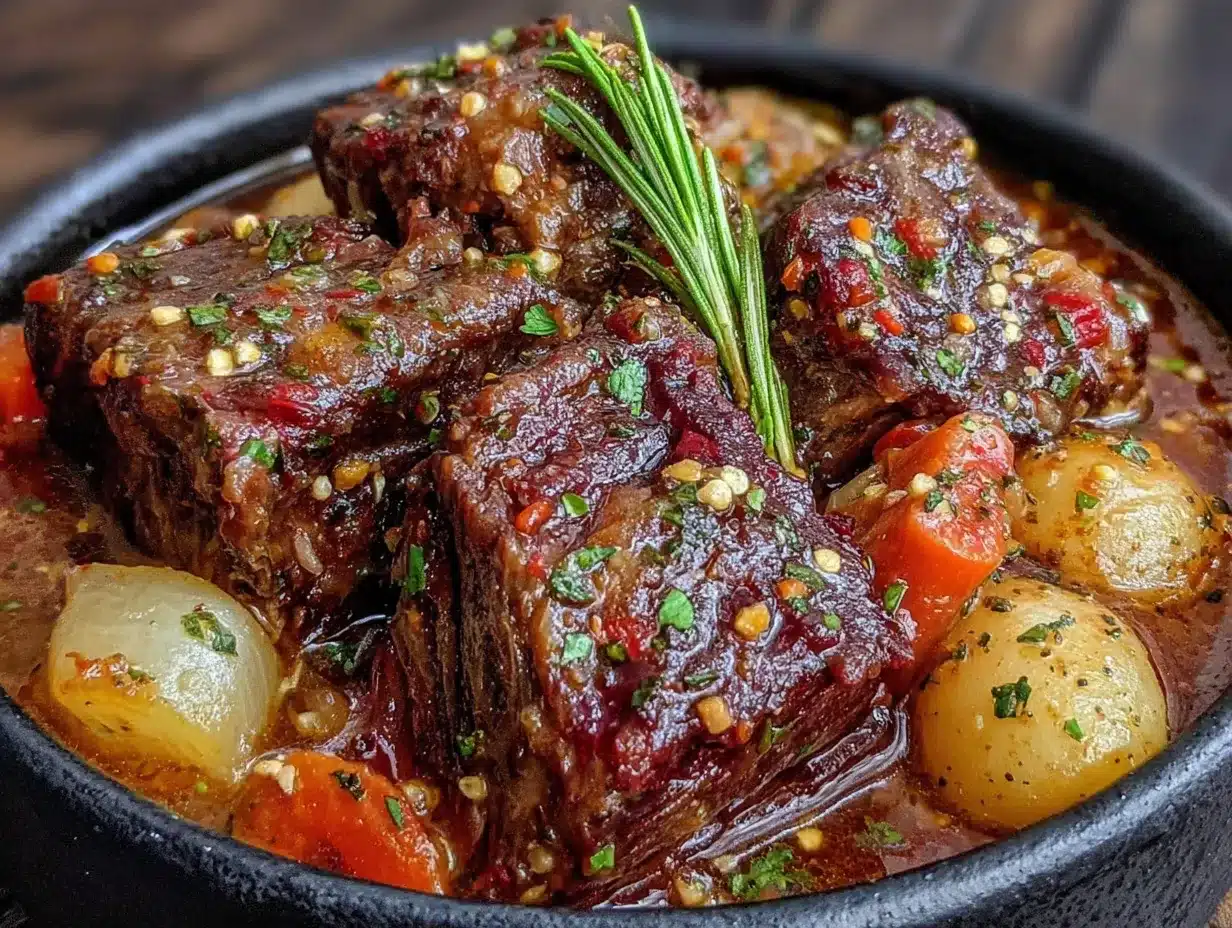
Alright, let’s make some stew. This might look like a lot of steps, but I promise—most of it is just waiting for the slow cooker to do its thing.
- Prep your ingredients first. Dice the onion, mince the garlic, peel and chop the carrots and potatoes, and cut the beef into 1.5-inch cubes. Having everything ready before you start cooking makes the process so much smoother. Trust me on this—I’ve learned the hard way that trying to chop vegetables while beef is burning in the pan is not a good time.
- Toss the beef with flour and seasonings. In a mixing bowl, combine the beef cubes, ¼ cup all-purpose flour, 1 teaspoon salt, and ½ teaspoon black pepper. Toss until every piece is lightly coated. This flour coating will help thicken the stew later and create a beautiful brown crust.
- Brown the beef in batches. Heat 1 tablespoon of olive oil in your large skillet over medium-high heat. Add half the beef cubes in a single layer—don’t crowd the pan, or they’ll steam instead of brown. Let them cook undisturbed for 3-4 minutes, then use tongs to flip each piece. You’re looking for deep brown color on all sides, not just pale golden. Transfer the browned beef to your slow cooker. Repeat with the remaining oil and beef. Yes, this takes a few extra minutes, but it’s the single most important step for flavor. Don’t skip it.
- Bloom the tomato paste. After the beef is done, reduce the heat to medium. There should be some browned bits stuck to the bottom of the skillet—that’s pure flavor. Add the diced onion and cook for 2-3 minutes, stirring occasionally, until it starts to soften. Add the minced garlic and the tomato paste, and stir constantly for about 1 minute. The tomato paste will darken and smell incredibly rich. This step deepens the flavor dramatically.
- Deglaze the pan with red wine. Pour in the cup of red wine and use your wooden spoon to scrape up all those browned bits from the bottom of the skillet. Let the wine simmer for 2-3 minutes, until it reduces slightly and smells less boozy. The alcohol mostly cooks off here, leaving behind concentrated grape-y goodness.
- Add the broth and herbs. Pour in the beef broth, add the dried thyme and bay leaves, and stir to combine. Bring this mixture to a gentle simmer, then pour the whole thing over the beef in the slow cooker. The liquid should almost cover the beef—if it doesn’t, add a splash more broth or water.
- Add the vegetables. Nestle the carrot chunks and potato chunks into the liquid around the beef. Don’t stir too aggressively—you want the vegetables submerged but not broken up. The potatoes will soften and thicken the broth slightly as they cook.
- Cook low and slow. Cover the slow cooker and cook on LOW for 7-8 hours or on HIGH for 4-5 hours. Low and slow is better if you have the time—the beef becomes incredibly tender and the flavors meld together beautifully. I usually start this in the morning before work and come home to a house that smells like heaven.
- Finish with peas (optional). About 15 minutes before serving, stir in the frozen peas. They don’t need long—just enough to warm through and turn bright green. If you add them too early, they’ll turn mushy and lose their color.
- Taste and adjust. Before serving, remove the bay leaves. Taste the stew and add more salt and pepper if needed. The flavors will have concentrated during cooking, so you might not need much. If the stew seems too thin, you can mix 1 tablespoon of cornstarch with 2 tablespoons of cold water and stir it in, then cook on HIGH for 10-15 minutes to thicken.
Your stew should be thick, rich, and deeply savory. The beef should fall apart when you press it with a fork, and the carrots should be tender but not mushy. If you’ve followed these steps, you’re in for something special.
Cooking Tips & Techniques
After making this stew more times than I can count, I’ve picked up a few tricks that make a real difference. Here are the ones I wish someone had told me sooner:
Don’t skip the browning. I know it’s tempting to just dump everything in the slow cooker and walk away. I’ve done it. And every time, I’ve regretted it. That deep brown crust on the beef is where the flavor lives—it’s called the Maillard reaction, and it’s not optional if you want a rich, complex stew. Take the extra 10 minutes. Your future self will thank you.
Use the right wine. This isn’t the time for that bottle of cooking wine you’ve had since 2019. Use a dry red wine that you’d actually drink—Cabernet Sauvignon, Merlot, or even a Zinfandel work great. The wine should add depth, not sweetness. If you’re not sure, ask the person at your local wine shop for a dry red under $15. They’ll point you in the right direction.
Layer your ingredients properly. Put the beef on the bottom of the slow cooker and the vegetables on top. The beef needs to be submerged in the liquid to cook evenly, and the vegetables will steam perfectly on top. If you stir everything together, the potatoes might end up too soft or the beef might not cook through.
Resist the urge to peek. Every time you lift that lid, you release heat and extend the cooking time. I know it smells amazing and you want to check on it, but try to wait until at least the 6-hour mark on LOW. Your patience will be rewarded.
Make it ahead for better flavor. This stew actually tastes better the next day. The flavors continue to meld in the fridge, and the texture improves as the starches settle. If you can, make it a day ahead and reheat it gently on the stove or in the slow cooker. I’ve done this for dinner parties and it’s a game-changer.
One mistake I made early on: I used too much liquid because I was worried the stew would dry out. Big mistake. The vegetables release water as they cook, and the condensation from the lid adds even more. Stick to the measurements in the recipe—you can always add more broth at the end if needed, but you can’t take it out.
Variations & Adaptations
This recipe is forgiving, and there are plenty of ways to make it your own. Here are some variations I’ve tried and loved:
Gluten-Free Version: Skip the flour when browning the beef. Instead, toss the beef cubes in 2 tablespoons of cornstarch or arrowroot powder before browning. The rest of the recipe stays the same. At the end, if you want a thicker stew, mix 1 tablespoon of cornstarch with 2 tablespoons of cold water and stir it in during the last 15 minutes.
Low-Carb/Keto Adaptation: Swap the potatoes for 2 cups of chopped turnips, radishes, or cauliflower florets. These vegetables hold up well in the slow cooker and absorb the broth beautifully without the carbs. I’ve also added 8 ounces of sliced mushrooms for extra heartiness. The flavor is slightly different, but still deeply satisfying.
Dairy-Free & Paleo: This recipe is naturally dairy-free as written. For Paleo, use arrowroot powder instead of flour for thickening, and make sure your beef broth is Paleo-friendly (no additives or sugars). Everything else is already compliant.
Herb Variations: Not a fan of thyme? Try 1 teaspoon of dried rosemary or 2 sprigs of fresh rosemary instead. I’ve also used 1 teaspoon of smoked paprika for a slightly different depth. Each herb brings its own personality to the stew.
Add More Vegetables: This stew is great with celery (2 stalks, diced), parsnips (2, peeled and chopped), or even a cup of chopped kale stirred in during the last 30 minutes. Just keep the total vegetable volume similar so the liquid ratio stays balanced.
Make It Spicy: Add ½ teaspoon of red pepper flakes along with the dried thyme for a subtle kick. Or stir in a chopped chipotle pepper in adobo sauce for smoky heat. I tried this once on a whim and it was surprisingly good—the heat cuts through the richness perfectly.
My personal favorite variation: I add 2 tablespoons of balsamic vinegar along with the red wine. It adds a touch of sweetness and acidity that brightens the whole dish. I discovered this by accident when I ran out of red wine and had to supplement with balsamic—and honestly, I’ve never gone back.
Serving & Storage Suggestions
This stew is incredibly versatile when it comes to serving. Here’s how I like to enjoy it:
Serving Temperature: Serve it piping hot, straight from the slow cooker. Ladle it into wide, shallow bowls so the broth has room to spread. I like to let it sit for 5 minutes after cooking to let the flavors settle.
What to Serve With It: Crusty bread is non-negotiable in my house. A good sourdough or French baguette is perfect for sopping up the broth. You can also serve it over egg noodles, mashed potatoes, or creamy polenta for a heartier meal. For a lighter option, a simple green salad with a lemon vinaigrette cuts through the richness beautifully.
Garnish Ideas: A sprinkle of fresh parsley adds color and freshness. I also love a grating of Parmesan cheese on top—it adds saltiness and a slight nuttiness that works with the wine. If you’re feeling fancy, a dollop of crème fraîche or sour cream is lovely.
Storage Instructions: Let the stew cool completely before storing. Transfer it to an airtight container and refrigerate for up to 4 days. The flavors actually improve after a day or two—the beef becomes even more tender and the broth thickens slightly.
Freezer Instructions: This stew freezes beautifully. Portion it into freezer-safe containers or zip-top bags (lay them flat for easy stacking). It will keep for up to 3 months. Thaw overnight in the refrigerator before reheating.
Reheating Tips: Reheat gently on the stovetop over medium-low heat, stirring occasionally. Add a splash of broth or water if the stew has thickened too much. You can also reheat individual portions in the microwave—just cover the bowl and heat in 1-minute intervals, stirring between each. The texture stays surprisingly good, even after freezing.
How Flavors Develop: I’ve noticed that this stew is at its best on day two. The beef has had time to absorb all the wine and herb flavors, and the broth becomes incredibly rich. If you can, make it a day ahead and refrigerate it overnight. The fat will solidify on top, making it easy to skim off if you want a lighter stew. Then just reheat and serve.
Nutritional Information & Benefits
Here’s the nutritional breakdown for one serving (about 1.5 cups) of this stew, based on 6 servings:
| Nutrient | Amount per Serving |
|---|---|
| Calories | 385 |
| Protein | 32g |
| Fat | 14g |
| Saturated Fat | 5g |
| Carbohydrates | 28g |
| Fiber | 4g |
| Sugar | 6g |
| Sodium | 680mg |
This stew is packed with protein from the beef, which helps keep you full and satisfied. The carrots and potatoes provide fiber, vitamins A and C, and potassium. The red wine adds antioxidants like resveratrol, which has been linked to heart health. And the slow cooking method preserves nutrients better than high-heat cooking.
Dietary Considerations: This recipe is naturally dairy-free and can be made gluten-free with a simple substitution. It’s also Whole30-compliant if you use arrowroot powder instead of flour. The main allergens to watch for are gluten (from the flour) and sulfites (from the wine). If you’re sensitive to sulfites, look for organic wine labeled “no added sulfites.”
My wellness perspective: I love that this stew is a complete meal in one bowl—protein, vegetables, and healthy fats all together. It’s the kind of food that feels indulgent but is actually quite balanced. And since you control the ingredients, you can adjust the salt and fat to fit your needs. For me, that’s the best kind of comfort food.
Conclusion
This easy slow cooker beef stew with red wine has become a staple in my kitchen, and I think it deserves a spot in yours too. It’s the kind of recipe that asks very little of you but gives back so much—tender beef, rich broth, and vegetables that have soaked up all that wine-infused goodness. It’s comfort food that doesn’t require a whole afternoon of babysitting a pot on the stove.
What I love most about this recipe is how forgiving it is. You can swap in different vegetables, adjust the herbs, or even use a different cut of beef—and it will still turn out delicious. It’s a recipe that rewards experimentation, so don’t be afraid to make it your own. Add more garlic if you’re a garlic lover. Throw in some mushrooms if you have them. Make it spicy if that’s your thing. The slow cooker is patient, and so is this stew.
I’d love to hear how yours turns out. Did you add something unexpected? Serve it with something amazing? Or maybe you finally recreated that memory you’ve been chasing—like I did with my aunt Maggie’s stew. Drop a comment below and let me know. And if you share a photo on Pinterest, tag me so I can see your beautiful bowl of comfort food. Until next time, happy cooking—and don’t forget the crusty bread.
Frequently Asked Questions
Can I make this stew without wine?
Yes, absolutely. If you don’t cook with wine, replace the red wine with an equal amount of beef broth plus 1 tablespoon of balsamic vinegar. The vinegar adds acidity and depth that mimics the wine’s flavor. It won’t taste exactly the same, but it will still be delicious.
Can I use a different cut of beef?
Beef chuck is ideal, but you can also use bottom round, brisket, or even stew meat from the grocery store. Just avoid lean cuts like sirloin or tenderloin—they don’t have enough fat to stay tender during long cooking. If you use a leaner cut, reduce the cooking time to 5-6 hours on LOW.
Why is my stew watery?
This usually happens when too much liquid is added or the lid is lifted too often. Stick to the measurements in the recipe, and resist the urge to peek. If your stew is still watery at the end, mix 1 tablespoon of cornstarch with 2 tablespoons of cold water and stir it in, then cook on HIGH for 15 minutes to thicken.
Can I cook this on HIGH instead of LOW?
Yes, but the texture won’t be quite as tender. Cook on HIGH for 4-5 hours instead of 7-8 hours on LOW. The beef will still be good, but low and slow gives you that fall-apart tenderness that makes this stew special.
How do I store and reheat leftovers?
Store leftovers in an airtight container in the refrigerator for up to 4 days. To reheat, warm gently on the stovetop over medium-low heat, adding a splash of broth if needed. You can also microwave individual portions in 1-minute intervals. The stew freezes well for up to 3 months—just thaw overnight in the fridge before reheating.
PrintEasy Slow Cooker Beef Stew with Red Wine (Best Comfort Food!)
This easy slow cooker beef stew with red wine is the ultimate comfort food. With minimal hands-on time and simple ingredients, it delivers tender beef, rich broth, and perfectly cooked vegetables—all made in your slow cooker.
- Prep Time: 15 minutes
- Cook Time: 7-8 hours (LOW) or 4-5 hours (HIGH)
- Total Time: 7 hours 15 minutes to 8 hours 15 minutes
- Yield: 6 servings 1x
- Category: Main Course
- Cuisine: American
Ingredients
- 2 lbs beef chuck, cut into 1.5-inch cubes
- 1 cup dry red wine (Cabernet Sauvignon or Merlot)
- 2 cups low-sodium beef broth
- 3 tablespoons tomato paste
- 1 large yellow onion, diced
- 4 cloves garlic, minced
- 3 large carrots, peeled and cut into 1-inch chunks
- 1.5 lbs Yukon Gold potatoes, cut into 1.5-inch chunks
- ¼ cup all-purpose flour
- 2 tablespoons olive oil
- 1 teaspoon dried thyme
- 2 bay leaves
- Salt and black pepper to taste
- 1 cup frozen peas (optional)
Instructions
- Prep your ingredients first. Dice the onion, mince the garlic, peel and chop the carrots and potatoes, and cut the beef into 1.5-inch cubes.
- In a mixing bowl, combine the beef cubes, ¼ cup all-purpose flour, 1 teaspoon salt, and ½ teaspoon black pepper. Toss until every piece is lightly coated.
- Heat 1 tablespoon of olive oil in a large skillet over medium-high heat. Add half the beef cubes in a single layer and cook undisturbed for 3-4 minutes, then flip each piece. Transfer browned beef to the slow cooker. Repeat with remaining oil and beef.
- Reduce heat to medium. Add the diced onion and cook for 2-3 minutes until softened. Add the minced garlic and tomato paste, stirring constantly for about 1 minute until the tomato paste darkens.
- Pour in the red wine and use a wooden spoon to scrape up the browned bits from the bottom of the skillet. Let the wine simmer for 2-3 minutes until slightly reduced.
- Pour in the beef broth, add the dried thyme and bay leaves, and stir to combine. Bring to a gentle simmer, then pour the mixture over the beef in the slow cooker.
- Nestle the carrot and potato chunks into the liquid around the beef.
- Cover the slow cooker and cook on LOW for 7-8 hours or on HIGH for 4-5 hours.
- About 15 minutes before serving, stir in the frozen peas (if using).
- Remove the bay leaves. Taste and adjust salt and pepper as needed. If the stew is too thin, mix 1 tablespoon of cornstarch with 2 tablespoons of cold water and stir in, then cook on HIGH for 10-15 minutes to thicken.
Notes
For best flavor, brown the beef well and bloom the tomato paste. The stew tastes even better the next day. To make gluten-free, substitute cornstarch or arrowroot powder for the flour. For a low-carb version, swap potatoes for turnips, radishes, or cauliflower.
Nutrition
- Serving Size: 1.5 cups
- Calories: 385
- Sugar: 6
- Sodium: 680
- Fat: 14
- Saturated Fat: 5
- Carbohydrates: 28
- Fiber: 4
- Protein: 32
Keywords: slow cooker beef stew, red wine beef stew, easy beef stew, comfort food, slow cooker recipe, beef stew with wine