Love this? Save it for later!
Share the inspiration with your friends
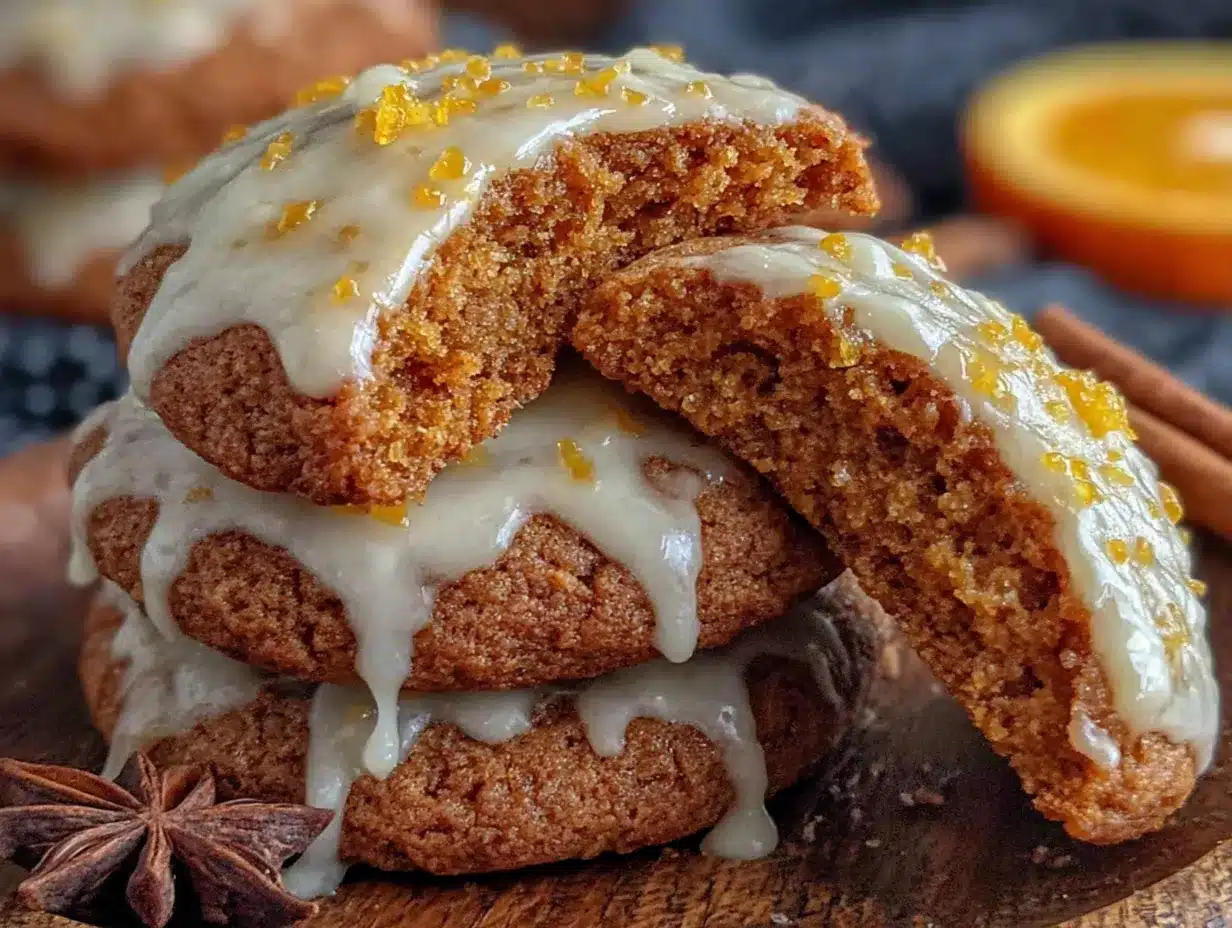
There used to be a tiny café tucked on a side street in Portland, called The Spiced Pear, that made gingerbread cookies that haunted me. When they closed their doors three years ago—just a handwritten sign in the window one Tuesday—I genuinely felt a little lost. I mean, I’d stop in every single week during the holidays just for one of those cookies with my coffee. The texture was unreal: pillowy soft, almost like a muffin top in cookie form, with this bright, tangy orange glaze that cut through all that warm spice. After maybe twelve attempts—some were hockey pucks, others crumbled into sad piles—I finally cracked the code.
The secret, honestly, is skipping the chill time. Most gingerbread recipes make you wait, and wait, while the dough firms up in the fridge. But let me tell you, that’s where cookies get dense and dry. This version goes straight from bowl to oven, and the result is this incredibly tender, cake-like crumb that stays soft for days. The orange glaze isn’t just a pretty topping either—it’s the bright, citrusy punch that makes these cookies unforgettable. You know that feeling when you take a bite and everything just clicks? That’s this recipe.
I’ve made these for cookie swaps, holiday parties, and random Tuesday cravings, and they never last long. The kitchen smells like Christmas morning, and the glaze dries to that crackly, glossy finish that looks bakery-level impressive. Honestly, if you’ve been searching for that perfect soft gingerbread cookie that doesn’t require hours of chilling, your search ends here. Let’s bake something that actually works for real life.
Why You’ll Love This Recipe
These soft gingerbread cookies with orange glaze have become my most-requested holiday recipe, and for good reason. After testing this recipe through countless batches—some too flat, others too cakey—I landed on a version that checks every box for busy home bakers who refuse to compromise on flavor.
- No Chill Time Required : The dough goes straight from mixing bowl to oven. No waiting, no fridge space needed, no last-minute panic when you realize the dough isn’t firm enough. This is weeknight-baking friendly.
- Simple Pantry Ingredients : You likely have everything already—flour, butter, sugar, molasses, and spices. No fancy extracts or hard-to-find specialty items. The orange juice is fresh, but bottled works in a pinch.
- Perfect for Holiday Baking : These cookies are ideal for cookie exchanges, gift boxes, or decorating with kids. The soft texture holds up well to stacking, and the glaze sets firm enough for transport.
- Crowd-Pleaser Texture : Everyone loves a soft, cake-like cookie that doesn’t crumble into a mess. These have that perfect tender bite—firm enough to hold, soft enough to melt.
- That Orange Glaze Magic : The citrus glaze isn’t just decoration—it’s the flavor bridge that ties the warm gingerbread spices together. It adds brightness and a beautiful crackled finish that looks professional.
What makes this version different from the dozens of gingerbread recipes out there? It’s the balance. I tested ratios of butter to molasses, played with baking soda amounts, and finally landed on a formula that gives you that bakery-style softness without the wait. Plus, the orange glaze is a game-changer—most recipes use plain powdered sugar icing, but fresh orange juice adds a layer of complexity that makes these cookies memorable.
This recipe isn’t just good—it’s the kind that makes you close your eyes after the first bite. It’s comfort food reimagined: faster, softer, and with that bright citrus finish that keeps you reaching for another one. Perfect for impressing guests without stress, or turning a simple afternoon into something special.
What Ingredients You Will Need
This recipe uses simple, wholesome ingredients to deliver that soft, tender texture and bold gingerbread flavor. Most are pantry staples, but a few key choices make all the difference in the final cookie.
For the Gingerbread Cookies
- Unsalted butter, softened (1 cup / 2 sticks) — I prefer using European-style butter like Kerrygold for richer flavor, but any unsalted butter works. The softening is crucial—leave it out for about 30 minutes before starting.
- Brown sugar, packed (1 cup / 200g) — Light or dark brown sugar both work. Dark brown sugar gives deeper molasses notes, while light keeps things milder. Pack it firmly into the measuring cup.
- Molasses (½ cup / 170g) — Use unsulphured molasses, not blackstrap. Grandma’s or Brer Rabbit brands are reliable. Blackstrap is too bitter and will overpower the cookies.
- Large egg (1, at room temperature) — Cold eggs can seize the butter mixture. Let it sit out for 15 minutes or place in warm water for 5 minutes.
- Vanilla extract (1 teaspoon) — Pure vanilla is best, but imitation works fine. I’ve used Nielsen-Massey for years.
- All-purpose flour (3 cups / 360g) — Spoon and level your flour—don’t scoop directly from the bag. Too much flour makes dense cookies.
- Baking soda (2 teaspoons) — This helps the cookies spread and rise slightly. Make sure it’s fresh—test by dropping a bit in vinegar; it should fizz.
- Ground ginger (2 teaspoons) — Freshly ground ginger from a spice jar is fine, but if you have whole dried ginger, grind it yourself for more punch.
- Ground cinnamon (1½ teaspoons) — Ceylon cinnamon is milder and sweeter; Cassia is more intense. Both work, just adjust to taste.
- Ground cloves (½ teaspoon) — A little goes a long way. Too much can make the cookies taste medicinal.
- Ground nutmeg (½ teaspoon) — Freshly grated nutmeg is amazing here, but pre-ground is perfectly fine.
- Salt (½ teaspoon) — Fine sea salt or table salt. Don’t skip it—salt balances the sweetness and enhances the spices.
For the Orange Glaze
- Powdered sugar (1½ cups / 180g) — Sift it to avoid lumps. Confectioners’ sugar is the same thing.
- Fresh orange juice (3-4 tablespoons) — Freshly squeezed makes a huge difference in flavor. One medium orange gives about 3 tablespoons. Avoid bottled juice if possible—it’s less bright.
- Orange zest (1 teaspoon, from the same orange) — Zest before juicing. The oils in the zest add intense citrus aroma.
- Vanilla extract (½ teaspoon, optional) — Adds warmth, but you can skip it for a purer orange flavor.
Ingredient Selection Tip : For the best molasses flavor, look for a brand that lists “unsulphured cane molasses” on the label. I’ve had great results with Grandma’s Molasses—it’s widely available and consistent. If you’re substituting, remember that blackstrap molasses is much darker and less sweet, so the cookies will be less tender.
Substitution Guidance : For a dairy-free version, use vegan butter sticks (like Miyoko’s) in place of regular butter. For a gluten-free option, swap the all-purpose flour with a 1:1 gluten-free baking flour blend that contains xanthan gum—I’ve used King Arthur Measure for Measure successfully. The texture will be slightly more delicate, but still delicious.
Equipment Needed
You don’t need fancy equipment for these cookies, which is part of the appeal. Here’s what you’ll actually use:
- Large mixing bowl — A standard 4-quart bowl works. I’ve used the same Pyrex bowl for years—it’s sturdy and easy to clean.
- Electric hand mixer or stand mixer — A hand mixer is fine, but a stand mixer with paddle attachment makes creaming butter and sugar effortless. I’ve made these with both—hand mixing takes about 2 extra minutes.
- Whisk — For combining dry ingredients. A simple wire whisk prevents clumps.
- Rubber spatula — For scraping down the bowl and folding in dry ingredients. A silicone one won’t scratch your bowls.
- Measuring cups and spoons — Dry measuring cups for flour and sugar, liquid measuring cup for molasses and orange juice. Accuracy matters here.
- Baking sheets — Two large rimmed baking sheets. I prefer light-colored aluminum—dark sheets can cause over-browning.
- Parchment paper or silicone baking mats — Parchment is cheap and disposable; silicone mats are reusable and non-stick. Either works, but skip greasing the pan directly—it makes cookies spread too much.
- Cookie scoop or tablespoon — A 1.5-tablespoon cookie scoop gives uniform cookies. If using a spoon, try to make each ball roughly the same size.
- Cooling rack — Wire racks allow air to circulate so cookies cool evenly. If you don’t have one, you can cool them on the baking sheet, but they’ll take longer.
- Small bowl and whisk — For the glaze. A fork works too, but whisking incorporates air for a smoother texture.
Budget-Friendly Option : If you don’t have a mixer, you can cream the butter and sugar by hand with a wooden spoon—it just takes elbow grease. The cookies will still turn out perfectly soft.
Preparation Method
Let’s walk through this step by step. The whole process takes about 25 minutes of active time, plus 10-12 minutes of baking per batch. No chilling, remember—straight to the oven.
Step 1: Preheat and Prep
Preheat your oven to 350°F (175°C). Line two baking sheets with parchment paper or silicone mats. This ensures easy removal and even baking.
Step 2: Cream Butter and Sugar
In a large mixing bowl, beat the softened butter and brown sugar together until light and fluffy—about 2-3 minutes with an electric mixer on medium speed. You’re looking for a pale, airy texture. Scrape down the sides of the bowl with a spatula halfway through. The mixture should look like wet sand but lighter.
Step 3: Add Wet Ingredients
Add the molasses, egg, and vanilla extract to the butter mixture. Beat on medium speed until fully combined—about 1 minute. The batter will look slightly separated at first, but it will come together into a smooth, dark brown mixture. Scrape the bowl again. If the mixture looks curdled, don’t panic—it will smooth out once you add the flour.
Step 4: Combine Dry Ingredients
In a separate medium bowl, whisk together the flour, baking soda, ground ginger, cinnamon, cloves, nutmeg, and salt. Whisking ensures the spices and leavener are evenly distributed—no one wants a pocket of baking soda in their cookie.
Step 5: Mix Dry into Wet
Gradually add the dry ingredients to the wet mixture, mixing on low speed. Add about one-third at a time, mixing just until incorporated after each addition. The dough will be thick and slightly sticky—this is normal. Do not overmix, or the cookies will become tough. Stop as soon as no white flour streaks remain.
Step 6: Scoop the Dough
Using a 1.5-tablespoon cookie scoop (or two spoons), scoop rounded balls of dough onto the prepared baking sheets, spacing them about 2 inches apart. The dough won’t spread much, so you can fit 12 cookies per standard sheet. If the dough is too sticky to handle, lightly moisten your hands with water.
Step 7: Bake
Bake one sheet at a time on the center rack for 10-12 minutes. The cookies are done when the edges are set and the tops look slightly crackled but still soft in the center. They will puff up slightly and then settle. A toothpick inserted into the center should come out with a few moist crumbs—not wet batter. For softer cookies, bake for 10 minutes; for slightly firmer ones, go to 12 minutes.
Step 8: Cool
Let the cookies cool on the baking sheet for 5 minutes. They will continue to set as they cool. Transfer them to a wire cooling rack to cool completely before glazing—about 20 minutes. If you glaze while warm, the glaze will melt and run off.
Step 9: Make the Orange Glaze
While the cookies cool, make the glaze. In a small bowl, whisk together the powdered sugar, 3 tablespoons of fresh orange juice, orange zest, and vanilla extract (if using). Whisk until smooth. The glaze should be thick but pourable—if it’s too thick, add more orange juice a teaspoon at a time. If it’s too thin, add more powdered sugar a tablespoon at a time.
Step 10: Glaze the Cookies
Dip the tops of the cooled cookies into the glaze, or drizzle it over them with a spoon. Let the excess drip off, then place the glazed cookies back on the cooling rack. Let the glaze set for about 30 minutes until firm and crackly. For a thicker glaze layer, dip twice, letting the first layer set for 15 minutes before the second dip.
Personal Tip : I once forgot the orange zest and the glaze tasted flat. Don’t skip it—the zest carries the essential oils that make the citrus pop. Also, if you’re making these for a cookie swap, let the glaze fully set (about 1 hour) before stacking them.
Cooking Tips & Techniques
After making these cookies more times than I can count, I’ve picked up a few tricks that make a real difference. Here’s what I wish someone had told me.
Don’t Overmix the Dough — This is the number one mistake I see. Once you add the flour, mix just until it disappears. Overworking the dough develops gluten, which makes cookies tough instead of tender. I learned this the hard way after a batch came out more like bread rolls than cookies.
Room Temperature Ingredients Matter — Cold butter won’t cream properly with sugar, and a cold egg can seize the mixture. Leave your butter and egg out for 30 minutes before starting. If you’re in a rush, cut the butter into small cubes—it softens in about 15 minutes.
Measure Flour Correctly — Spoon the flour into your measuring cup and level it off with a knife. Scooping directly from the bag packs in extra flour, which dries out the cookies. A kitchen scale is even better—360 grams is your target.
Watch the Baking Time — These cookies are meant to be soft, so pull them out when the edges are set but the centers still look slightly underdone. They’ll continue cooking from residual heat on the baking sheet. If you wait until they look fully baked, they’ll be overdone.
Glaze Timing — The glaze should be applied to completely cooled cookies. Warm cookies melt the glaze into a sticky mess. I’ve made that mistake—it still tastes good, but the presentation suffers. Let those cookies sit for a full 20 minutes on the rack.
Double Batch Strategy — This recipe doubles beautifully. I often make a double batch for holiday parties. Just mix the dough in two batches if your mixer bowl isn’t large enough. The cookies freeze well unglazed, so you can bake ahead and glaze fresh.
My Biggest Failure — I once substituted blackstrap molasses because that’s all I had. The cookies came out dark, bitter, and dense. Stick with unsulphured molasses—it’s sweeter and milder. Blackstrap has its place, but not here.
Variations & Adaptations
One of the best things about this recipe is how flexible it is. Here are some variations I’ve tried and loved.
Spiced Orange Variation
Add ¼ teaspoon of ground cardamom to the dry ingredients. The floral, slightly citrusy notes of cardamom pair beautifully with the orange glaze. I made this version for a holiday brunch and got requests for the recipe from three different people.
Dark Chocolate Drizzle
Instead of the orange glaze, melt ½ cup of dark chocolate chips with 1 teaspoon of coconut oil and drizzle over the cooled cookies. The bitterness of dark chocolate contrasts perfectly with the sweet, spicy cookie. This is my go-to for chocolate lovers.
Vegan Adaptation
Replace the butter with vegan butter sticks (I’ve used Earth Balance and Miyoko’s with success). Use a flax egg (1 tablespoon ground flaxseed mixed with 3 tablespoons water, let sit for 5 minutes) instead of the regular egg. The cookies will be slightly less tender but still delicious. Use dairy-free powdered sugar for the glaze.
Gluten-Free Version
Substitute the all-purpose flour with a 1:1 gluten-free baking flour blend that contains xanthan gum. I’ve tested this with King Arthur Measure for Measure and Bob’s Red Mill 1-to-1. The cookies spread slightly more and are a bit more delicate, but the flavor is spot-on. Handle the dough gently.
Lemon Ginger Variation
Replace the orange juice and zest in the glaze with lemon juice and zest. The bright, tart lemon pairs wonderfully with the ginger. Add 1 teaspoon of fresh grated ginger to the cookie dough for an extra kick. This version is especially refreshing after a heavy meal.
Spiced Sugar Coating
Skip the glaze entirely. Roll the dough balls in a mixture of ¼ cup granulated sugar and 1 teaspoon ground cinnamon before baking. The cookies come out with a sparkly, crunchy exterior and a soft interior. This is a simpler option when you’re short on time.
Serving & Storage Suggestions
These cookies are best enjoyed at room temperature, but they’re also fantastic slightly warm—just let the glaze set first. Serve them alongside a cup of hot coffee, spiced chai, or a glass of cold milk. They also pair beautifully with mulled wine or hot apple cider during the holidays.
Presentation Ideas : Arrange the glazed cookies on a tiered stand for a stunning holiday dessert table. Stack them in a clear glass jar with a ribbon for a homemade gift. Or simply pile them on a plate—they look gorgeous with that glossy, crackled glaze.
Storage Instructions : Store the cookies in an airtight container at room temperature for up to 5 days. Place a slice of bread in the container—it absorbs excess moisture and keeps the cookies soft. Change the bread slice every 2 days. Do not refrigerate, as the cold air dries them out.
Freezing Instructions : Freeze unglazed cookies in a single layer on a baking sheet, then transfer to a freezer-safe bag or container. They’ll keep for up to 3 months. Thaw at room temperature for about 30 minutes, then glaze fresh. The glaze is best made fresh—frozen glazed cookies can get sticky.
Reheating Tip : If you want that just-baked warmth, microwave a cookie for 10 seconds. The glaze will soften slightly but won’t melt off. Or pop them in a 300°F oven for 3-4 minutes.
Flavor Development : These cookies actually taste better the next day. The spices mellow and meld together, and the glaze sets into a perfect crackly shell. If you can resist eating them all on day one, you’ll be rewarded on day two.
Nutritional Information & Benefits
Here’s the approximate nutritional breakdown for one cookie (based on 24 cookies with glaze):
| Nutrient | Amount per Cookie |
|---|---|
| Calories | 180 |
| Total Fat | 7g |
| Saturated Fat | 4g |
| Carbohydrates | 28g |
| Sugar | 18g |
| Protein | 2g |
| Fiber | 1g |
| Sodium | 120mg |
Health Benefits : Ginger is known for its anti-inflammatory properties and can aid digestion. Molasses contains iron, calcium, and magnesium—it’s actually one of the more nutrient-dense sweeteners. The orange glaze provides a small amount of vitamin C. While these are still a treat, the ingredients offer more nutritional value than a standard sugar cookie.
Dietary Considerations : This recipe contains dairy (butter) and gluten (flour). See the variations section for vegan and gluten-free adaptations. The cookies are nut-free as written, making them safe for school events.
Personal Wellness Perspective : I believe in enjoying treats without guilt. These cookies are made with real ingredients—butter, molasses, fresh orange juice—not preservatives or artificial flavors. They’re a homemade indulgence that feels good to eat and share. One cookie satisfies that sweet craving without overdoing it.
Conclusion
These soft no-chill gingerbread cookies with orange glaze are everything I wanted from that long-gone café cookie—soft, spicy, and topped with that bright citrus finish that makes each bite memorable. No chilling, no complicated techniques, just straightforward baking that delivers every single time.
I hope you give these a try, whether it’s for a holiday cookie exchange, a weekend baking project, or just because you’re craving something warm and comforting. Customize the glaze, play with the spices, make them your own. That’s the beauty of a good recipe—it’s a starting point, not a rulebook.
I’d love to hear how yours turn out! Drop a comment below and let me know if you tried any variations, or tag me in your photos on social media. Happy baking, friends—may your cookies always be soft and your glaze always crackly.
Frequently Asked Questions
Can I make the dough ahead of time and chill it?
Technically yes, but the recipe is designed to skip chilling. If you do chill the dough, let it sit at room temperature for 15 minutes before scooping—it will be very firm straight from the fridge. The cookies might spread slightly less, but they’ll still be soft.
Why did my cookies come out flat?
Flat cookies usually mean the butter was too soft or melted, or the baking soda is old. Make sure your butter is softened but not melted—it should hold a slight indent when pressed. Also, check that your baking soda is fresh; old baking soda loses its leavening power.
Can I use a different citrus for the glaze?
Absolutely! Lemon, lime, or even grapefruit juice work beautifully. Just adjust the sugar-to-juice ratio as needed—different citrus juices have different acidity levels. Lemon is more tart, so you might need a touch more powdered sugar to balance it.
How do I prevent the glaze from being too runny?
Start with 3 tablespoons of orange juice and add more slowly. The glaze should be thick enough to coat the back of a spoon but still pourable. If it’s too thin, whisk in more powdered sugar a tablespoon at a time. If it’s too thick, add orange juice a teaspoon at a time.
Can I freeze the glazed cookies?
It’s better to freeze them unglazed. The glaze can become sticky and lose its crackly texture after freezing and thawing. Bake, cool, freeze without glaze, then thaw and glaze fresh. The glaze takes just 2 minutes to make, so it’s worth the extra step.
Pin This Recipe!
Easy Soft Gingerbread Cookies with Orange Glaze

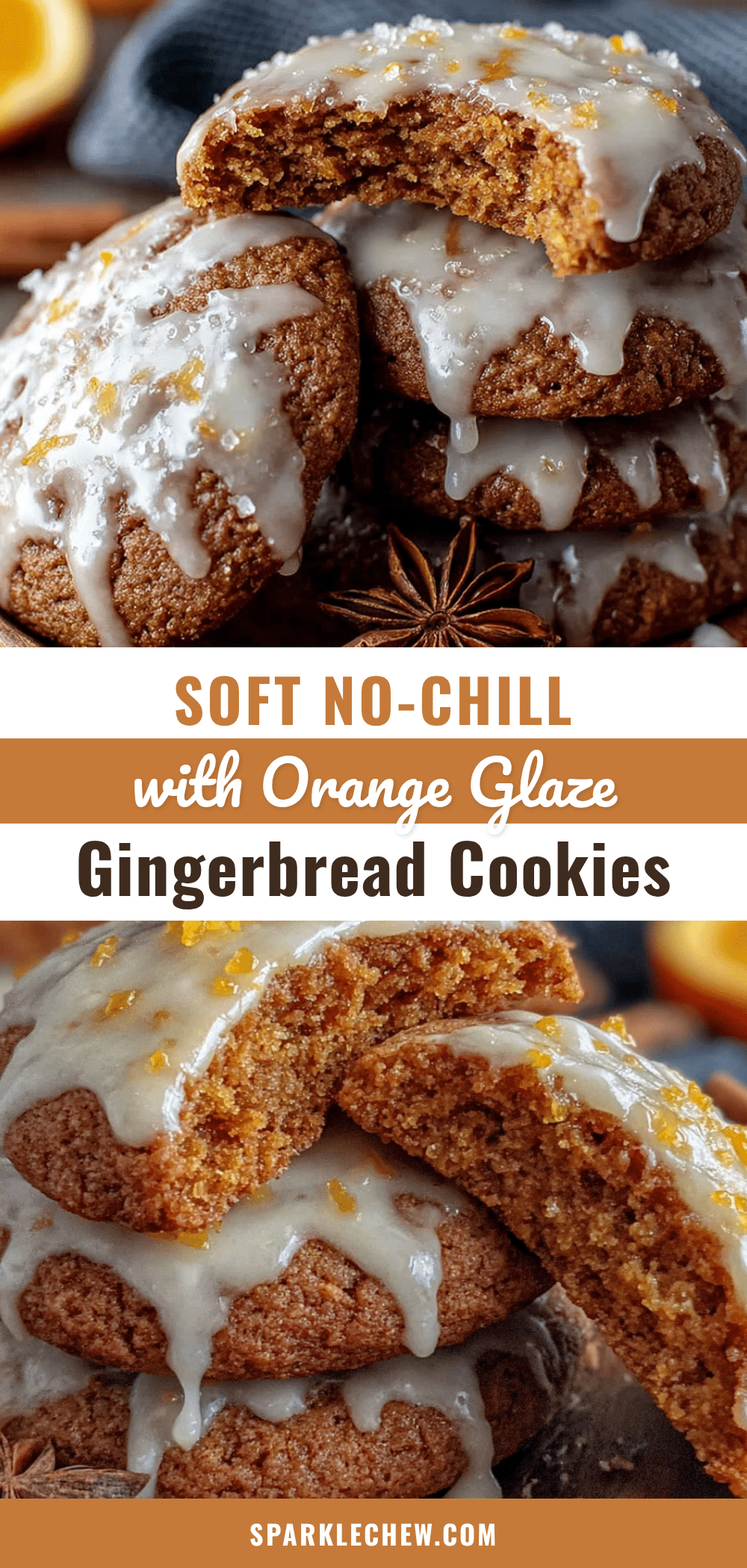
These soft, no-chill gingerbread cookies are pillowy and tender with a bright, tangy orange glaze that cuts through the warm spices. Perfect for holiday baking, cookie swaps, or a cozy treat any day.
- Prep Time: 25 minutes
- Cook Time: 10-12 minutes per batch
- Total Time: 45 minutes
- Yield: 24 cookies 1x
- Category: Dessert
- Cuisine: American
Ingredients
- 1 cup (2 sticks) unsalted butter, softened
- 1 cup (200g) brown sugar, packed
- ½ cup (170g) unsulphured molasses
- 1 large egg, at room temperature
- 1 teaspoon vanilla extract
- 3 cups (360g) all-purpose flour, spooned and leveled
- 2 teaspoons baking soda
- 2 teaspoons ground ginger
- 1½ teaspoons ground cinnamon
- ½ teaspoon ground cloves
- ½ teaspoon ground nutmeg
- ½ teaspoon salt
- 1½ cups (180g) powdered sugar, sifted
- 3–4 tablespoons fresh orange juice
- 1 teaspoon orange zest
- ½ teaspoon vanilla extract (optional)
Instructions
- Preheat oven to 350°F (175°C). Line two baking sheets with parchment paper or silicone mats.
- In a large bowl, beat softened butter and brown sugar together until light and fluffy, about 2-3 minutes with an electric mixer on medium speed. Scrape down sides halfway through.
- Add molasses, egg, and vanilla extract to the butter mixture. Beat on medium speed until fully combined, about 1 minute. Scrape bowl again.
- In a separate medium bowl, whisk together flour, baking soda, ginger, cinnamon, cloves, nutmeg, and salt.
- Gradually add dry ingredients to wet mixture, mixing on low speed. Add about one-third at a time, mixing just until incorporated after each addition. Do not overmix.
- Using a 1.5-tablespoon cookie scoop or two spoons, scoop rounded balls of dough onto prepared baking sheets, spacing them about 2 inches apart.
- Bake one sheet at a time on the center rack for 10-12 minutes. Cookies are done when edges are set and tops look slightly crackled but still soft in center.
- Let cookies cool on baking sheet for 5 minutes, then transfer to a wire cooling rack to cool completely, about 20 minutes.
- While cookies cool, make the glaze: In a small bowl, whisk together powdered sugar, 3 tablespoons orange juice, orange zest, and vanilla extract (if using) until smooth. Adjust consistency with more juice or sugar as needed.
- Dip tops of cooled cookies into glaze or drizzle over them. Let excess drip off, then place glazed cookies back on cooling rack. Let glaze set for about 30 minutes until firm and crackly.
Notes
The secret to soft cookies is skipping the chill time. Use unsulphured molasses, not blackstrap. For best results, ensure butter and egg are at room temperature. The glaze sets best on completely cooled cookies. Store in an airtight container at room temperature for up to 5 days; place a slice of bread in the container to keep them soft. Freeze unglazed cookies for up to 3 months.
Nutrition
- Serving Size: 1 cookie
- Calories: 180
- Sugar: 18
- Sodium: 120
- Fat: 7
- Saturated Fat: 4
- Carbohydrates: 28
- Fiber: 1
- Protein: 2
Keywords: soft gingerbread cookies, orange glaze, no-chill cookies, holiday baking, gingerbread, easy cookie recipe