Love this? Save it for later!
Share the inspiration with your friends
This was supposed to be a traditional sourdough stuffing. I had the loaf—a beautiful, crusty boule I’d been nurturing for days. I had the celery, the onions, the fresh sage. I even had my grandmother’s cast iron pan preheating in the oven. Then, at the absolute worst possible moment—with the turkey already resting and guests due in an hour—I realized the bread was moldy. Not a little spot I could cut around, but a full, fuzzy green takeover. I stood there, staring at the ruined loaf, feeling that familiar wave of kitchen panic. You know that feeling when a whole plan collapses in front of you?
I had exactly forty-five minutes and a pantry full of ingredients that suddenly seemed wrong. My neighbor Tom had recently gone gluten-free, and I remembered the bag of gluten-free bread cubes he’d dropped off the week before, saying, “If you can make these taste good, you’re a magician.” Honestly, I grabbed them out of sheer desperation. I tossed them in the hot pan, added extra butter because butter fixes everything, and threw in every herb I could find. What came out of that oven was nothing like the plan—and so much better. The texture was lighter, the herbs actually tasted brighter, and it soaked up the turkey juices like a dream. I mean, I couldn’t believe it myself.
That moment of failure taught me something important. Sometimes the best recipes come from the worst disasters. This quick gluten-free herb Thanksgiving stuffing isn’t a compromise. It’s a happy accident that became a permanent fixture on my holiday table. Even people who eat gluten—like my skeptical brother-in-law—ask for this version now. It’s faster, it’s easier, and honestly, it might just be better than the original. Let me show you how to make it without the panic.
Why You’ll Love This Recipe
Let me tell you why this quick gluten-free herb Thanksgiving stuffing has earned a permanent spot in my holiday rotation. After testing it on three separate occasions—once for a Friendsgiving, once for my picky in-laws, and once just for a random Tuesday night craving—I can confidently say this recipe delivers every single time.
- Quick & Easy : This stuffing comes together in under 45 minutes from start to finish. No overnight drying of bread, no complicated steps. Perfect for those last-minute holiday emergencies or when you just need a comforting side dish without the all-day commitment.
- Simple Ingredients : You likely already have everything in your kitchen right now. Gluten-free bread cubes, butter, onions, celery, and a handful of fresh herbs. No fancy grocery trips or specialty store runs needed.
- Perfect for Thanksgiving : This stuffing holds its own against any traditional version. It’s great for holiday dinners, potlucks, or even as a cozy side dish on a chilly Sunday afternoon.
- Crowd-Pleaser : I’ve served this to gluten-eaters who had no idea it was gluten-free. It always gets rave reviews from kids and adults alike. My nephew asked for seconds, then thirds.
- Unbelievably Delicious : The texture is perfectly crispy on top, tender and moist underneath. The herb flavor is bright and aromatic, not muddy or overwhelming like some stuffings can be.
What makes this recipe different from every other gluten-free stuffing out there? It’s the technique. Most gluten-free breads turn into mush when you add liquid. I figured out that toasting the cubes first in butter creates a barrier that keeps them from disintegrating. The result is a stuffing that actually has structure and bite. It’s not just another version—it’s the best version I’ve ever made.
This recipe is the kind that makes you close your eyes after the first bite. It’s comfort food reimagined—faster, easier, but with the same soul-soothing satisfaction. Perfect for impressing guests without stress, or turning a simple weeknight meal into something memorable.
What Ingredients You Will Need
This recipe uses simple, wholesome ingredients to deliver bold flavor and satisfying texture without the fuss. Most of these are pantry staples you probably already have on hand.
- Gluten-free bread cubes (6 cups) — Look for a sturdy gluten-free bread, not the soft sandwich kind. I recommend Schar or Canyon Bakehouse for best texture. You can also use gluten-free baguette or ciabatta if you prefer a denser crumb. (Pro tip: day-old bread works even better than fresh.)
- Unsalted butter (1/2 cup, 1 stick) — Adds richness and helps toast the bread cubes without burning. Use dairy-free butter if needed, but the flavor won’t be quite as deep.
- Yellow onion (1 large, diced) — Provides the savory base. Sweet onions work too, but yellow onions give the best savory depth.
- Celery stalks (3 large, diced) — Essential for that classic stuffing texture and flavor. Don’t skip this—it adds crucial crunch and moisture.
- Fresh sage (2 tablespoons, chopped) — The star herb here. Dried sage works in a pinch, but fresh really makes this dish shine. (Use 2 teaspoons dried if substituting.)
- Fresh thyme (1 tablespoon, leaves removed from stems) — Adds an earthy, slightly floral note. Dried thyme works too—use 1 teaspoon.
- Fresh rosemary (1 tablespoon, finely chopped) — Piney and aromatic. Go easy—rosemary can overpower quickly.
- Fresh parsley (1/4 cup, chopped) — Adds freshness and color at the end. Flat-leaf or curly both work fine.
- Chicken or vegetable broth (1 1/2 cups, warmed) — Use low-sodium so you can control the salt level. Vegetable broth keeps this vegetarian-friendly.
- Eggs (2 large, beaten) — Helps bind the stuffing together so it doesn’t fall apart when you serve it. Flax eggs work for a vegan version.
- Salt (1 teaspoon) — I use kosher salt for better control. Table salt works too, but reduce to 3/4 teaspoon.
- Black pepper (1/2 teaspoon, freshly ground) — Adds a gentle warmth. Pre-ground pepper is fine, but fresh is noticeably better.
- Garlic (3 cloves, minced) — Optional but recommended. Adds a subtle savory depth that complements the herbs beautifully.
Ingredient Selection Tips: When choosing gluten-free bread, avoid anything too soft or sweet. You want a bread that has some structure—think more like a rustic loaf than sandwich bread. I’ve found that gluten-free breads made with a blend of rice flour and tapioca starch work best. They toast up nicely and hold their shape during baking.
Substitution Guidance: For a dairy-free version, use olive oil or vegan butter instead of regular butter. For a vegan stuffing, use vegetable broth and flax eggs (2 tablespoons ground flaxseed mixed with 6 tablespoons water). You can also add cooked sausage, mushrooms, or roasted chestnuts for extra heartiness.
Equipment Needed
You don’t need fancy equipment for this quick gluten-free herb Thanksgiving stuffing. Here’s what you’ll need:
- Large skillet or sauté pan (12-inch) — For sautéing the vegetables and toasting the bread cubes. A non-stick pan makes cleanup easier, but stainless steel works fine too.
- Baking dish (9×13-inch) — For baking the stuffing. A ceramic or glass dish works best for even heat distribution. Metal pans can cause the edges to brown too quickly.
- Large mixing bowl — For combining all the ingredients before baking. Any large bowl will do—I use my grandmother’s old ceramic one.
- Sharp knife and cutting board — For dicing the vegetables and chopping the herbs. A dull knife makes this job miserable, so sharpen yours first.
- Wooden spoon or spatula — For stirring the bread cubes and vegetables. A silicone spatula works great too.
- Measuring cups and spoons — For accurate measurements. I’ve learned the hard way that eyeballing ingredients in stuffing leads to inconsistent results.
- Aluminum foil — For covering the dish during the first part of baking. This traps steam and keeps the stuffing moist.
Budget-Friendly Options: Don’t have a 9×13 baking dish? Use a cast iron skillet instead—it actually gives you better crispy edges. No large skillet? Use a Dutch oven or even a large saucepan. The key is having enough surface area to toast the bread cubes evenly. I’ve made this in a disposable aluminum pan when traveling for Thanksgiving, and it worked just fine.
Maintenance Tip: If using a cast iron pan for baking, make sure it’s well-seasoned to prevent sticking. A quick wipe with oil before adding the stuffing mixture helps.
Preparation Method
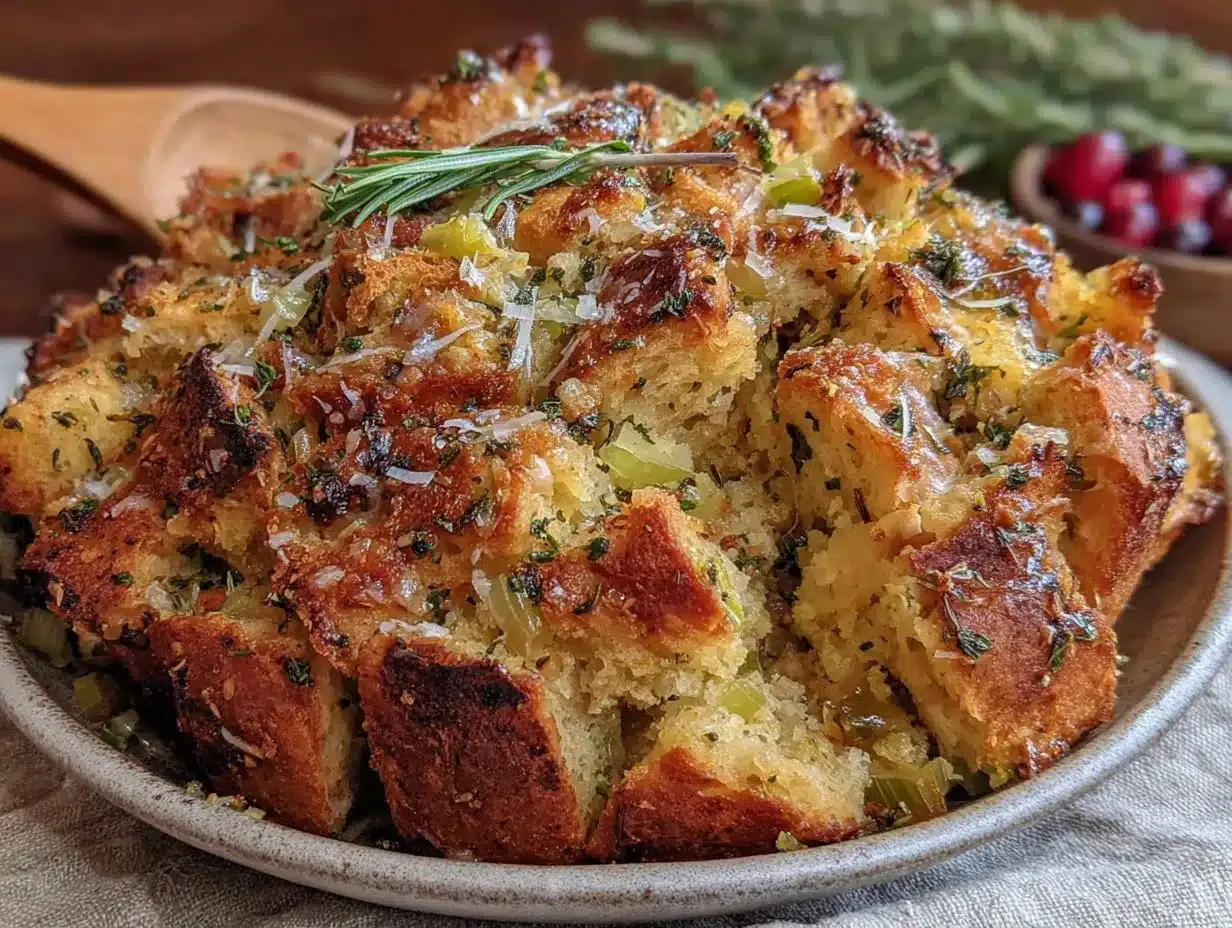
Here’s how to make this quick gluten-free herb Thanksgiving stuffing. The total time is about 45 minutes, with 15 minutes of active prep and 30 minutes of baking.
- Preheat your oven to 375°F (190°C). Position the rack in the middle of the oven. This temperature is hot enough to crisp the top without burning the bottom.
- Prepare your gluten-free bread cubes. If your bread isn’t already cubed, cut it into 1/2-inch cubes. You should have about 6 cups total. Spread them on a baking sheet and toast for 8-10 minutes, flipping halfway through, until lightly golden and dry to the touch. (This step is crucial—it prevents mushy stuffing.)
- Melt the butter in your large skillet over medium heat. Add the diced onion and celery. Cook for 5-7 minutes, stirring occasionally, until the onions are translucent and the celery has softened. The kitchen should smell amazing at this point—that’s the butter and vegetables working their magic.
- Add the minced garlic and fresh herbs. Stir in the sage, thyme, and rosemary. Cook for 1 minute more until fragrant. Be careful not to burn the garlic—it turns bitter quickly. If you’re using dried herbs, add them now too.
- Transfer the vegetable mixture to a large mixing bowl. Add the toasted gluten-free bread cubes. Toss gently to combine, making sure the herbs and vegetables are evenly distributed throughout the bread.
- In a separate small bowl, whisk together the warm broth and beaten eggs. Pour this mixture over the bread cube mixture. Toss gently until all the bread is moistened. Don’t overmix—you want some texture, not a paste. The bread should look evenly damp but not swimming in liquid.
- Season with salt and pepper. Taste a small piece of bread (it’s safe since everything is cooked except the eggs, which will bake) and adjust seasoning if needed. Remember that the flavors will concentrate as it bakes.
- Transfer the mixture to your greased 9×13 baking dish. Spread it evenly with a spatula. Don’t pack it down—you want some air pockets for texture.
- Cover the dish with aluminum foil. Bake for 20 minutes. This traps steam and ensures the inside cooks through without drying out.
- Remove the foil and bake for another 10-15 minutes. The top should be golden brown and crispy. The edges will be darker and crunchier—that’s the best part. Let it rest for 5 minutes before serving.
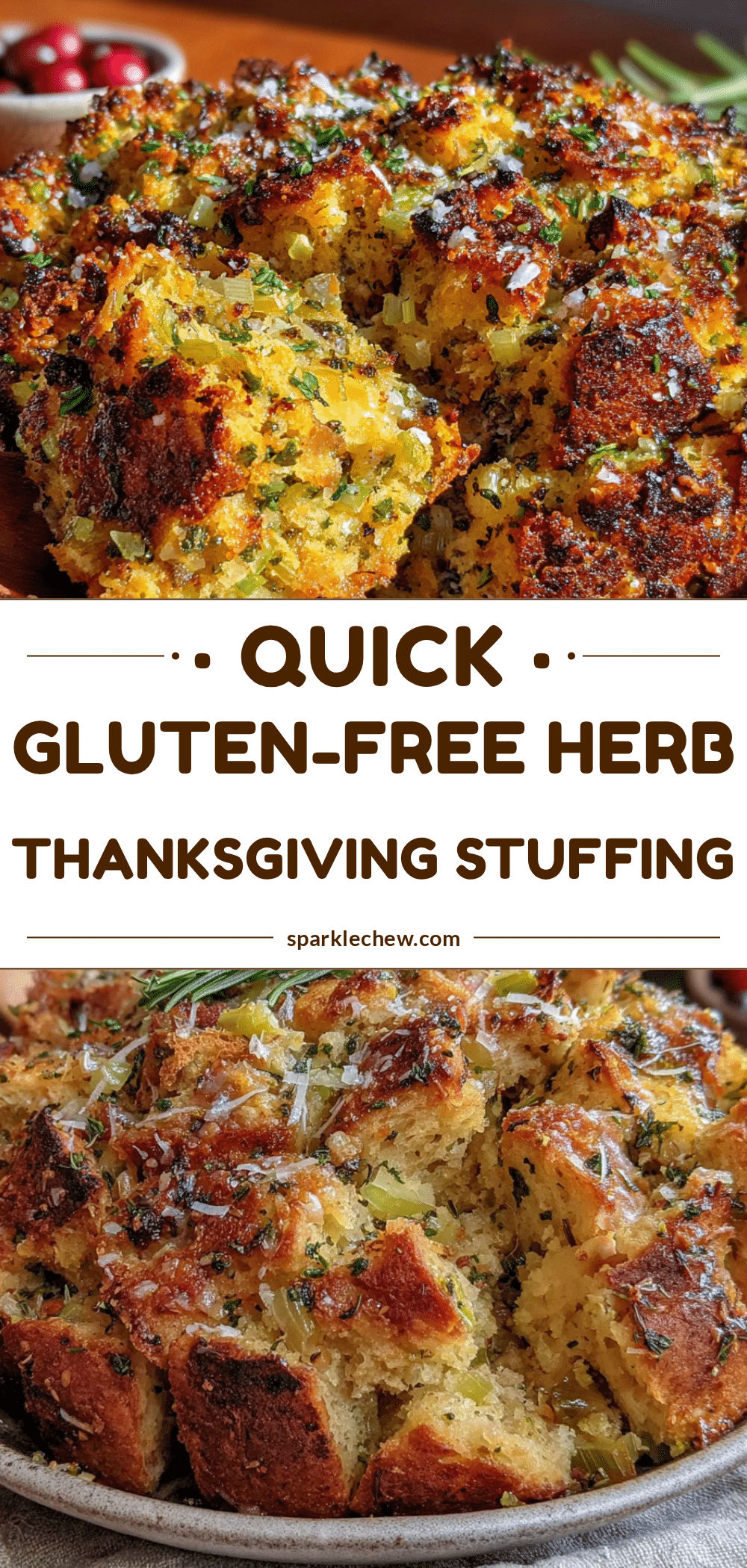
Sensory Cues: When it’s done, the top should be golden with slightly darker edges. You’ll hear a slight sizzle when you pull it from the oven. The smell will be deeply savory—herbs, butter, and toasted bread. The texture should be crispy on top and tender underneath, with no soggy spots.
Troubleshooting: If the top is browning too quickly, tent with foil for the remaining bake time. If the stuffing seems too dry after baking, drizzle a little extra warm broth over the top before serving. If it’s too wet, bake uncovered for an extra 5 minutes.
Cooking Tips & Techniques
After making this quick gluten-free herb Thanksgiving stuffing more times than I can count, here are the things I’ve learned the hard way so you don’t have to.
The Biggest Mistake: Adding too much liquid. Gluten-free bread absorbs liquid differently than regular bread. It gets soggy faster and stays soggy longer. Start with 1 1/4 cups of broth instead of 1 1/2 cups, then add more if needed. I once added the full amount and ended up with stuffing soup. Not my finest moment.
Toast Your Bread Twice: I know it seems like extra work, but toasting the bread cubes before adding them to the stuffing makes a huge difference. The first toasting dries them out so they can absorb flavor without turning to mush. I learned this after my first attempt produced a texture that I can only describe as “sad porridge.”
Use Warm Broth: Cold broth shocks the bread cubes and doesn’t absorb evenly. Warm broth (not boiling, just warm) helps the bread soak up the liquid more consistently. I microwave my broth for about 45 seconds before adding it.
Don’t Skip the Eggs: The eggs are what give this stuffing structure. Without them, it will fall apart when you try to serve it. I made this mistake once for a dinner party and ended up serving what looked like a bread salad. Tasted fine, but presentation was a disaster.
Multitasking Strategy: While the bread cubes are toasting in the oven, start sautéing your vegetables. By the time the bread is done, your vegetables should be ready to combine. This saves about 10 minutes of total prep time.
Make-Ahead Tip: You can assemble the stuffing the night before, but wait to add the broth and eggs until just before baking. Store the bread cubes and vegetable mixture separately in the fridge. Combine everything, add the liquid, and bake as directed. This actually improves the flavor because the herbs have time to meld.
Variations & Adaptations
This quick gluten-free herb Thanksgiving stuffing is incredibly versatile. Here are some variations I’ve tried and loved.
Sausage & Apple Stuffing: Brown 1 pound of gluten-free Italian sausage (casings removed) in the skillet before adding the vegetables. Remove the sausage and set aside. Add 1 diced apple (Granny Smith or Honeycrisp) along with the celery and onion. Proceed with the recipe, adding the cooked sausage back in when you combine everything. The sweetness of the apple balances the savory sausage perfectly.
Mushroom & Leek Stuffing: Sauté 8 ounces of sliced cremini mushrooms with the onions and celery. Replace half the onion with 2 leeks (white and light green parts only, cleaned thoroughly). Add 1 tablespoon of soy sauce or tamari for extra umami. This version is especially good with roasted chicken or pork.
Herb & Chestnut Stuffing: Add 1 cup of roasted, peeled chestnuts (roughly chopped) along with the bread cubes. Chestnuts add a sweet, nutty flavor that pairs beautifully with the herbs. You can find jarred roasted chestnuts in most grocery stores during the holiday season.
Dairy-Free/Vegan Version: Use olive oil or vegan butter instead of regular butter. Replace the eggs with flax eggs (2 tablespoons ground flaxseed mixed with 6 tablespoons water). Use vegetable broth instead of chicken broth. The texture will be slightly less firm, but the flavor is still fantastic.
Low-Carb Adaptation: Replace the gluten-free bread with 4 cups of cauliflower florets (finely chopped in a food processor) and 2 cups of almond flour. Toast the cauliflower mixture in the oven for 15 minutes before proceeding with the recipe. This version is much lower in carbs but still has that stuffing-like texture.
Spicy Southwest Version: Add 1 diced jalapeño (seeds removed) with the vegetables. Stir in 1 teaspoon of cumin and 1/2 teaspoon of smoked paprika. Replace half the broth with fire-roasted diced tomatoes (drained). Top with chopped cilantro before serving. This is my personal favorite for a non-traditional Thanksgiving.
Serving & Storage Suggestions
This quick gluten-free herb Thanksgiving stuffing is best served hot, straight from the oven. The contrast between the crispy top and the tender interior is what makes it special.
Serving Temperature: Serve immediately after the 5-minute rest. If you need to hold it for a while, cover loosely with foil and keep warm in a 200°F oven for up to 30 minutes. The top will lose some crispiness, but it will still be delicious.
Presentation: Spoon the stuffing into a warmed serving bowl. Garnish with a few fresh herb sprigs—sage leaves and thyme sprigs look beautiful. For a more rustic presentation, serve it straight from the baking dish. I actually prefer this—it feels more homey and less fussy.
Complementary Dishes: This stuffing pairs perfectly with roasted turkey (obviously), but it’s also amazing with roasted chicken, pork chops, or even a simple roast chicken. For a vegetarian meal, serve it alongside roasted root vegetables and a green salad with vinaigrette. A glass of dry Riesling or a crisp apple cider complements the herb flavors beautifully.
Storage Instructions: Store leftover stuffing in an airtight container in the refrigerator for up to 4 days. The flavors actually continue to develop overnight, so leftovers might taste even better the next day.
Freezing: You can freeze this stuffing for up to 3 months. Let it cool completely, then transfer to a freezer-safe container or zip-top bag. Thaw overnight in the refrigerator before reheating.
Reheating Methods: For best results, reheat in a 350°F oven for 15-20 minutes, covered with foil for the first 10 minutes, then uncovered to crisp the top. You can also reheat individual portions in the microwave for 1-2 minutes, but the texture won’t be as good. If the stuffing seems dry after reheating, drizzle a little warm broth over it before serving.
Flavor Development: The herb flavors will mellow and meld overnight, creating a more cohesive taste. Some people actually prefer day-old stuffing for this reason. I always make extra so I can enjoy it for breakfast the next morning—don’t judge me, it’s amazing with a fried egg on top.
Nutritional Information & Benefits
Here’s the approximate nutritional breakdown for one serving (about 1 cup) of this quick gluten-free herb Thanksgiving stuffing.
- Calories: 245
- Total Fat: 14g
- Saturated Fat: 8g
- Cholesterol: 65mg
- Sodium: 520mg
- Total Carbohydrates: 26g
- Dietary Fiber: 3g
- Sugars: 4g
- Protein: 6g
Health Benefits: This stuffing is gluten-free, making it suitable for those with celiac disease or gluten sensitivity. The fresh herbs—sage, thyme, rosemary, and parsley—are packed with antioxidants and anti-inflammatory compounds. Celery provides vitamin K and fiber, while onions offer prebiotics that support gut health. Using low-sodium broth helps control salt intake.
Dietary Considerations: This recipe is naturally nut-free and can be made dairy-free and vegan with simple substitutions. It’s not low-carb due to the bread, but the cauliflower version offers a lower-carb alternative.
Potential Allergens: Contains gluten (if using gluten-free bread, it’s safe for gluten-sensitive individuals), dairy (butter), and eggs. Check your gluten-free bread label for other potential allergens like soy or nuts.
Personal Wellness Perspective: I love that this stuffing lets everyone at the table enjoy the same dish without anyone feeling left out. Food should bring people together, not create awkward conversations about dietary restrictions. This recipe does exactly that.
Conclusion
This quick gluten-free herb Thanksgiving stuffing started as a kitchen disaster and became one of my most-requested recipes. It’s proof that sometimes the best things come from unexpected places. Whether you’re hosting a holiday dinner, bringing a dish to a potluck, or just craving comfort food on a Tuesday night, this stuffing delivers every single time.
I love this recipe because it doesn’t feel like a compromise. It’s not “gluten-free stuffing that’s almost as good as the real thing.” It’s just really, really good stuffing—period. The herbs are bright, the texture is perfect, and it comes together in under an hour. What more could you ask for?
Now I want to hear from you. Have you ever had a kitchen disaster that turned into a happy accident? Or do you have a favorite stuffing variation I should try? Drop a comment below and let me know. And if you make this recipe, tag me in your photos—I love seeing your creations. Happy cooking, friends.
Frequently Asked Questions
Can I make this stuffing ahead of time?
Yes, absolutely. You can assemble the stuffing the night before, but wait to add the broth and eggs until just before baking. Store the bread cubes and vegetable mixture separately in the fridge, then combine everything, add the liquid, and bake as directed. The flavor actually improves overnight.
What’s the best gluten-free bread to use?
Look for a sturdy gluten-free bread, not the soft sandwich kind. Brands like Schar and Canyon Bakehouse work well. You want something with structure—think rustic loaf rather than fluffy bread. Day-old bread works even better than fresh.
Can I use dried herbs instead of fresh?
Yes, you can substitute dried herbs for fresh. Use about 1 teaspoon of dried herbs for every tablespoon of fresh. So for this recipe, use 2 teaspoons dried sage, 1 teaspoon dried thyme, and 1 teaspoon dried rosemary. Add them with the garlic so they have time to rehydrate.
How do I prevent the stuffing from getting soggy?
The key is toasting the bread cubes thoroughly before adding any liquid. This creates a barrier that prevents the bread from absorbing too much moisture too quickly. Also, start with less broth than you think you need—you can always add more, but you can’t take it out once it’s in.
Can I freeze leftover stuffing?
Yes, this stuffing freezes beautifully. Let it cool completely, then transfer to a freezer-safe container or zip-top bag. It will keep for up to 3 months. Thaw overnight in the refrigerator before reheating in a 350°F oven until hot and crispy on top.
Pin This Recipe!
Quick Gluten-Free Herb Thanksgiving Stuffing: Easy & Best Recipe
This quick gluten-free herb Thanksgiving stuffing is a happy accident that became a permanent fixture on the holiday table. It’s faster, easier, and might just be better than the original, with a perfectly crispy top and tender, herb-infused interior.
- Prep Time: 15 minutes
- Cook Time: 30 minutes
- Total Time: 45 minutes
- Yield: 8 servings 1x
- Category: Side Dish
- Cuisine: American
Ingredients
- 6 cups gluten-free bread cubes (about 1/2-inch cubes)
- 1/2 cup (1 stick) unsalted butter
- 1 large yellow onion, diced
- 3 large celery stalks, diced
- 2 tablespoons fresh sage, chopped (or 2 teaspoons dried)
- 1 tablespoon fresh thyme leaves (or 1 teaspoon dried)
- 1 tablespoon fresh rosemary, finely chopped (or 1 teaspoon dried)
- 1/4 cup fresh parsley, chopped
- 1 1/2 cups chicken or vegetable broth, warmed (low-sodium preferred)
- 2 large eggs, beaten
- 1 teaspoon kosher salt (or 3/4 teaspoon table salt)
- 1/2 teaspoon freshly ground black pepper
- 3 cloves garlic, minced (optional)
Instructions
- Preheat your oven to 375°F (190°C). Position the rack in the middle of the oven.
- If your bread isn’t already cubed, cut it into 1/2-inch cubes. Spread on a baking sheet and toast for 8-10 minutes, flipping halfway, until lightly golden and dry.
- Melt the butter in a large skillet over medium heat. Add the diced onion and celery. Cook for 5-7 minutes, stirring occasionally, until onions are translucent and celery has softened.
- Add the minced garlic and fresh herbs (sage, thyme, rosemary). Cook for 1 minute more until fragrant.
- Transfer the vegetable mixture to a large mixing bowl. Add the toasted gluten-free bread cubes. Toss gently to combine.
- In a separate small bowl, whisk together the warm broth and beaten eggs. Pour over the bread cube mixture and toss gently until all bread is moistened (not swimming in liquid).
- Season with salt and pepper. Taste a small piece of bread and adjust seasoning if needed.
- Transfer the mixture to a greased 9×13-inch baking dish. Spread evenly with a spatula without packing down.
- Cover the dish with aluminum foil. Bake for 20 minutes.
- Remove the foil and bake for another 10-15 minutes, until the top is golden brown and crispy. Let rest for 5 minutes before serving.
Notes
Toast the bread cubes twice for best texture. Use warm broth to help the bread absorb liquid evenly. Don’t skip the eggs—they give the stuffing structure. For make-ahead, assemble without broth and eggs, store separately, then combine and bake just before serving.
Nutrition
- Serving Size: 1 cup
- Calories: 245
- Sugar: 4
- Sodium: 520
- Fat: 14
- Saturated Fat: 8
- Carbohydrates: 26
- Fiber: 3
- Protein: 6
Keywords: gluten-free stuffing, Thanksgiving stuffing, herb stuffing, quick stuffing, easy stuffing, gluten-free Thanksgiving, holiday side dish